
Arduino Nano V3.0
4.6Editor score
ATmega328P MCU
CH340 USB Driver
Breadboard Friendly
This guide compares the top ten Arduino Nano Board options available in October 2026 to help makers and engineers choose the right microcontroller for their
The Arduino Nano Board remains a cornerstone for hobbyists and professionals seeking compact microcontroller solutions. Its small form factor hides significant power, making it ideal for wearables, robotics, and embedded systems where space is at a premium.
We compared ten real products based on processor type, connectivity options, compatibility, and user feedback. Each entry offers unique advantages, from classic ATmega328P designs to modern ESP32-S3 and Renesas RA4M1 variants for diverse application needs.
Every pick includes detailed specs, pros, cons, and usage tips to guide your decision. Note that prices fluctuate often, so verify current costs before purchasing. This list covers the full spectrum from budget clones to official latest-gen boards.
4.6Editor score

4.6Editor score

4.5Editor score
This side-by-side comparison highlights key differences across ten popular Arduino Nano Board models. Evaluate memory, connectivity, and form factors to find the perfect match for your next embedded project or prototype.
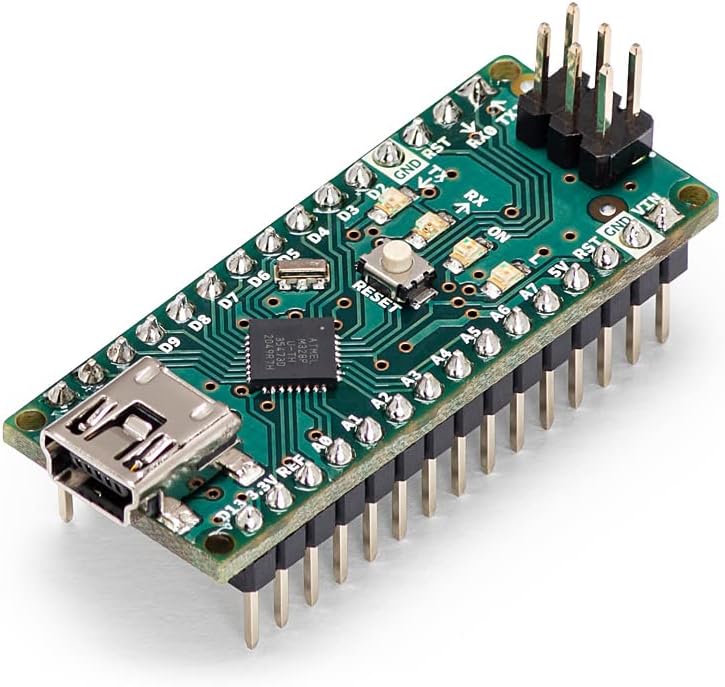


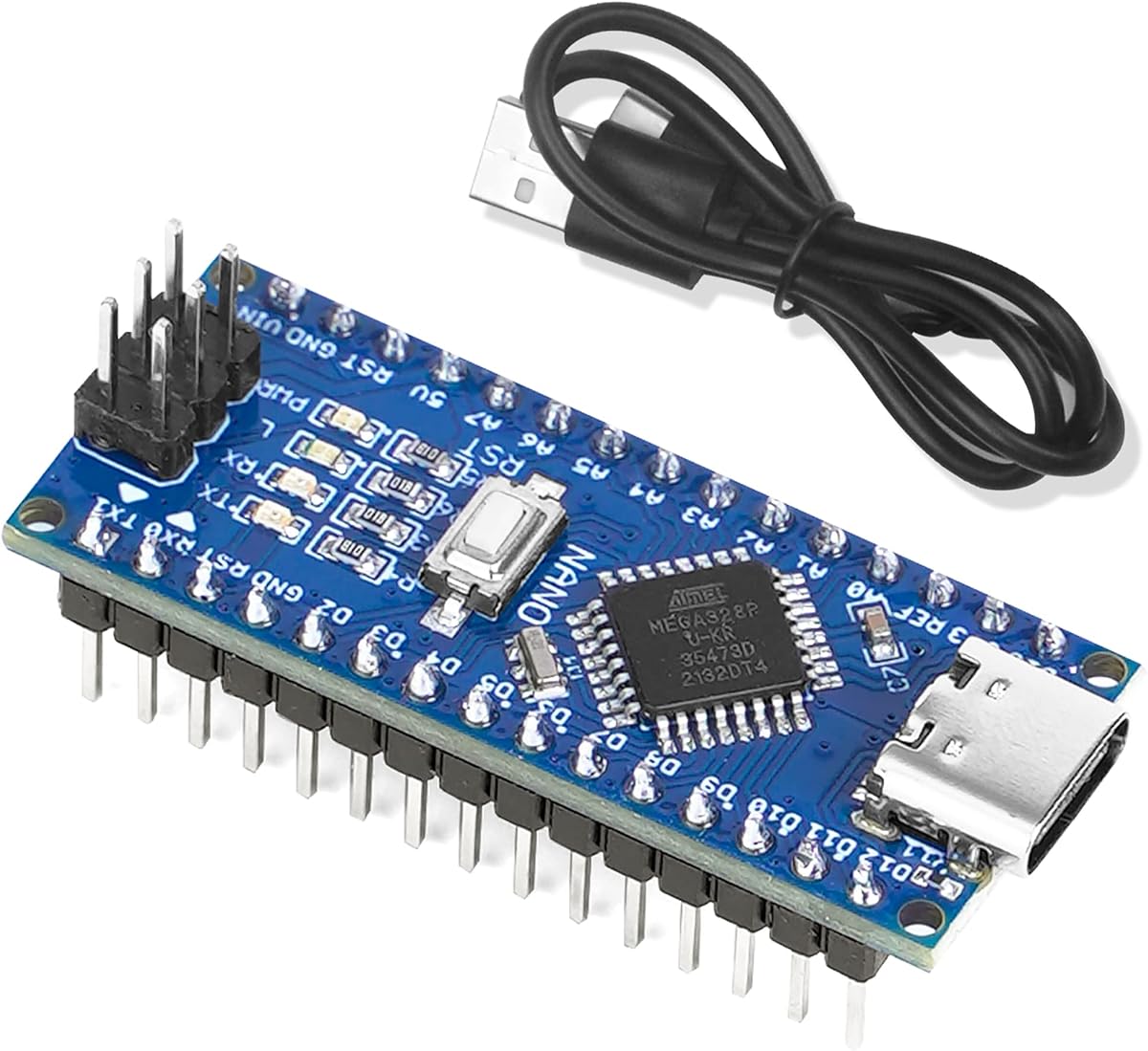
The LAFVIN Nano V3.0 offers exceptional value with three boards and cables included. It mirrors the classic Nano specs using an ATmega328P and CH340G chip, making it perfect for bulk projects or classroom sets.
We may earn a commission when you buy through this link, at no additional cost to you.
It runs standard Arduino IDE sketches without modification and supports ISP programming. The CH340 driver ensures compatibility across Windows, Mac, and Linux systems, reducing setup friction for new users.
While it lacks wireless capabilities, this makes it ideal for stable wired connections. The compact size fits easily on breadboards, though the headers might require soldering on some clones.
Buy this for prototyping multiple units or teaching environments where cost matters. Its reliability and compatibility make it a top budget choice for Arduino Nano Board needs.
Purchasing a 3 pack reduces per unit cost significantly for larger projects or spare inventory.
The CH340G chip is widely supported but may need driver installation on some operating systems.
We may earn a commission when you buy through this link, at no additional cost to you.
The official Arduino Nano [A000005] sets the standard for compact development. It uses the ATmega328P with 14 digital and 8 analog pins, supporting vast libraries and community code.
We may earn a commission when you buy through this link, at no additional cost to you.
Its build quality ensures stability in wearables and embedded systems. Mini USB provides power and programming without extra components, simplifying prototyping workflows.
However, it costs more than clones and uses Mini USB instead of modern Type C. This may require adapters if you lack older cables.
Choose this for reliability-critical applications where authenticity matters. It remains a solid pick for those prioritizing official support and proven performance.
Official boards guarantee consistent manufacturing standards and official support channels from Arduino.
Mini USB is robust but less common than Type C in modern peripherals and chargers.
We may earn a commission when you buy through this link, at no additional cost to you.
ELEGOO updates the classic Nano with USB-C connectivity and presoldered headers. This 3 pack is ideal for robotics or sensor nodes needing modern connectors without soldering hassle.
We may earn a commission when you buy through this link, at no additional cost to you.
It runs familiar 5V 16MHz sketches with 32KB flash. UART I2C and SPI support expand modules and sensors easily on breadboards.
Power options include 7-12V VIN or regulated 5V. Ensure you use the included cable as host C to C may not work on this board.
Perfect for makers upgrading from older Nano versions. Its mix of classic power and modern convenience makes it a strong contender.
USB-C simplifies cabling and is increasingly standard in portable and embedded devices.
Presoldered headers save time and allow immediate breadboard integration without extra tools.
We may earn a commission when you buy through this link, at no additional cost to you.
The Nano Every upgrades memory with 48KB Flash and 6KB SRAM. It supports larger programs and data handling while retaining Arduino IDE compatibility.
We may earn a commission when you buy through this link, at no additional cost to you.
Powered by ATmega4809, it runs 20 digital and 8 analog pins. USB-C ensures reliable power and programming, ideal for robotics and IoT applications.
It is cost-effective for real-time tasks but ships single. Ensure shields match the form factor if using legacy hardware.
Select this for complex logic requiring more space. It bridges classic design with modern efficiency perfectly.
Increased flash and SRAM allow more complex applications and efficient data logging.
More digital pins enable control of additional components without multiplexing.
We may earn a commission when you buy through this link, at no additional cost to you.
The Nano ESP32 brings dual-core Xtensa 32-bit LX7 processing to the Nano form. It enables real-time data processing, voice recognition, and machine learning at the edge.
We may earn a commission when you buy through this link, at no additional cost to you.
Wi-Fi and Bluetooth 5.0 support seamless cloud and device communication. HID profiles allow creation of custom input devices like keyboards or mice.
MicroPython compatibility simplifies rapid prototyping for Python users. USB-C ensures stable connection for heavy data transfer.
Ideal for smart home and advanced IoT builds. Its wireless and Python support set a new standard for Arduino Nano Board versatility.
Integrated Wi-Fi and Bluetooth eliminate external modules for connected IoT projects.
Runs MicroPython for easier scripting and faster development cycles.
We may earn a commission when you buy through this link, at no additional cost to you.
This 2 pack uses ATmega328P and CH340G chips for broad IDE support. USB-C power socket enables modern connectivity with cables.
We may earn a commission when you buy through this link, at no additional cost to you.
It supports 14 digital IO pins and 6 PWM outputs. Power automatically switches between USB and external voltage without jumpers.
Ideal for prototyping with standard ATmega328P tools. It avoids older Mini USB cables and offers reliable communication.
Best for users needing multiple boards quickly at low cost. Its simplicity matches most common Arduino project needs.
Voltage detection ensures stable power without manual jumper configuration.
USB-C reduces cable clutter and improves durability compared to legacy connectors.
We may earn a commission when you buy through this link, at no additional cost to you.
This 3 pack delivers cost-effective ATmega328P controllers with USB-C. Boards detect higher voltage sources automatically without jumpers for stable power.
We may earn a commission when you buy through this link, at no additional cost to you.
Each board offers 14 digital IO pins with 6 PWM. Compatible across Windows Mac Linux systems for broad developer support.
It is perfect for classrooms or teams needing spares. Breadboard friendly design simplifies quick prototyping.
Choose this for large-scale deployment or testing. It balances modern connectivity with classic MCU capabilities.
Fully compatible with major operating systems for flexible development environments.
Supports external power sources for projects disconnected from USB power.
We may earn a commission when you buy through this link, at no additional cost to you.
Built on Renesas RA4M1, the Nano R4 offers 256KB Flash and 32KB RAM. It runs 48MHz for advanced embedded applications.
We may earn a commission when you buy through this link, at no additional cost to you.
Pre-soldered headers simplify prototyping. Qwiic connector allows effortless sensor expansion. RGB LED streamlines debugging feedback.
Its 4.3×1.7cm footprint supports production embedding. Castellated edges enable PCB mounting without soldering.
Ideal for education and production needing high performance. It redefines Nano capabilities with robust features.
I2C port enables easy sensor expansion without complex wiring.
Programmable feedback simplifies testing and user interaction design.
We may earn a commission when you buy through this link, at no additional cost to you.
This variant ships with loose male pins for custom soldering. Use castellated edges to mount directly onto custom PCBs for production.
We may earn a commission when you buy through this link, at no additional cost to you.
Retains RA4M1 performance with 256KB Flash. Qwiic and RGB LED features enable advanced debugging and expansion.
Ideal for makers integrating into custom enclosures. Requires basic soldering but avoids bulky headers.
Select for production-ready integration. It offers flexibility for custom PCB designs.
Castellated edges allow direct surface mount on custom boards.
Loose pins allow custom header placement if breadboarding is needed.
We may earn a commission when you buy through this link, at no additional cost to you.
OSOYOO Nano module is tiny and breadboard friendly. It uses ATmega328P with CH340 USB for IDE compatibility.
We may earn a commission when you buy through this link, at no additional cost to you.
USB-C powers board automatically without jumpers. Includes 14 digital IO and 6 PWM pins. Cables support both Type A and C.
Ideal for compact portable builds needing simple MCU logic. Fully compatible with Windows Mac and Linux.
Choose for portable or minimal designs. It offers classic functionality in a smaller package.
Tiny footprint allows embedding in tight spaces.
USB-C ensures modern cabling compatibility and reliable power delivery.
We may earn a commission when you buy through this link, at no additional cost to you.
Choosing the right Arduino Nano Board depends on project needs like memory connectivity and power options.
Classic Nano boards use ATmega328P with 32KB Flash and 2KB SRAM. Newer versions like Nano Every offer ATmega4809 with 48KB Flash and 6KB SRAM for larger programs. The R4 uses Renesas RA4M1 with 256KB Flash. More memory allows complex algorithms and data logging.
Look for memory that matches your sketch size. If you need advanced logic or logging, prioritize higher memory boards.
Traditional boards use Mini USB; modern ones use USB-C for better durability. The ESP32-S3 adds Wi-Fi and Bluetooth 5.0 for wireless projects. Some clones omit wireless to keep costs low.
Choose USB-C for future-proofing. If you need remote control, select boards with integrated wireless modules.
Most Nano boards accept USB 5V and 7-12V external VIN. Some auto-switch sources; others require jumpers. ESP32 and R4 boards draw more power. Check voltage ranges carefully.
Ensure your power source meets voltage and amperage needs. USB power suits low current projects; VIN suits motors or heavy loads.
Most boards offer 14 digital IO pins with 6 PWM outputs. R4 has 20 pins. ESP32 has expanded pins. More pins control more sensors without multiplexing.
Count your inputs and outputs. If you need multiple LEDs or motors, ensure enough PWM pins exist.
Ch340 chips need drivers on Windows. Original boards use CP2102 or FTDI. Ensure drivers are available for your OS. Most boards work across Windows Mac Linux.
Check OS compatibility before buying. Linux and Mac users prefer auto-detect drivers to avoid setup hassles.
Most boards have headers for breadboards. Some clones omit them. R4 offers pre-soldered headers or loose pins for custom PCBs.
If soldering is needed, consider clone kits. For plug-and-play, choose pre-soldered boards to save time.
Clones often come in 2 or 3 packs reducing cost. Official boards are sold single. If testing multiple designs, bulk packs offer value.
Buy in bulk if prototyping multiple units. Single boards suffice for stable production builds.
Official boards enjoy full library support. Clones work but may lack updates. R4 and ESP32 have growing ecosystems. Check community resources.
Choose boards with strong community backing to access tutorials and libraries.
Connect the board via USB or external power. Install drivers like CH340 if needed. Select the port in Arduino IDE IDE upload code.
Use a breadboard to connect sensors and power supplies. Ensure voltage levels match board requirements to avoid damage.
Store boards in static-free packaging when not in use. Avoid bending pins excessively. Keep firmware updated to latest stable versions.
Yes, most Nano boards are fully compatible with the Arduino IDE. Select the appropriate board type like 'Arduino Nano' in tools settings. Some clones may require CH340 driver installation.
Not all official boards come with cables, but many clone kits include one. Check product descriptions carefully. USB-C models need Type-C to Type-A or Type-C cables.
Yes, newer clones like ELEGOO and Nano Every offer USB-C. This simplifies cabling. Ensure code and libraries work unchanged as hardware specs remain similar.
ATmega328P pins support 40mA max. Total current should not exceed 200mA. Use external drivers for motors or high-current devices to prevent board damage.
Only the Nano ESP32 includes built-in Wi-Fi and Bluetooth. Other models need add-on modules like ESP01. Check product specs if wireless is required.
Yes, their compact size fits well in wearables. Ensure power sources fit. Battery-powered versions are more efficient. Consider Nano Every or R4 for advanced sensors.
Top picks like the ESP32-S3 and R4 offer modern features for IoT and complex tasks. Budget-friendly clones like V3.0 suit simple prototyping.
Prioritize memory and connectivity based on project goals. Ensure driver compatibility and power requirements align with your design.
Check current prices before purchasing as deals change. This guide helps you choose confidently among ten top-rated Arduino Nano Board options.