
Fender Quantum HD 2
MAX-HD mic preamps
ADAT expansion support
Fender Amp & FX Pack
This guide compares the top 10 external sound cards for guitar, reviewing features like latency, preamps, and software to help you record music with clarity.
Whether you are a beginner starting your first demo or a pro recording an album, finding the right external sound card for guitar is essential. These devices convert your instrument signal into digital audio with precision, ensuring your tone remains intact without unwanted noise or latency issues.
We evaluated ten top-rated interfaces based on build quality, audio resolution, input options, and included software. Our comparison focuses on how well each unit handles guitar signals, offers monitoring flexibility, and integrates with popular recording software on Mac and PC systems.
Each pick highlights unique strengths such as portability, high-resolution conversion, or bundled amp modeling. Note that product availability and pricing can fluctuate over time, so check the latest details before purchasing to ensure you get the best value for your specific recording needs.
4.6Editor score

4.2Editor score
This side-by-side comparison outlines the core specifications of all ten selected interfaces. Review the input types, conversion rates, and unique features to determine which device matches your studio setup and recording goals.


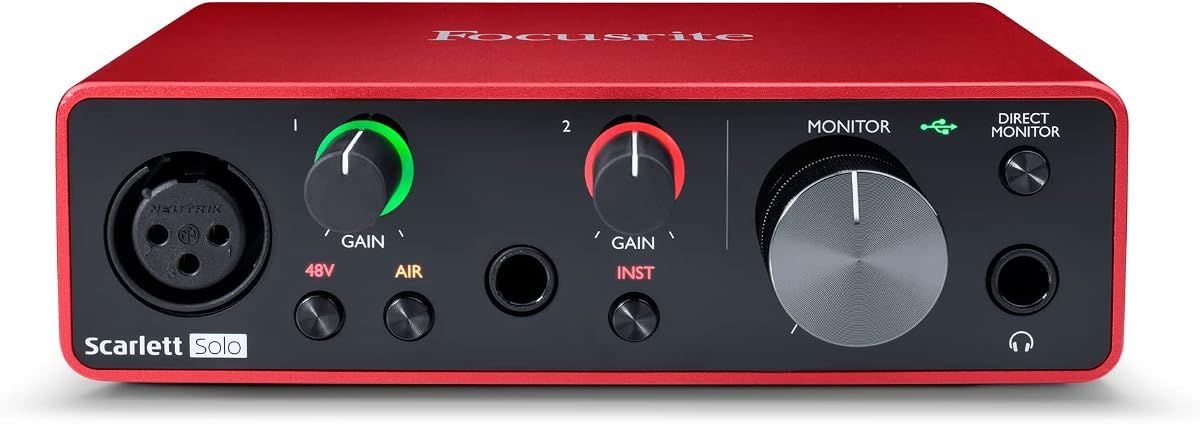
The Focusrite Scarlett Solo 3rd Gen stands out as a top choice for guitarists seeking studio-quality recording. With a 4.6-star rating, users praise its high-performance converters and mic preamps that deliver bright, clear audio. Its Gain Halo lights help you avoid clipping, ensuring your guitar signals are captured with precision.
We may earn a commission when you buy through this link, at no additional cost to you.
This interface shines with its high-headroom instrument inputs, allowing your guitar to shine through without unwanted distortion. The switchable Air mode adds clarity to acoustic tones, making it versatile for various styles. Included software like Pro Tools Intro and Ableton Live Lite provides everything needed to start recording immediately.
While it offers only two inputs, this is often sufficient for solo artists or small bands. The lack of onboard DSP means monitoring relies on DAW processing, which might add slight latency without direct monitoring features. However, its robust build and industry standard reliability make these trade-offs acceptable for most home setups.
If you want a professional starting point that balances quality and ease of use, this is the pick. It is ideal for musicians who value clear tone and reliable hardware. With its included software suite, you can create full productions without additional costs, making it a smart investment for your studio.
Designed to handle bright signals without clipping, ensuring your guitar tone remains dynamic and detailed.
Includes essential DAWs and effects to streamline your workflow from recording to mastering.
We may earn a commission when you buy through this link, at no additional cost to you.
The Fender Quantum HD 2 is a powerhouse for serious musicians needing high-resolution recording. With a front-facing instrument input optimized for transparent capture, it delivers pristine tone. The 32-bit/192kHz converters ensure professional clarity that suits detailed studio work and high-fidelity streaming.
We may earn a commission when you buy through this link, at no additional cost to you.
Its MAX-HD mic preamps and ADAT expansion support allow for hybrid studio growth. The included Fender Amp & FX Pack in the Fender Studio app provides authentic amp models, essential for guitarists wanting classic tones. Auto Gain simplifies setup, and dual re-amp outputs let you explore new sounds with external gear.
While the price is higher than entry-level interfaces, the feature set justifies the investment for those needing flexibility. Registering for the app is a minor step to unlock software value. This interface is built for creators who demand precision and want seamless integration with Fender's ecosystem.
Choose this if you need a full-featured interface that scales with your studio. It offers professional tools like loopback routing and remote control. With its robust build and extensive connectivity, it supports both guitar recording and broader audio production tasks effectively.
Access a complete collection of iconic amp sounds directly through the Fender Studio app.
ADAT and S/PDIF I/O options allow you to expand your setup as your needs grow.
We may earn a commission when you buy through this link, at no additional cost to you.
The MAONO PS22 Lite is an affordable option that delivers impressive audio resolution. With 24-bit/192kHz recording, it captures details clearly for streaming and podcasting. Its 106dB dynamic range ensures minimal noise, making it great for guitar and vocal recordings without breaking the bank.
We may earn a commission when you buy through this link, at no additional cost to you.
It features a dedicated instrument input and supports condenser microphones with 48V phantom power. The included ProStudio Routing Software offers virtual channels and ASIO drivers for low-latency output. This makes it versatile for content creators who need more than just basic playback functionality.
The compact design fits easily in a travel kit, though its simplicity means fewer advanced controls. Drivers must be selected correctly in your software, which can be a hurdle for beginners. Still, for the price, it offers a solid foundation for starting your recording journey.
Ideal for hobbyists and streamers on a budget, this interface balances performance and cost. It works well with popular DAWs like Ableton and Cubase. With direct monitoring and intuitive mode switching, it lets you focus on creativity without technical distractions.
Delivers studio-quality sound resolution for professional-sounding recordings and streams.
ProStudio software allows complex setups for live streaming and multi-track projects.
We may earn a commission when you buy through this link, at no additional cost to you.
The Fender AudioBox GO is designed for musicians on the move. Its ultra-compact 2×2 design fits in a pocket, and bus power eliminates the need for extra chargers. With pristine 24-bit/96kHz converters, it ensures high-quality audio for mobile recordings and live sessions.
We may earn a commission when you buy through this link, at no additional cost to you.
It features an XLR mic input with phantom power and a dedicated TS instrument input optimized for guitar. Zero-latency headphone monitoring with mix control allows you to track and perform seamlessly. This interface is particularly convenient for quick demos or travel jams.
While it includes a 6-month trial for Fender Studio Pro, long-term access requires an upgrade. Its small size limits physical controls, but the simplicity helps beginners. For those prioritizing portability, this device offers reliable performance without compromising on sound clarity.
Choose this for its ease of use and mobile-friendly features. It connects easily to phones, tablets, and computers. Whether you are recording in a hotel room or a home studio, its compact form factor ensures you never miss a creative idea.
A compact design that allows you to record high-quality audio anywhere without extra gear.
Compatible with virtually all macOS and Windows systems for universal recording.
We may earn a commission when you buy through this link, at no additional cost to you.
The M-AUDIO M-Track Duo is a solid choice for those seeking value. With 48kHz resolution and Crystal Preamps, it delivers clear audio for podcasts and music. Its two combo inputs allow you to connect guitars and microphones simultaneously, offering flexibility for small projects.
We may earn a commission when you buy through this link, at no additional cost to you.
Features like the USB/Direct switch enable zero-latency monitoring, essential for tracking performances. The included MPC Beats software provides essential production tools, making it a great starting point. Its compact design and fuss-free monitoring options ensure a smooth experience for beginners.
While it lacks higher sample rates, it covers most basic recording needs efficiently. The build is functional but simpler than premium options. For those needing a reliable interface without complex features, this model provides a straightforward path to quality sound.
Ideal for podcasters and musicians on a budget, it balances features and price. Its transparent preamps ensure your signal remains intact. Whether recording vocals or guitars, this interface offers a hassle-free introduction to home audio production.
Combo inputs let you connect multiple instruments and microphones for multi-track projects.
MPC Beats software gives you the tools to produce tracks right out of the box.
We may earn a commission when you buy through this link, at no additional cost to you.
The Sound Blaster Play! 3 is primarily an adapter for playback enhancement. While it includes a mic input, its main strength is delivering clear audio to headphones. With 24-bit/96kHz resolution, it improves sound quality for listening and light voice tasks without needing drivers.
We may earn a commission when you buy through this link, at no additional cost to you.
Its software control panel allows audio enhancements and optimized profiles for various earphones. This makes it easy to adjust sound settings for your preferred headphones. While not a full interface for recording, it solves the problem of poor built-in laptop audio.
Recording is possible but limited to basic voice or line inputs. It lacks dedicated instrument inputs, so using it for guitar may require extra adapters. For those needing a simple boost to audio quality, this adapter is a practical and cheap solution.
Choose this for improved listening quality and simple connections. It is perfect for streaming or gaming where microphone needs are minimal. Its plug-and-play design ensures you can get started immediately without technical hassle or software conflicts.
Optimized profiles ensure you get the best sound quality for your specific headphones.
Works straight out of the box, saving time on installation and configuration.
We may earn a commission when you buy through this link, at no additional cost to you.
The StarTech 7.1 USB Audio Adapter focuses on expanding output channels. It supports up to 7.1 surround sound for immersive playback. While it has a mic input, it is not optimized for high-fidelity recording. It is a reliable upgrade for laptops with limited audio capabilities.
We may earn a commission when you buy through this link, at no additional cost to you.
Its SPDIF optical passthrough and line-in options allow for digital audio connections. Volume and mute controls are physically accessible, making it user-friendly. For gamers or movie watchers, this adapter provides a significant improvement in surround sound experience.
Recording is basic and limited to standard rates like 48KHz. It does not support high-resolution recording needed for professional music. However, for general computing tasks and entertainment, it offers stable performance at a low cost.
Choose this if you need surround sound without complex setup. It is compatible with Windows systems and handles digital inputs well. For guitar recording, other options are better, but for audio playback, this adapter delivers value.
Delivers 7.1 channel audio for a more immersive listening environment.
Easy-to-use mute buttons and volume controls simplify daily audio management.
We may earn a commission when you buy through this link, at no additional cost to you.
The Synido A10 stands out with its wireless backing track feature. This lets you stream accompaniment from one phone to another, perfect for jamming. Its 24-bit/48kHz resolution ensures clear audio, and the aluminum body adds durability. It is built for modern musicians who need mobility.
We may earn a commission when you buy through this link, at no additional cost to you.
It features zero-latency monitoring via a dedicated switch, ensuring real-time tracking. Continuous power support lets you record while charging, reducing downtime. Independent volume buttons allow precise control over inputs and headphones, making performance adjustments intuitive.
The interface is compatible with phones and tablets, expanding its utility beyond computers. While software support is not as extensive as desktop interfaces, its unique wireless feature fills a niche for solo practice. It is a great tool for composition and mobile recording.
Ideal for guitarists who need to practice with backing tracks without cables, this interface offers a fresh approach. It supports Android and iOS devices. With its secure connector and portable design, it fits easily into your daily creative routine.
Stream accompaniment seamlessly to your recording phone for effortless practice and performance.
Works with iPhones and tablets for recording on the go without complex setups.
We may earn a commission when you buy through this link, at no additional cost to you.
The Cubilux CB5 functions as a USB audio hub allowing multi-track recording. Its Hi-Res DAC supports sampling rates up to 96kHz, ensuring decent clarity for performances. The compact design requires no external power, making it convenient for travel and on-the-go sessions.
We may earn a commission when you buy through this link, at no additional cost to you.
It features stereo microphone and line-in jacks for connecting instruments and mics. Assigning device names helps manage separate inputs for layered recordings. Its clean sound and portable nature make it suitable for content creators needing quick setups.
While line-out and audio output cannot be used simultaneously, this is a manageable limitation. It lacks advanced mixing controls but covers basic needs well. For those needing more inputs without complex gear, this device offers practical flexibility at a good price.
Choose this if you need a simple hub for multi-track recording. Its 24-bit conversion handles most audio tasks smoothly. With zero setup hassle, it lets you record wherever inspiration strikes without carrying extra equipment.
Supports multi-device recording for creating layered audio projects efficiently.
Delivers clean audio output suitable for professional content creation.
We may earn a commission when you buy through this link, at no additional cost to you.
The Cubilux 7.1 USB focuses on surround sound playback. It supports 7.1 and 5.1 audio for gaming and music. The aluminum case isolates interference, ensuring clean signals. With sample rates up to 384kHz, it delivers Hi-Res music quality for premium listening.
We may earn a commission when you buy through this link, at no additional cost to you.
Its hardware supports line-in and stereo mic inputs, but these are standard rather than specialized. The plug-and-play design works seamlessly with most PCs and MacBooks. While not a dedicated recording tool, it enhances audio playback significantly.
Windows XP compatibility is absent, so check your system. It is a strong choice for users seeking better sound quality without installing drivers. For guitarists focusing on monitoring, it may lack specific optimization, but the audio quality is robust.
Choose this for premium audio output and a durable build. It supports streaming services with high-resolution files. For entertainment and general audio tasks, this sound card offers a reliable and immersive experience.
Supports high sample rates to deliver detailed music and movie sound.
Aluminum housing prevents interference and protects against physical damage.
We may earn a commission when you buy through this link, at no additional cost to you.
Selecting the right external sound card for guitar involves evaluating technical specs and usability. Use these factors to find a model that matches your recording goals and budget.
Look for dedicated instrument inputs with high headroom to capture guitar signals cleanly. XLR combo jacks are useful if you also plan to record vocals. Check if phantom power is available for condenser mics.
Prioritize interfaces with proper impedance matching to preserve tone and reduce noise.
Higher resolution like 24-bit/96kHz ensures detailed audio. While 48kHz is sufficient for most streaming, higher rates help for professional mastering. Check if your DAW supports these rates.
Choose models that offer at least 24-bit depth for dynamic recordings.
Direct monitoring allows you to hear your guitar in real time without DAW delay. Zero-latency monitoring is crucial for comfortable recording sessions. Interfaces with hardware mixers let you control levels independently.
Ensure the interface offers direct monitoring switches to avoid lag.
Metal enclosures resist heat and physical damage. Compact interfaces are easier to carry for mobile recording. Consider bus-powered models to reduce cable clutter.
Prioritize sturdy builds if you travel frequently with your gear.
Bundled DAWs and amp models add value. ASIO drivers ensure low latency on Windows systems. Compatibility with macOS and major apps is essential.
Select interfaces with reliable driver support to avoid crashes.
USB-C is modern and offers fast data transfer. Check for MIDI or additional digital outputs if you expand your studio. Ensure your computer has compatible ports.
USB-C is preferred for modern devices and simpler cabling.
Entry-level models cost less but may lack features. Mid-range interfaces offer better preamps and stability. Set a budget based on your needs rather than extra specs.
Balance cost with essential features like clean preamps.
A reliable warranty covers manufacturing faults. Check if the manufacturer offers tech support or software updates. Longer warranties reflect confidence in build quality.
Choose brands with a history of good support.
Connect your guitar to the instrument input using a quality 1/4-inch cable. Select the correct input source on your computer's audio settings. Open your DAW and assign the interface as the input device.
Adjust the input gain until your signal peaks around -12dB. Use direct monitoring to hear yourself without lag. If you use phantom power, ensure your microphones are compatible.
Store the interface in a dry, dust-free area. Use padded cases during travel to protect connectors. Keep firmware updated via the manufacturer's website for optimal performance.
Yes, most external sound cards are compatible with macOS. Ensure the driver is installed and your DAW recognizes the interface. Apple devices support USB audio natively for most models.
Some interfaces are plug-and-play, while others need ASIO drivers for low latency. Check the manufacturer's site for software. Drivers are essential for best performance on Windows.
Yes, 48kHz is standard for most streaming and home recording. Higher rates like 96kHz are useful for professional mastering. Choose based on your final output needs.
Yes, if the interface has multiple inputs. Look for combo jacks or separate instrument and mic inputs. This setup allows simultaneous tracking without extra hardware.
Latency occurs if you rely on software monitoring. Use direct monitoring to hear input instantly. Adjust buffer sizes in your DAW to reduce lag.
Interfaces often have better preamps and instrument inputs. Sound cards are typically for playback or basic mic use. Interfaces are optimized for music production.
No, electric guitars do not need phantom power. It is only for condenser microphones. Ensure you can disable phantom power to avoid damaging instrument inputs.
The top three picks offer distinct strengths for various needs. The Focusrite Scarlett Solo 3rd Gen is our Editor's Choice for quality. Fender Quantum HD 2 offers premium features, and MAONO PS22 Lite leads in budget options.
Prioritize inputs, monitoring, and software compatibility when choosing. Ensure your interface matches your studio size and creative goals. The right gear will help you capture your tone with clarity.
Prices and availability can change, so verify current details before purchasing. Check for bundled software updates and warranty terms. With the right sound card, your recordings will sound professional.