
EVISTR 64GB Digital Voice Recorder
4.2Editor score
64GB high capacity memory
Voice activated recording
USB-C fast charging
This guide compares the top ten handheld recorders for journalists based on audio quality, battery life, portability, and essential field recording features
Journalists need reliable tools to capture clear audio in any environment. A good handheld recorder ensures interviews, meetings, and ambient sounds are recorded with precision and clarity for broadcast or publication.
We evaluated ten top models based on microphone quality, storage capacity, battery endurance, and ease of use in the field. Each device was analyzed for its ability to handle noisy settings and deliver professional results.
Each pick highlights key strengths and ideal use cases for different reporting styles. Please note that availability and pricing may change, so verify details before purchasing your next essential recording device.
4.2Editor score

4.7Editor score
4.2Editor score
The following table provides a side-by-side comparison of all ten selected models, highlighting their core specifications and unique capabilities for field reporting.




The Zoom H5 stands out as a top choice for journalists needing versatile audio capture. With its interchangeable capsule system, it adapts to various recording environments effortlessly.
We may earn a commission when you buy through this link, at no additional cost to you.
Its four-track simultaneous recording capability allows for complex setups, while the XLR inputs support external microphones for enhanced fidelity in noisy settings.
Though battery life is moderate and the unit is somewhat heavy, the flexibility it offers justifies these trade-offs for serious field work.
Journalists seeking a reliable, adaptable tool for interviews and field recordings will find the H5 an excellent investment for their toolkit.
The interchangeable capsule system allows users to swap microphones based on the specific recording scenario, ensuring optimal sound capture in any environment.
With XLR inputs and four-track recording, the H5 supports professional workflows, making it suitable for complex interviews and multi-source audio capture.
We may earn a commission when you buy through this link, at no additional cost to you.
The EVISTR 64GB offers exceptional value for journalists on a budget. Its substantial storage and voice-activated features make it practical for long recording sessions.
We may earn a commission when you buy through this link, at no additional cost to you.
With PCM noise reduction and a durable metal body, it delivers clear audio despite its affordable price point. The USB-C charging adds convenience for modern workflows.
However, the build quality is basic and it lacks external mic inputs, which may limit advanced use cases.
Ideal for students and entry-level reporters, this recorder provides reliable performance without straining finances.
With 64GB of internal memory, users can store thousands of hours of audio, ensuring they never run out of space during extended reporting trips.
The voice-activated recording feature conserves battery and storage by starting only when sound is detected, streamlining playback and reducing silent segments.
We may earn a commission when you buy through this link, at no additional cost to you.
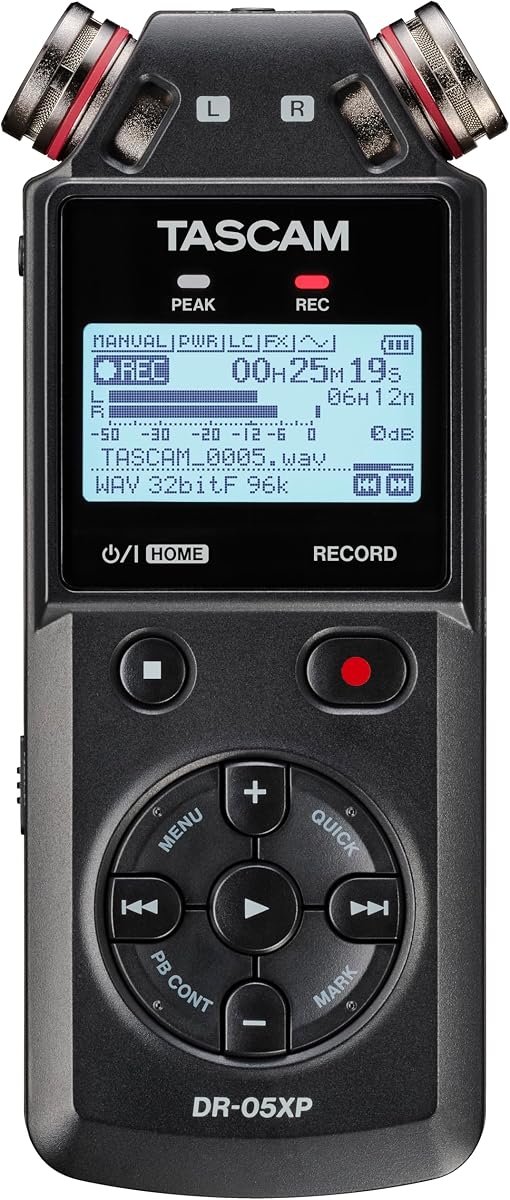
The TASCAM DR-05XP brings premium 32-bit float recording to a portable form factor, ensuring audio integrity even in unpredictable sound environments.
We may earn a commission when you buy through this link, at no additional cost to you.
Its omnidirectional condenser microphones handle loud inputs without distortion, while the USB-C interface allows seamless integration with computers for quick file transfers.
While it lacks Bluetooth and advanced features, its focus on core recording quality makes it a robust tool for professional use.
Journalists prioritizing audio fidelity and reliability will appreciate this recorder's ability to capture pristine sound effortlessly.
32-bit float recording eliminates the risk of clipping, allowing journalists to capture loud sounds without manual gain adjustment or fear of distortion.
The USB-C audio interface enables direct connection to computers, facilitating rapid file transfers and easy integration into post-production workflows.
We may earn a commission when you buy through this link, at no additional cost to you.
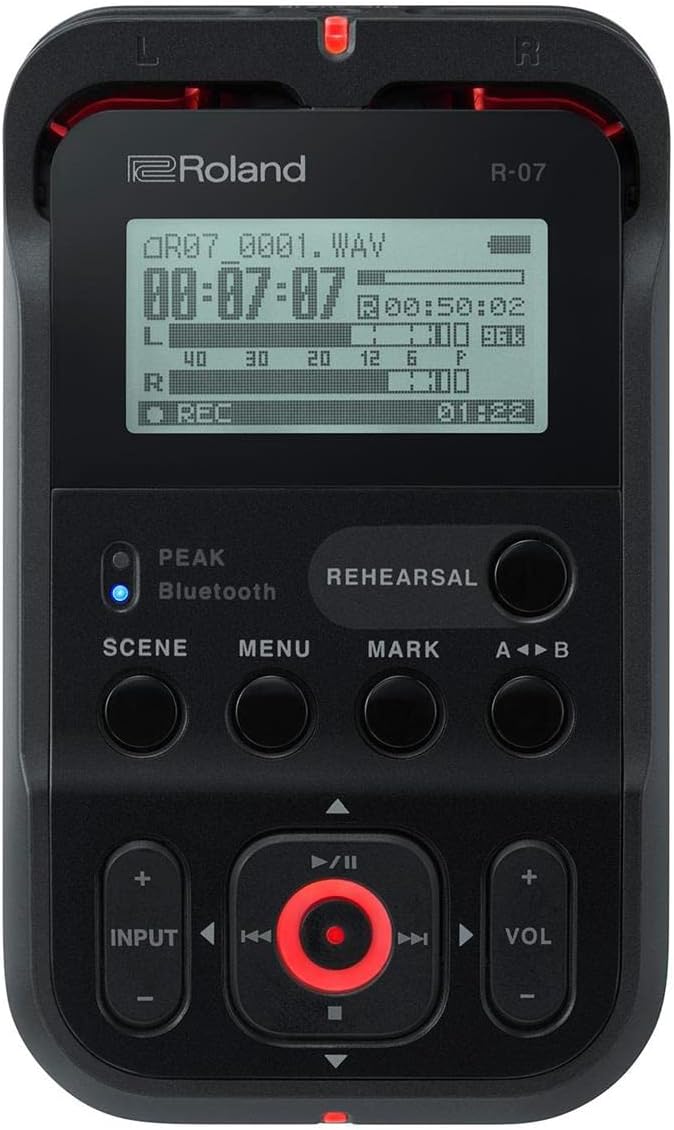
The Roland R-07 offers high-resolution audio with the added convenience of Bluetooth monitoring, allowing journalists to listen in real-time via supported devices.
We may earn a commission when you buy through this link, at no additional cost to you.
Its one-touch templates simplify setup, and the extensive battery life ensures it lasts through long reporting assignments without interruption.
Although it carries a higher price and uses micro SD cards, its professional features justify the investment for those needing quality and convenience.
This recorder is well-suited for journalists who value wireless flexibility and reliable performance in diverse environments.
Bluetooth connectivity enables low-latency wireless monitoring, letting users hear recordings instantly on connected speakers or headphones for immediate feedback.
One-touch templates allow quick configuration for different recording scenarios, reducing setup time and ensuring readiness for spontaneous interviews.
We may earn a commission when you buy through this link, at no additional cost to you.
The Tonfarb 64GB emphasizes simplicity with one-click recording and saving, making it easy to capture moments without fumbling for controls.
We may earn a commission when you buy through this link, at no additional cost to you.
Its password protection adds security for sensitive recordings, and the large screen enhances navigation efficiency during field work.
While the build feels basic and audio specs are limited, its user-friendly design appeals to those prioritizing ease of use.
Journalists needing a straightforward, secure recorder for quick notes and interviews will find this model practical.
Instant one-click recording ensures users never miss a moment, as the device can start capturing audio even when powered off.
Password protection safeguards important files, providing peace of mind when storing sensitive interview data or confidential audio.
We may earn a commission when you buy through this link, at no additional cost to you.
The Tascam DR-40 offers dependable four-track recording in a portable package, suitable for journalists needing versatile audio capture capabilities.
We may earn a commission when you buy through this link, at no additional cost to you.
Its sturdy construction and consistent performance make it a trusted tool for field use, though it lacks modern streaming features.
While some features feel dated, the recorder delivers solid audio quality that meets professional standards for various applications.
Those seeking a proven, reliable recorder for interviews and ambient sound will appreciate its consistent results.
The DR-40 is known for its consistent audio capture, making it a reliable choice for journalists who cannot afford technical failures in the field.
With four-track capabilities, it supports multi-source recording, useful for capturing dialogue and ambient sound simultaneously.
We may earn a commission when you buy through this link, at no additional cost to you.
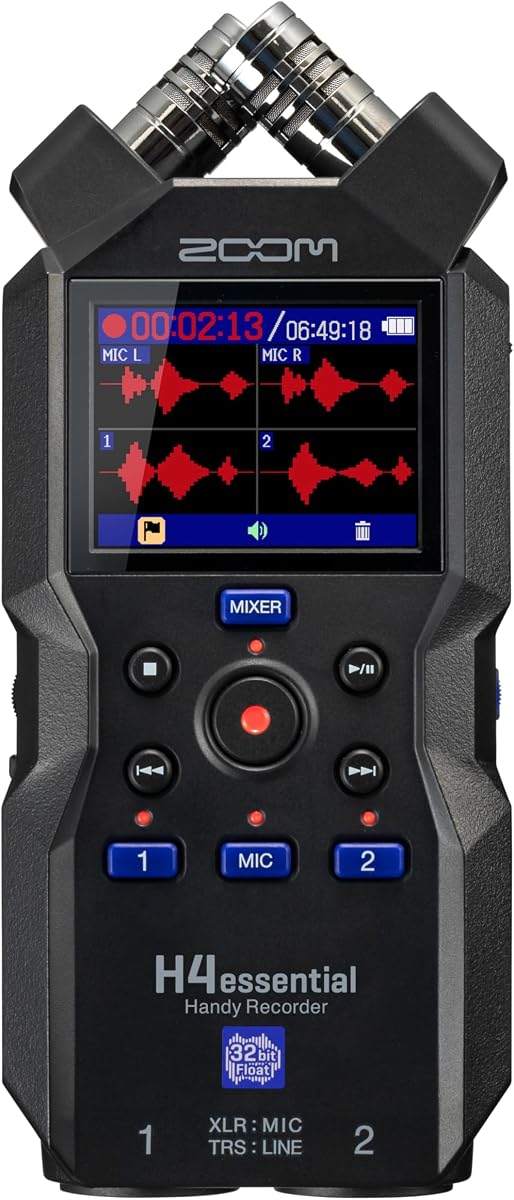
The Zoom H4 Essential simplifies recording with spoken menu guidance, making it accessible for users of all experience levels.
We may earn a commission when you buy through this link, at no additional cost to you.
Its USB-C connection supports streaming and recording, while SD card backup ensures data safety during important sessions.
Although build quality varies and gain range is limited, its user-friendly design appeals to those seeking straightforward operation.
Journalists needing an accessible, versatile recorder for interviews and podcasts will find the H4 Essential suitable.
Spoken menu guidance makes the device more accessible for visually impaired users and simplifies navigation for all users.
USB-C connectivity allows the recorder to function as a microphone for livestreams and remote meetings, adding modern utility.
We may earn a commission when you buy through this link, at no additional cost to you.
The Pocket AI Voice Recorder transforms interviews with automatic transcription and summarization, helping journalists quickly extract key insights from recordings.
We may earn a commission when you buy through this link, at no additional cost to you.
Its MagSafe compatibility and long battery life support hands-free recording during travel and busy schedules.
While advanced features require a subscription and audio control is limited, the AI capabilities significantly streamline post-recording work.
Modern journalists prioritizing efficiency and quick data analysis will find this AI-powered tool highly valuable.
Automatic summarization and action item extraction allow users to review conversations quickly without listening to entire recordings.
One-tap recording and MagSafe compatibility ensure hands-free operation, perfect for capturing conversations discreetly and conveniently.
We may earn a commission when you buy through this link, at no additional cost to you.
The Zoom H1 Essential offers clear stereo audio in a lightweight, portable package, ideal for journalists needing quick and simple recording solutions.
We may earn a commission when you buy through this link, at no additional cost to you.
Its USB-C connection supports streaming for calls and podcasts, making it versatile for various reporting needs.
While storage is limited and external inputs are absent, its ease of use makes it a practical tool for many scenarios.
Journalists looking for an affordable, straightforward recorder for basic interviews will appreciate its simplicity.
Designed for ease of use, the H1 Essential allows quick setup and recording, minimizing technical hurdles for field reporters.
USB streaming support enables the device to function as a microphone for remote work, adding utility beyond basic recording.
We may earn a commission when you buy through this link, at no additional cost to you.
The Zoom H2 Essential stands out with full audio accessibility features, including audible menu navigation, supporting users with visual impairments.
We may earn a commission when you buy through this link, at no additional cost to you.
Its three-microphone system and 32-bit float recording provide excellent audio safety and versatility for different field scenarios.
While the interface can feel complex and charging is required, these features make it a unique and robust choice.
Journalists valuing accessibility and advanced audio capabilities will find this model well-suited for inclusive reporting.
Audible menu navigation in seven languages ensures full accessibility for blind and visually impaired users, promoting inclusive content creation.
32-bit float recording ensures recordings remain clear even without adjusting gain, providing confidence in unpredictable acoustic environments.
We may earn a commission when you buy through this link, at no additional cost to you.
Selecting the right handheld recorder involves considering several critical factors to ensure your device meets professional standards for field reporting.
High-resolution recording formats like 32-bit float or 24-bit WAV provide superior dynamic range, preventing clipping in loud environments and preserving subtle details in quiet settings.
Look for devices offering 32-bit float or 24-bit recording to ensure your audio remains clear and distortion-free regardless of volume fluctuations.
Omnidirectional microphones capture sound from all directions, ideal for group interviews or ambient noise, while directional microphones focus on specific sources for clearer dialogue.
Choose a microphone configuration that matches your typical reporting scenarios to optimize sound capture in varied environments.
Extended battery life is essential for long field assignments; consider devices with rechargeable batteries or options for standard AA batteries that can be easily replaced.
Prioritize recorders offering at least 10 to 15 hours of continuous operation to avoid interruptions during critical reporting.
Journalists often record hours of audio, so large internal storage or support for expandable memory cards ensures you never run out of space during trips.
Opt for models with 64GB or more internal storage or SD card slots for convenient expansion of recording capacity.
A durable and compact design ensures the recorder can withstand rugged field conditions and fit easily into pockets or bags for on-the-go reporting.
Select a device with a sturdy build and ergonomic controls to maintain reliability and ease of use during travel.
USB-C or USB interfaces facilitate easy file transfers and computer integration, while XLR inputs allow for external microphones to enhance audio quality.
Ensure the recorder supports your workflow by offering necessary connection types for quick data transfer and external equipment support.
Features like voice activation, Bluetooth connectivity, and accessibility options improve convenience and usability for diverse needs and environments.
Evaluate extra features to determine which ones add value to your specific reporting style and requirements.
While budget is a consideration, investing in a recorder that balances cost with performance and durability ensures long-term value for your reporting work.
Focus on finding a device that offers the necessary features without unnecessary expense, prioritizing reliability and audio quality.
Before recording, always check battery levels and ensure adequate storage space to avoid interruptions. Test microphone settings and gain levels in the environment to prevent distortion or low-quality audio.
During use, hold the recorder steady to minimize handling noise and avoid covering built-in microphones with your hand. If using external mics, connect them securely to ensure stable audio capture.
After recording, transfer files regularly to a computer or cloud storage to preserve data. Store the device in a dry, protective case and clean microphones gently with a soft cloth to maintain performance.
A suitable handheld recorder offers high audio quality, long battery life, and durable construction for field use. It should have easy controls for quick operation and sufficient storage for extended interviews or recordings.
Many modern handheld recorders include USB-C or Bluetooth connectivity, allowing them to connect to smartphones for file transfers or streaming. Check device specifications to ensure compatibility with your phone model.
Built-in microphones on high-quality recorders are often sufficient for most field interviews. However, external microphones can improve audio clarity in noisy environments or for specialized recording needs.
Battery life varies by model but ranges from 10 hours to several days depending on usage and power settings. Rechargeable batteries and AA battery options offer flexibility for different reporting conditions.
Many handheld recorders support SD or microSD cards to expand storage capacity. Always check if the model includes slots for memory cards if you plan to record extensively.
Regularly transfer audio files to secure storage such as computers or cloud services. Avoid removing power abruptly during recording or file transfers to minimize risk of data corruption.
Choosing the best handheld recorder depends on your specific needs and budget. The Zoom H5 offers versatile professional features, the EVISTR 64GB provides excellent value, and the TASCAM DR-05XP delivers premium audio safety.
Prioritize audio quality, battery life, and portability to ensure your recorder supports your field work reliably. Select models that align with your reporting style and offer the features that enhance your productivity.
Remember that availability and pricing may change, so verify current details before purchasing. Investing in a reliable recorder will help you capture clear, professional audio consistently.