
Bambu Lab A1
4.7Editor score
Full auto calibration
Multi-color printing ready
Quiet operation mode
Finding the right 3D printer for Dnd Miniatures can transform your tabletop gaming experience. Whether you prefer resin detail or FDM speed, the right machine brings your characters to life with precision and ease.
We evaluated ten leading models based on print quality, speed, ease of use, and compatibility with miniature designs. Each product was selected for its ability to deliver high-resolution results suitable for intricate fantasy and sci-fi figures.
Every pick below highlights specific strengths for gaming enthusiasts, from budget-friendly options to professional-grade systems. Note that product availability and pricing may change, so verify current details before purchasing your new printer today.
4.7Editor score

4.4Editor score

4.5Editor score
As an Amazon Associate we earn from qualifying purchases.
This side-by-side comparison highlights key specifications across all ten models to help you quickly identify which printer matches your specific needs for printing miniatures, props, and terrain for your tabletop games.






The Bambu Lab A1 stands out as the top choice for beginners seeking professional results without the complexity. With a 4.7 rating, it delivers high-speed precision and multi-color capabilities that make printing detailed miniatures faster than ever before.
We may earn a commission when you buy through this link, at no additional cost to you.
Its full-auto calibration and active flow rate compensation ensure every layer is perfect, reducing failed prints significantly. The 10,000 mm/s² acceleration allows you to churn out multiple figures quickly, saving time for painting and gaming sessions.
While it lacks an enclosed chamber for high-temperature filaments, it handles standard PLA and PETG perfectly for most miniature needs. The only trade-off is buying the AMS lite separately for multi-color prints, which is a reasonable extra cost for the quality gained.
If you want a printer that works right out of the box with minimal setup time, the A1 is the clear recommendation. It balances speed, ease of use, and print quality better than most competitors in this price range today.
The high acceleration and speed settings mean you can print complex miniatures in a fraction of the time compared to older models.
Automatic bed-leveling and Z-offset adjustments remove the guesswork, ensuring consistent first layers every time you start a print.
We may earn a commission when you buy through this link, at no additional cost to you.
The Bambu Lab P2S Combo is engineered for users who demand the highest quality multi-color prints for their tabletop games. Its inclusion of the AMS 2 Pro enables effortless switching between materials and colors without manual intervention or purging waste.
We may earn a commission when you buy through this link, at no additional cost to you.
With AI failure detection and adaptive airflow, it maintains consistent temperatures to prevent warping on complex figures. The filament drying feature ensures every spool is ready, avoiding moisture issues that can ruin delicate miniature details during long prints.
While the investment is higher than entry-level printers, the time saved on manual color changes and higher success rates justify the cost for serious hobbyists. It streamlines the entire workflow from design to finished product seamlessly.
Choose the P2S if you need reliable multi-material capabilities and want to minimize downtime. It is a robust machine that grows with your skills, offering endless creativity through its unified ecosystem and smart features.
The AMS 2 Pro keeps spools dry up to 65°C, ensuring consistent extrusion and preventing bubble formation in your prints.
Sensors monitor prints in real time to pause or alert you if issues arise, saving you from wasting hours on failed jobs.
We may earn a commission when you buy through this link, at no additional cost to you.
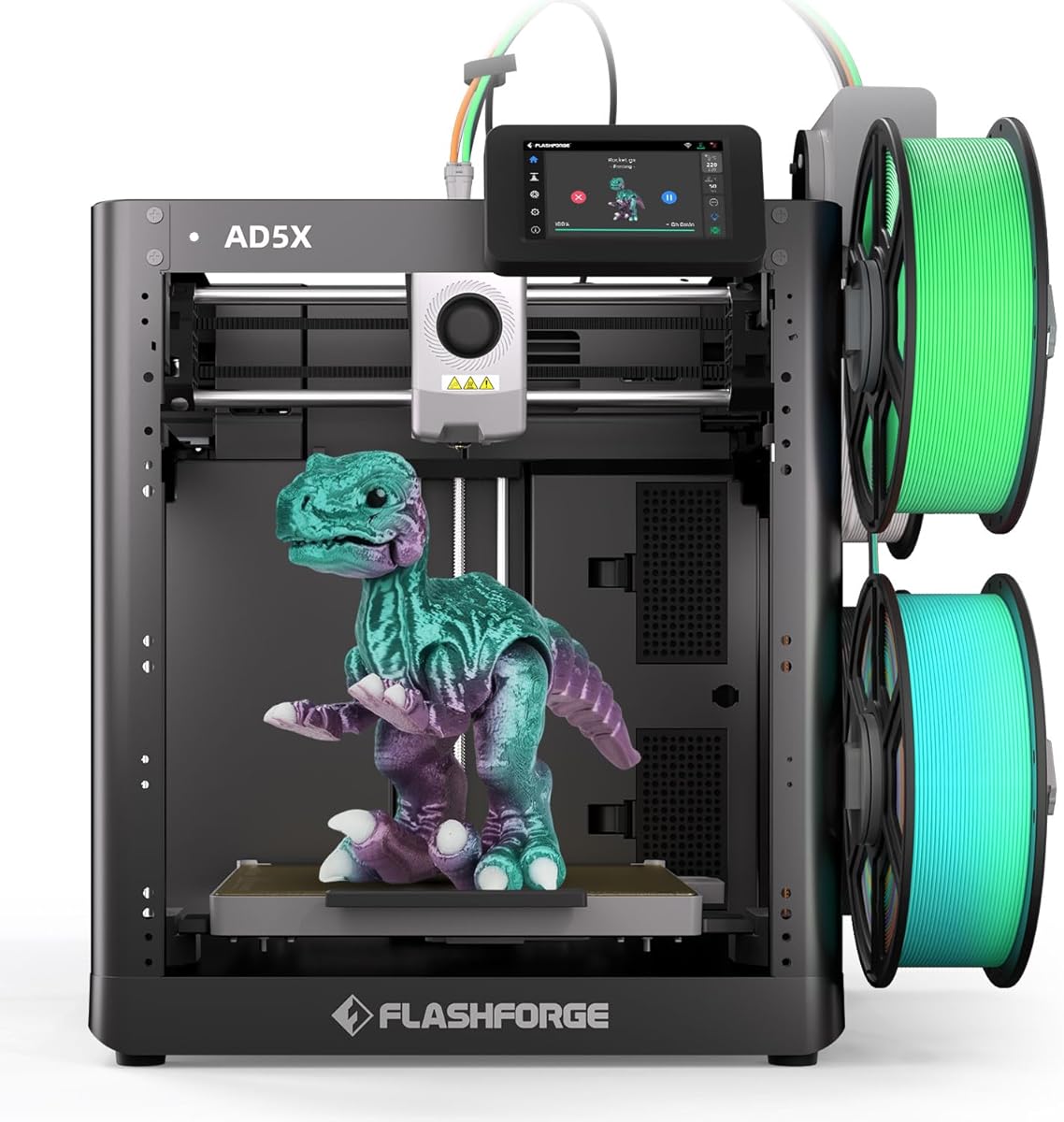
The FLASHFORGE AD5X brings vibrant multi-color printing to a competitive price point, making it attractive for gamers wanting custom color schemes. The Intelligent Filament System ensures seamless refills so you can focus on creative designs rather than monitoring spools constantly.
We may earn a commission when you buy through this link, at no additional cost to you.
Its high-speed performance and 300°C nozzle allow for a wide range of materials, including engineering-grade filaments. The Core XY structure minimizes vibrations for smoother surfaces on detailed miniatures that need sharp edges and fine features.
While the rating reflects some setup quirks, the multi-color capability is a standout feature for adding depth to your painted figures. It offers significant value for those who want advanced features without the high cost of premium brands.
Ideal for artists who want to experiment with complex color mixes, the AD5X delivers versatility. With a large build volume, you can print multiple miniatures in one job, maximizing efficiency for bulk production runs.
The IFS automatically detects and refills filament, minimizing downtime and letting you walk away from long prints safely.
At 300°C, it handles high-performance materials that standard printers can't, expanding your options for durable props.
We may earn a commission when you buy through this link, at no additional cost to you.
For ultra-fine detail on miniatures, the Phrozen Sonic Mini 8K S is the top pick with its 22 micron XY resolution. It brings your figures to life with sharp textures and smooth surfaces that are hard to achieve with FDM printers alone.
We may earn a commission when you buy through this link, at no additional cost to you.
The 7.1-inch monochrome LCD allows for fast printing while maintaining high quality across the build volume. Its support for popular slicers like Lychee and Chitubox gives you the freedom to customize settings for specific miniature designs easily.
Resin printing requires more post-processing like washing and curing, but the level of detail is worth the effort for serious collectors. It is compact enough for home desks and priced well for beginners entering the resin space.
If you prioritize fine details over speed or multi-material options, this model is the clear winner. It transforms complex designs into tangible reality, making every miniature a unique piece of art ready for your collection.
The 22 micron XY resolution captures tiny features like facial expressions and fabric folds with stunning clarity.
Support for open source software means you can choose the slicer you prefer without hardware restrictions.
We may earn a commission when you buy through this link, at no additional cost to you.
The Bambu Lab P1S offers an enclosed design that improves print performance for advanced filaments like ABS and ASA. It is ideal for those who want durability in their miniatures or plan to print structural props that need to withstand higher stress.
We may earn a commission when you buy through this link, at no additional cost to you.
With speeds up to 500mm/s and auto bed leveling, it balances performance and ease of use effectively. You can spend more time creating and less time troubleshooting thanks to its reliable hardware and software integration.
While it does not include the AMS out of the box, the potential for 16-color prints via an add-on makes it a versatile long-term investment. The enclosed chamber helps maintain consistent temperature to prevent warping on larger prints.
For gamers who need both speed and material versatility, the P1S is a strong choice. It bridges the gap between beginner and professional machines, offering features that will serve you as your skills grow.
The enclosed body stabilizes temperature, crucial for printing engineering materials without warping or cracking.
Support for ABS, ASA, and TPU means you can print parts that require strength or flexibility.
We may earn a commission when you buy through this link, at no additional cost to you.
The FLASHFORGE Adventurer 5M Pro is designed for users who need speed and quiet operation in a home office or bedroom. Its dual filtration system and noise control keep the environment comfortable while your prints run in the background.
We may earn a commission when you buy through this link, at no additional cost to you.
With a 3-second quick-swap nozzle and auto leveling, setup is minimal and efficient for quick jobs. The smart camera allows you to monitor progress from your phone, giving peace of mind when you are away from the machine.
While it may not match the top ratings of others, its ease of use and speed are significant advantages for busy gamers. The high-temperature extruder opens up more material choices for durable gaming accessories.
If you value a clean, quiet workspace and rapid printing for prototypes, this is a great fit. It offers practical features that streamline the printing process without requiring constant supervision or manual adjustments.
Swap nozzles in just 3 seconds, allowing you to adapt quickly between different print sizes without tools.
Check progress remotely with time-lapse capability, letting you manage prints while working elsewhere.
We may earn a commission when you buy through this link, at no additional cost to you.
The FLASHFORGE AD5X Multi-Material version enhances productivity with a focus on four-color printing and full auto calibration. It is built for users who want to produce detailed figures quickly while experimenting with mixed material properties.
We may earn a commission when you buy through this link, at no additional cost to you.
Its CoreXY structure and vibration compensation ensure precise alignment even at high speeds. This reduces defects and improves surface quality on complex prints, making it suitable for detailed miniature production.
The modular design saves space while accommodating four spools, which is excellent for smaller workspaces. However, the initial setup may require patience to dial in settings for best results with multiple colors.
For those looking to maximize color options without a huge budget, this printer offers strong value. It combines speed and multi-material capability into one unit that can handle a variety of creative projects.
Print with PLA, PETG, and TPU simultaneously to create functional and colorful parts in one go.
The compact side-by-side spool design fits easily on standard desks without taking up much room.
We may earn a commission when you buy through this link, at no additional cost to you.
The Bambu Lab A1 Mini Combo brings the full A1 experience to a smaller footprint, perfect for those with limited desk space. It includes the AMS lite, so you can start multi-color printing right away without extra purchases.
We may earn a commission when you buy through this link, at no additional cost to you.
With 10,000 mm/s² acceleration and active flow compensation, it maintains high precision even in a compact frame. The pre-assembled design means setup is fast, letting you get to your first print in just 20 minutes.
While the build volume is smaller, it is perfect for individual miniatures and small props. The quiet operation makes it suitable for home environments where noise could be a distraction during gameplay or work.
If you want multi-color capability in a small package, this is an excellent choice. It balances portability and performance well for hobbyists who prioritize color variety and ease of use over massive print sizes.
Despite its size, it delivers full multi-color performance, ideal for desktop gaming setups.
Pre-assembled design reduces setup time significantly so you can start printing immediately.
We may earn a commission when you buy through this link, at no additional cost to you.
The Snapmaker U1 is a premium professional system that redefines multi-color printing with a four-toolhead design. It allows for true multi-material printing where rigid and flexible parts combine seamlessly, offering unmatched design freedom.
We may earn a commission when you buy through this link, at no additional cost to you.
With a 5-second tool changer and 5x less waste than traditional systems, it saves both time and material costs. The built-in model library and smart calibration make it easier to get started, even if you are new to advanced setups.
While the price reflects its professional capabilities, the reduction in waste and speed make it a strong long-term investment. It handles complex jobs like articulated models with soluble supports that are difficult on standard printers.
Choose the U1 if you are a serious creator needing top-tier multi-material options. It delivers professional-grade results with a workflow designed to maximize efficiency and minimize downtime during production runs.
Automatic tool switching reduces change time dramatically, allowing for continuous printing without pause.
Combine rigid and flexible materials to create complex, functional parts that would be impossible otherwise.
We may earn a commission when you buy through this link, at no additional cost to you.
The Anycubic Kobra X offers native 4-color printing with a simple setup process, making it accessible for new users. Its LeviQ 3.0 leveling system ensures bed flatness, reducing failures caused by inconsistent first layers during long print sessions.
We may earn a commission when you buy through this link, at no additional cost to you.
With smart AI monitoring and a vast library of preloaded models, it helps beginners find inspiration and troubleshoot issues quickly. The large model library provides a head start with thousands of designs ready to use.
Although filament is sold separately, the native 4-color design saves you from buying extra hardware. The dual-band Wi-Fi ensures stable remote control, which is convenient for managing prints from anywhere in the house.
For those who want a ready-to-go solution with built-in color features, the Kobra X is a solid option. It balances ease of use with advanced features that support long-term growth in your printing projects.
The 49-point calibration guarantees perfect first layers, reducing the risk of failed prints significantly.
Dual-band Wi-Fi connects reliably to your phone so you can track prints without walking to the printer.
We may earn a commission when you buy through this link, at no additional cost to you.
Choosing the right 3D printer requires balancing resolution, speed, budget, and post-processing needs to match your gaming goals.
For miniatures, high resolution is crucial to capture facial expressions and texture details. Resin printers like the Phrozen Sonic Mini offer 22 microns for crisp features, while FDM printers use finer nozzles to achieve similar results with less post-processing.
Look for printers with at least 0.2mm nozzles for FDM or 25 microns for resin to ensure your figures look sharp on the table.
If you print multiple characters or terrain, speed matters. Models with CoreXY structures like Bambu Lab can print at 500mm/s or more, significantly reducing wait times. Faster machines also mean more frequent updates to your gaming assets.
Prioritize acceleration metrics around 10,000 mm/s² for smooth high-speed printing without sacrificing detail quality.
Standard PLA is easy to print and odorless, making it ideal for beginners. However, some projects require PETG for durability or ABS for heat resistance, which need an enclosed chamber to prevent warping.
Check the printer's max nozzle temperature to ensure it can handle advanced materials if you plan to mix functional props with miniatures.
Multi-color systems like AMS allow you to print figures with distinct colors for different parts of the armor. This reduces the need for painting and adds realism to your miniatures right out of the printer.
Consider if you need a system that handles multiple filaments simultaneously versus a single-color machine you paint later for a cleaner look.
Beginners benefit from auto-bed leveling and one-click calibration features that remove manual adjustments. Printers with intuitive interfaces and pre-assembled designs get you printing faster without needing mechanical expertise.
Look for models that include auto flow compensation to ensure smooth lines without manual tuning of flow rates or retraction settings.
Resin printers require washing and curing, which adds steps before printing can begin. FDM printers are generally easier with minimal post-processing but may need support removal for overhangs on detailed figures.
Decide if you are comfortable with liquid resin safety and curing times or prefer the simpler workflow of filament printing for daily use.
Ensure the build volume fits your largest desired prints. A 220mmx220mmx220mm volume allows you to print multiple miniatures at once, saving time for bulk projects compared to smaller desktop models.
Measure your available desk space to choose a compact model if you have limited room for a dedicated printing station in your home.
Initial cost is important but consider long-term expenses like filament, resin, and replacement nozzles. Systems with closed loops or filament drying save money by reducing failed prints and waste over time.
Investing in a reliable machine often pays off through higher success rates and better print quality, lowering your cost per usable miniature in the long run.
Always start by calibrating the bed according to the manufacturer's instructions. For FDM printers, use the auto-leveling features if available, and for resin, ensure the tank is clean and properly filled with resin to avoid voids.
Keep the printing environment stable by avoiding drafts and temperature fluctuations. Use a draft shield or enclosure for high-temp materials, and place your printer on a vibration-free surface to ensure layer alignment remains consistent.
Maintain the machine regularly by cleaning the nozzle and checking for filament blockages. Replace worn parts like PTFE tubes or build plates as needed to maintain print quality and prevent unexpected failures during long jobs.
Yes, FDM printers can produce excellent miniatures if you use a 0.2mm nozzle and slow print speeds. While resin often gives finer detail, FDM is easier to manage and safer for beginners needing durable figures for gaming.
FDM printers generally emit fewer fumes compared to resin printers which require chemical handling and curing. Always ensure good ventilation regardless of the type you choose, and follow safety guidelines for your materials.
With high-speed printers, a single miniature can take 1 to 2 hours depending on resolution. FDM speeds allow for rapid batches, while resin may take longer per layer but offers higher detail in one job.
FDM prints usually require painting to smooth visible layers, but multi-color systems reduce the need for detailed painting. You can use a single color for a stylized look or add details with acrylics for realism.
The Bambu Lab A1 or Phrozen Sonic Mini 8K S offer strong value for beginners. They provide high precision and ease of use at a reasonable price point for those starting their miniature printing journey.
Yes, you can split large terrain into sections and assemble them after printing. Many printers with medium volumes can handle pieces that fit together seamlessly for large-scale maps and scenery.
The right printer transforms how you create characters for your tabletop adventures. Whether you choose the Phrozen Sonic Mini for detail or Bambu Lab for speed, these models cover every need from hobbyist to pro.
Prioritize the features that match your workflow, such as auto-calibration for ease or multi-color for creativity. Investing in the right technology saves time and effort while improving the visual quality of your gaming assets.
Remember that prices and availability can change, so always check current listings before buying. Pick the model that fits your space and skills today to start printing incredible miniatures for your next campaign.