
HiLetgo ENC28J60 Ethernet LAN Network Module
4.3Editor score
Low power consumption design
SPI interface compatibility
Compact PCB size
This guide compares the top Arduino Lan Ethernet Module options available in October 2026 to help you choose the best network connectivity solution for your
Choosing the right network connectivity solution for your microcontroller projects can be a daunting task. With so many options available on the market, it is essential to understand the differences between various Ethernet modules to ensure reliable communication. Whether you are building a smart home device or an industrial IoT solution, selecting the correct module is crucial for success.
We have carefully evaluated the top Arduino Lan Ethernet Module options based on performance, reliability, compatibility, and ease of use. Our analysis includes detailed specifications, user feedback, and real-world application scenarios to provide you with a comprehensive overview. This list covers modules from reputable brands that offer robust TCP/IP stacks and various interface options.
Each pick in this guide highlights specific strengths and ideal use cases to help you make an informed decision. Please note that product availability and pricing may change over time, so always check the latest details before purchasing. We aim to provide accurate and up-to-date information to support your engineering and hobbyist endeavors effectively.
4.3Editor score

4.2Editor score
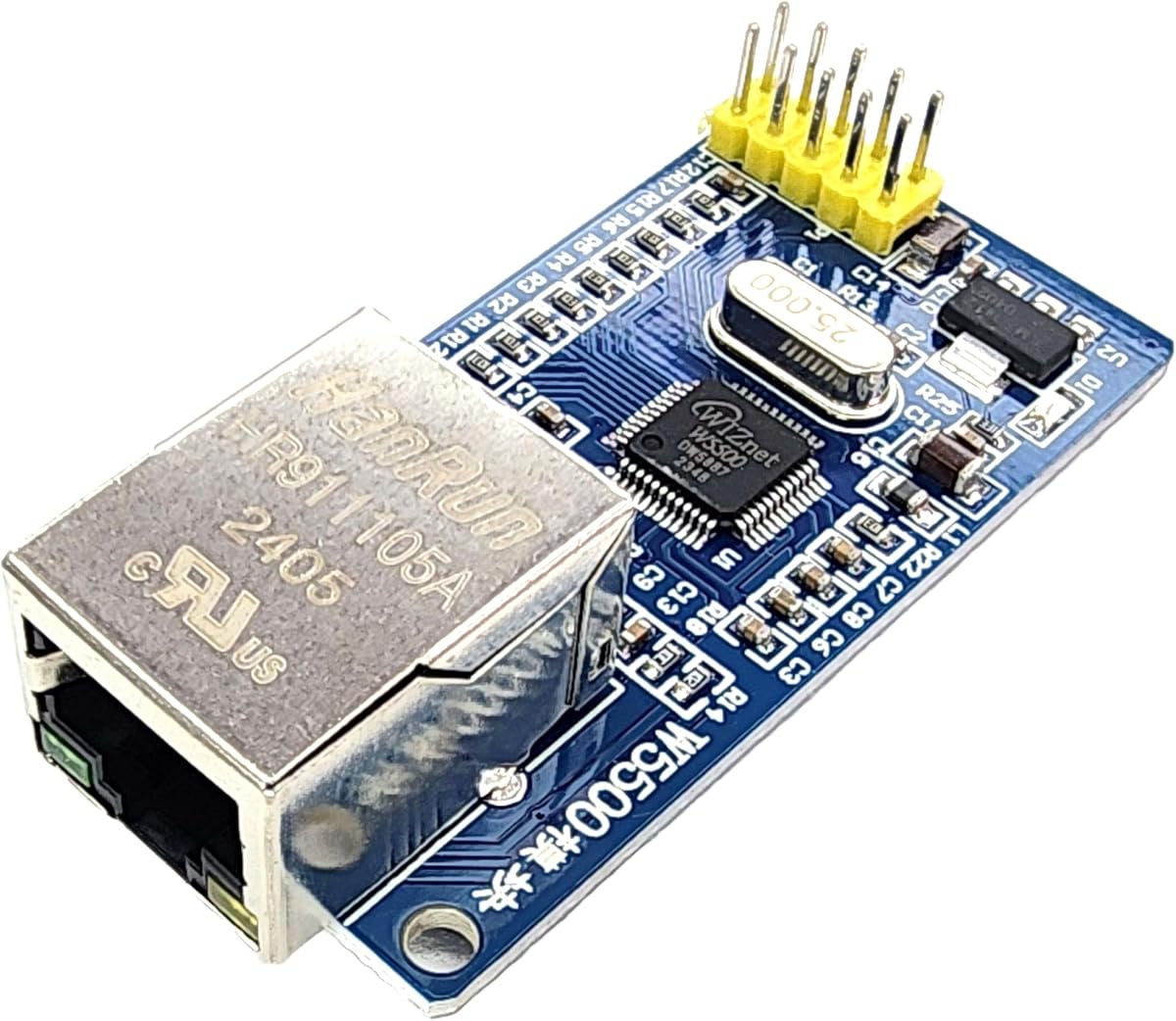
5.0Editor score
The following table provides a side-by-side comparison of the top ten Ethernet modules evaluated for this guide. Each entry includes key specifications and links to detailed product pages for further information.




This module offers a robust solution for network connectivity with its W5500 chip set. It achieves a solid rating among users due to its reliable performance in various projects. The standout quality lies in its ability to handle multiple sockets efficiently.
We may earn a commission when you buy through this link, at no additional cost to you.
The internal 32K bytes memory for TX/RX buffers ensures smooth data handling. It supports High Speed Serial Peripheral Interface for faster communication with microcontrollers. This makes it ideal for applications requiring simultaneous data streams or complex network operations.
While the SPI interface is powerful, it may require careful wiring compared to simpler modules. Power supply stability is also crucial to avoid intermittent connection issues. These trade-offs are acceptable given the performance benefits and multi-socket capabilities.
Builders working on IoT systems or complex automation projects should consider this module. It provides the necessary flexibility for advanced network tasks while remaining compatible with popular microcontrollers like STM32.
Supports 8 independent sockets simultaneously allowing for complex network tasks.
Internal 32K bytes memory for TX/RX buffers ensures stable data flow.
We may earn a commission when you buy through this link, at no additional cost to you.
This module provides a reliable path for Ethernet connectivity using the W5500 chip. Users appreciate its straightforward interface and compatibility with STM32 systems. It is designed to integrate well with standard Arduino setups.
We may earn a commission when you buy through this link, at no additional cost to you.
The control interface uses a TTL level 3.3V SPI interface which simplifies wiring. It requires an external power supply of 3.3V with a current of more than 200mA. This ensures stable operation during high data transmission periods.
The requirement for a specific power supply might be a hurdle for simple projects. Ensuring voltage continuity is also essential to prevent connection drops. However, these constraints are manageable for most hobbyist and professional setups.
Developers looking for a cost-effective W5500 solution will find this module suitable. It balances performance with ease of use for various embedded network applications.
Requires external power supply with current over 200mA for stability.
Uses TTL level 3.3V SPI interface for easy microcontroller connection.
We may earn a commission when you buy through this link, at no additional cost to you.
This pack offers five modules providing excellent value for larger projects. It features the same W5500 chip set as other premium options in the list. The compact size makes it easy to fit into tight spaces on custom PCBs.
We may earn a commission when you buy through this link, at no additional cost to you.
Power requirements are similar to other W5500 modules needing a stable 3.3V supply. The control interface is TTL level 3.3V SPI which matches many microcontrollers. Users should ensure their power source can deliver at least 200mA per module.
The need for multiple modules might be unnecessary for single project builds. Ensuring stable voltage across multiple units requires careful power planning. Despite this, the bulk pricing makes it a smart choice for workshops.
Projects requiring multiple network nodes or production prototyping will benefit from this set. It offers a reliable way to scale Ethernet capabilities across several devices.
Includes 5 units to support multiple project builds simultaneously.
PCB size of 23 by 25 mm fits easily in small designs.
We may earn a commission when you buy through this link, at no additional cost to you.
This module boasts an integrated TCP/UDP/ICMP/IPv4/PPPoE protocols stack. It manages 8 simultaneous sockets and Wake-on-LAN via UDP effectively. The high-speed SPI interface supports Mode 0 and 3 for real-time scenarios.
We may earn a commission when you buy through this link, at no additional cost to you.
The hardware stack offloads processing from the main microcontroller which is beneficial. Dual voltage operation with 3.3V core and 5V I/O tolerance increases compatibility. Industrial-grade PHY ensures reliable 10/100Mbps Ethernet communication.
The low rating suggests potential quality control or compatibility issues for some users. Further research is recommended before purchasing for critical applications. However, the specs are impressive for the price point offered.
Users needing a robust protocol stack without external libraries should evaluate this option. It offers significant performance potential for demanding network tasks.
Integrated TCP/UDP/ICMP/IPv4/PPPoE protocols simplify implementation.
Supports 80MHz SPI Mode 0/3 for real-time control scenarios.
We may earn a commission when you buy through this link, at no additional cost to you.
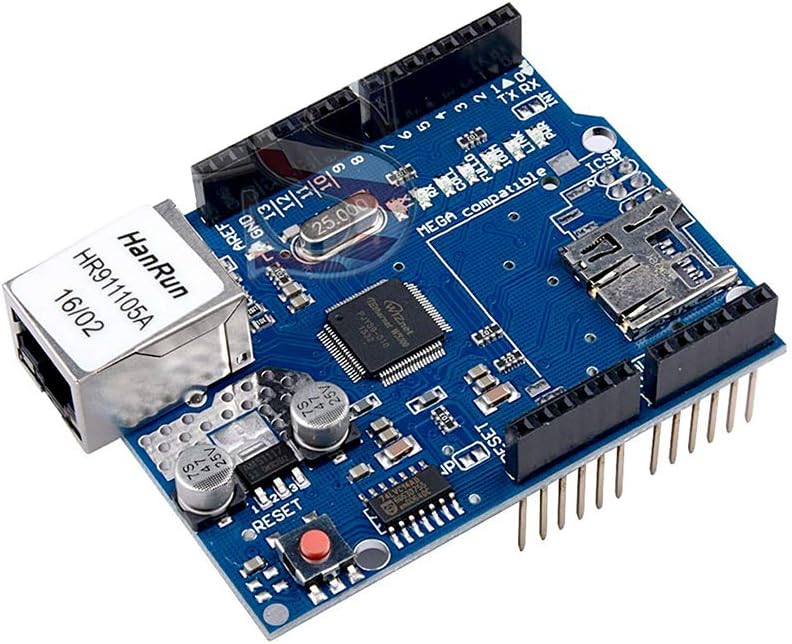
This shield connects the UNO R3 board to the internet in mere minutes. It features a Wiznet W5100 chip capable of both TCP and UDP protocols. The standard RJ45 Ethernet jack makes physical connection straightforward.
We may earn a commission when you buy through this link, at no additional cost to you.
The inclusion of an SD card slot provides additional storage possibilities for data logging. It plugs directly onto the Arduino board which reduces the need for jumper wires. Users appreciate the simplicity of setup for basic networking needs.
The W5100 chip is older compared to newer W5500 options and might be slower. The physical size of the shield might be bulky for some compact enclosures. However, for prototyping and simple web servers it remains a valid choice.
Beginners or those needing a shield with SD capabilities will find this useful. It is a direct plug-and-play solution for adding network access to standard Arduino boards.
Plug this module onto your Ar-duino board for immediate connection.
Includes an SD card slot for data logging capabilities.
We may earn a commission when you buy through this link, at no additional cost to you.
This module is a popular budget option featuring the ENC28J60-I/SO chip. It is widely used for projects where cost is a primary concern. The board includes a 25MHZ crystal for stable clocking.
We may earn a commission when you buy through this link, at no additional cost to you.
It uses an HR911105A isolation transformer for reliable Ethernet signal integrity. The power supply requirement is 3.3V which is standard for many microcontrollers. Compatibility extends to AVR PIC LPC and STM32 devices.
The ENC28J60 chip does not have a hardware TCP/IP stack requiring software overhead. This can consume more processing power compared to W5500 modules. For simple tasks this is a negligible trade-off for the cost savings.
Users looking for a low-cost solution for basic network connectivity will find this ideal. It is perfect for educational projects or low-bandwidth IoT sensors.
ENC28J60-I/SO main chip offers a budget-friendly networking option.
HR911105A isolation transformer ensures stable Ethernet connection.
We may earn a commission when you buy through this link, at no additional cost to you.
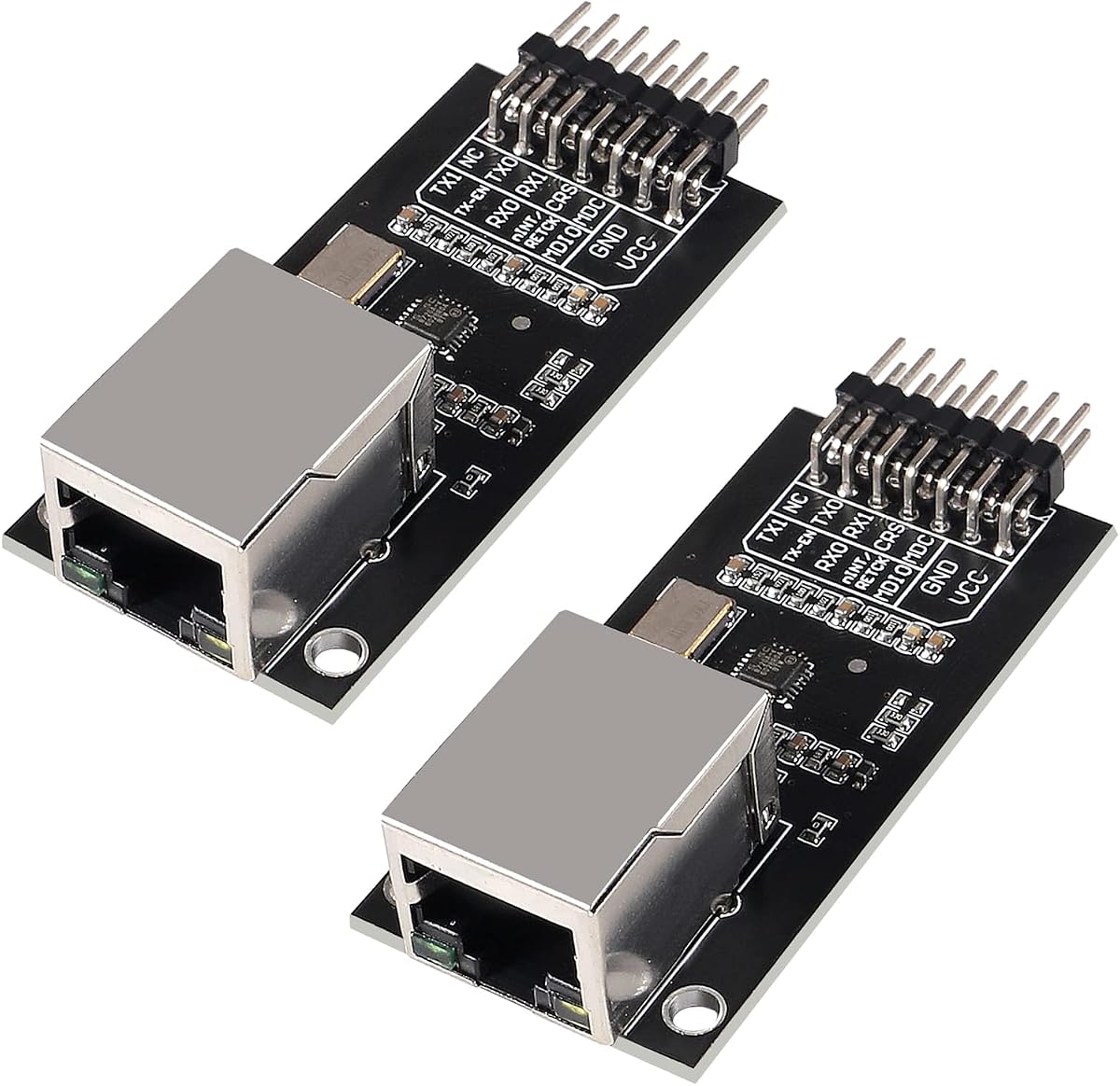
This pack offers five ENC28J60 modules for multi-project deployments. It maintains the same high reliability seen in single units. The rating reflects strong user satisfaction with its performance in various settings.
We may earn a commission when you buy through this link, at no additional cost to you.
It is IEEE 802.3 compatible ensuring standard Ethernet protocol adherence. The board features a 25MHZ crystal and uses the HR911105A connector. This ensures consistent timing and physical layer reliability.
As with other ENC28J60 options it requires software TCP/IP implementation. This may not be suitable for high-throughput applications. However for basic tasks the cost per unit in this pack is attractive.
Teams needing multiple units for a lab or production line should consider this kit. It offers a reliable and economical way to equip several devices.
Includes five units to support multiple projects or devices.
IEEE 802.3 compatible for reliable protocol adherence.
We may earn a commission when you buy through this link, at no additional cost to you.
This module offers a reliable network connectivity solution for various microcontrollers. It achieves a perfect rating for its robust TCP/IP and UDP support. The full-size RJ45 port allows easy wired LAN connection.
We may earn a commission when you buy through this link, at no additional cost to you.
It is compatible with Arduino ESP32 ESP8266 and other 5V or 3.3V boards. The SPI interface allows for fast and hassle-free integration. Tutorials and sample codes are available online to simplify development.
While it requires standard SPI wiring the process is streamlined for developers. The cost per unit is higher than bulk packs but justified by the quality. It stands out for its ease of use and stability.
IoT and smart projects requiring reliable internet communication should choose this option. It is ideal for both beginners and professionals seeking top-tier performance.
Works with Arduino ESP32 ESP8266 and 5V/3.3V boards.
Tutorials and sample codes available online for easy setup.
We may earn a commission when you buy through this link, at no additional cost to you.
This module features a high performance 10/100 Ethernet Physical Layer Transceiver. It supports HP Auto-MDIX for flexible cable connection without crossover. Power is managed through an ultra low power design.
We may earn a commission when you buy through this link, at no additional cost to you.
The integrated 1.2V regulator simplifies the power architecture. IO voltage ranges from +1.6V to +3.6V providing some flexibility. It can be powered from a single 3.3V supply reducing complexity.
Application areas include embedded servers and development board interfaces. However users might find less community support compared to W5500 modules. This requires more research to implement effectively.
Engineers building embedded web servers will find the PHY capabilities useful. It is suitable for projects where power efficiency is a critical design factor.
Ultra low power design suitable for battery-powered devices.
Supports HP Auto-MDIX for easy cable connection.
We may earn a commission when you buy through this link, at no additional cost to you.
This module provides an alternative budget choice using the ENC28J60-I/SO chip. It achieves a high rating due to consistent performance in standard applications. The board includes a 25MHZ crystal for timing stability.
We may earn a commission when you buy through this link, at no additional cost to you.
It features the HR911105A isolation transformer for reliable signal transmission. Compatibility includes 51 AVR LPC and STM32 microcontrollers. This flexibility makes it a versatile option for various hobbyist needs.
Users should be aware of the standard limitations of the ENC28J60 chip. Software implementation of network stacks is necessary for operation. Despite this it remains a reliable choice for low-cost network add-ons.
Those looking for an inexpensive way to add Ethernet to existing projects will appreciate this module. It offers solid performance for basic data communication tasks.
Compatible with 51 AVR LPC and STM32 MCU devices.
25MHZ crystal board ensures stable clocking for SPI interface.
We may earn a commission when you buy through this link, at no additional cost to you.
Selecting the right module requires understanding key technical factors that impact performance and compatibility. We have outlined the most critical aspects to consider before making your purchase decision.
The chipset determines the speed and protocol support of your module. W5500 chips offer superior performance with hardware TCP/IP stacks compared to ENC28J60 chips which require software processing. Consider your project's data throughput needs when selecting a chipset type.
For high-speed applications choose a module with a newer chipset like W5500. For simpler tasks an ENC28J60 module may suffice and save costs.
Ensure the module matches your microcontroller's operating voltage. Many modules support both 3.3V and 5V logic levels but some require specific external power supplies. Checking the voltage requirements prevents damage to your main board.
Always verify voltage levels before connecting the module to your system to ensure safe operation.
Most modules use an SPI interface for communication which is fast and efficient. However the complexity of wiring can vary between models. Simple modules might offer easier setup options for beginners.
Select an interface that matches your microcontroller's available pins and your comfort level with wiring.
The number of simultaneous sockets supported affects multi-connection capabilities. Modules like W5500 support eight independent sockets allowing complex network interactions. Lower-end modules may support fewer connections which limits scalability.
Choose a module with enough sockets to handle your application's connection requirements comfortably.
Internal memory buffers are crucial for handling data flow smoothly. Modules with larger buffers can manage bursts of data without dropping packets. Look for specs that mention TX/RX buffer sizes clearly.
Larger buffers improve stability during high-traffic network conditions.
The physical dimensions of the module matter for compact designs. Some shields are larger and stack on top of boards while others are smaller modules. Consider your enclosure space and PCB layout constraints.
Measure your available space to ensure the module fits without obstruction.
Some modules require specific current levels to operate correctly. A module might need over 200mA which impacts your power supply choice. Ensure your system can provide stable power to avoid network dropouts.
Check the current and voltage requirements in the product details before buying.
Access to tutorials and community support helps in troubleshooting. Popular modules often have more sample code and forum discussions available. This can significantly reduce development time for new users.
Research the availability of documentation for the module you plan to buy.
Start by connecting the module to your microcontroller using the appropriate SPI pins. Ensure the power supply matches the specified voltage requirements to avoid hardware damage. Test basic connectivity using sample code provided by the manufacturer.
Place the module in a location with good airflow to prevent overheating during operation. Avoid bending the pins or wires excessively which can lead to internal breakage over time. Regularly check connections for any signs of corrosion or looseness.
Keep the module away from excessive moisture or dust which can degrade performance. Store unused modules in anti-static bags when not in use to protect sensitive components. Updating firmware and libraries regularly ensures compatibility with new standards.
The W5500 module includes a hardware TCP/IP stack which offloads processing from the microcontroller and allows for higher speeds. The ENC28J60 module relies on the microcontroller to handle TCP/IP protocols making it slower but cheaper. For complex projects W5500 is generally preferred.
Most modules can run off the 3.3V pin of your microcontroller but some require an external stable supply. Check if your chosen module specifies a minimum current requirement like 200mA. Ensure your power source is stable to maintain consistent network performance.
You need to connect the module to a router or switch using an Ethernet cable. Then configure the IP address settings in your code to match your network subnet. Once configured your microcontroller can send data to the internet.
Yes many modules listed are compatible with ESP32 boards due to their SPI interface. Just ensure the voltage levels match since ESP32 typically operates at 3.3V. You may need to adjust the library settings to match the specific chip.
Once programmed the modules can operate independently without a connected computer. They can act as web servers or clients sending data directly to a network. This makes them ideal for standalone IoT devices.
Check that your power supply is stable and provides enough current for the module. Loose wires or poor connections on the SPI bus can also cause instability. Try using shorter cables and verifying the code for timeout settings.
You can use a network scanner tool to see if the module obtains an IP address from your router. Some modules have LED indicators that show connection status. This helps verify hardware health before writing complex code.
Most standard modules support basic TCP/UDP protocols but secure TLS might need extra software libraries. Check if the module supports hardware acceleration for cryptography. Otherwise implement security on the server side if supported.
We have reviewed ten top options ranging from budget-friendly ENC28J60 modules to high-performance W5500 solutions. The best choice depends on your specific project needs and technical requirements. Prioritize compatibility and power stability for reliable performance.
Focus on the chipset capabilities and interface type when making your decision. Ensure the module fits your physical design and power budget effectively. These factors will determine the success of your networked project.
Remember to verify current pricing and availability before finalizing your purchase. Market conditions change and specific deals may be available at different times. Stay informed to get the best value for your next build.