
Donner Amp Attenuator Pedal
4.3Editor score
High-quality electronic components
True bypass signal path
Mute footswitch included
This guide compares the top ten attenuators for tube amps to help you find the right unit for volume control, tone preservation, and recording flexibility.
Finding the right attenuator for tube amp setups is crucial for guitarists who want to maintain their signature tone at lower volumes. These devices allow you to push your amplifier to its sweet spot without blasting neighbors or damaging hearing. Selecting the best unit requires understanding impedance matching, power handling, and specific features like line outputs or reactive loads.
We have evaluated ten leading products based on their construction quality, tonal transparency, and versatility across different amplifier configurations. Our analysis considers passive and active designs, as well as units offering direct recording capabilities. Each entry in this list addresses specific needs ranging from budget-conscious players to professionals seeking studio-grade performance.
Every pick showcases unique strengths that cater to various playing styles and technical requirements. Whether you need a simple volume reducer or a complex recording interface, this guide provides clear insights. Please note that availability and pricing may fluctuate over time, so verifying current details before purchasing is always recommended.
4.3Editor score

4.6Editor score

4.4Editor score
The following table offers a side-by-side look at key specifications for each attenuator to help you quickly identify the right fit for your rig.




The Bugera POWER SOAK PS1 stands out as a robust solution for players needing to manage volume without sacrificing tone. With a 100-watt capacity, it accommodates most guitar and bass amplifiers effectively. Its passive design ensures no power supply is needed, simplifying setup on stage or in the studio.
We may earn a commission when you buy through this link, at no additional cost to you.
A key strength is the multi-impedance input connectors which allow matching 4, 8, or 16 Ohm amplifiers seamlessly. The line output with a dedicated level control offers direct recording capabilities. The emulated mic output aims to mimic a microphone placed in front of a speaker cabinet, adding versatility for silent recording scenarios.
While the emulated output is a strong feature, some users may find the tone coloring requires adjustment to suit their specific amp. The unit is also physically larger than pedalboard-friendly options, which might limit portability. However, these trade-offs are acceptable given the power handling and versatility it provides.
This attenuator is ideal for guitarists who need a reliable, high-wattage solution for home recording or low-volume practice. It balances performance and durability well. We recommend it for those seeking a straightforward device that preserves tube amp dynamics while keeping volume manageable.
The multi-impedance inputs ensure compatibility with a wide range of amplifiers, making it a flexible choice for diverse rigs.
The line and emulated mic outputs provide convenient options for capturing tones directly into interfaces without miking cabinets.
We may earn a commission when you buy through this link, at no additional cost to you.
The JHS Little Black Amp Box is a simple yet effective tool for controlling the volume of loud tube amplifiers. It works by running through the effects loop to manage the signal sent to the power section. This method allows you to push the front end for natural tone while keeping overall volume low.
We may earn a commission when you buy through this link, at no additional cost to you.
Its design focuses on retaining the response and tone of the amp's sweet spot at lower levels. High-grade components ensure the tone remains clear and pure without coloration. Being passive, it does not require any power supply, which simplifies wiring and reduces noise issues.
The compact size makes it easy to mount under a pedalboard, but it requires an amp with an effects loop. Additionally, it lacks a dedicated line output for direct recording, limiting its use in silent recording setups. These limitations are minor for players focused on live or home practice volume control.
This unit is perfect for guitarists who want to keep their tube amp pushed without disturbing others. It excels in tone preservation and simplicity. We suggest it for those with effects loop-equipped amps seeking a no-frills volume reducer.
By controlling the power section signal, this device keeps the front end dynamics intact for authentic tube feel.
Its small footprint allows for easy integration under existing boards without taking up valuable space.
We may earn a commission when you buy through this link, at no additional cost to you.
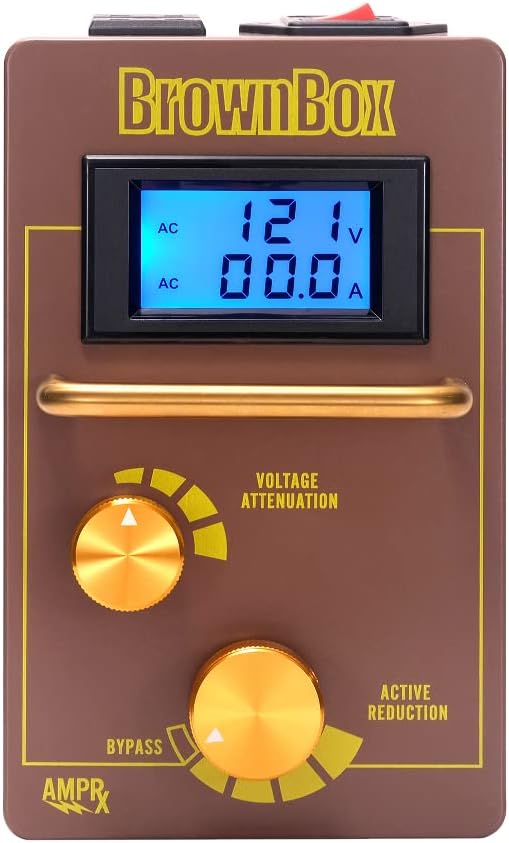
The BrownBox Tube Amplifier Input Voltage Attenuator offers a unique approach by managing AC input voltage rather than speaker output. This method reduces the power delivered to the amp, lowering overall volume while potentially extending tube life. The LCD voltmeter provides clear feedback on input levels.
We may earn a commission when you buy through this link, at no additional cost to you.
It features four selectable output and input voltages, giving precise control over how much voltage reaches the amplifier. This is particularly useful for players wanting to experiment with voltage sag and tone without changing components. It serves as a safety device to prevent overvoltage conditions.
Since it operates on AC input, it does not function as a traditional speaker load attenuator. Users expecting speaker output control might find it does not meet their needs. However, for voltage tuning enthusiasts, it offers a specialized solution not found in standard attenuators.
This unit is ideal for those interested in the electrical aspects of tube amp operation. It provides a way to tame volume through power supply adjustment. We recommend it for advanced players looking to explore voltage variations in their tone.
Lowering the input voltage reduces the amp's overall power output, affecting tone and volume differently than speaker attenuation.
The built-in LCD voltmeter helps users monitor input voltage accurately to achieve desired power levels safely.
We may earn a commission when you buy through this link, at no additional cost to you.
The Tone King Ironman II Mini is designed for players needing a reactive attenuator that preserves the natural impedance of their tube amp. With a 30-watt capacity, it suits many lower-wattage amplifiers. Its passive nature ensures reliability, while the line output facilitates direct recording into interfaces.
We may earn a commission when you buy through this link, at no additional cost to you.
A standout feature is the footswitchable boost, allowing dynamic control during performance. This lets you cut through a mix when needed without adjusting amp settings manually. The 8-ohm operation matches common speaker cabinets, ensuring safe and stable use with compatible gear.
While excellent for many amps, the 30-watt limit means it may not handle high-power amplifiers without risk of damage. The price point is higher than basic passive units, reflecting the quality and features. However, the tonal fidelity and recording capabilities justify the cost for serious players.
This attenuator is perfect for home recording or gigging musicians needing volume flexibility with tone integrity. It excels at maintaining dynamic feel while reducing output. We recommend it for those prioritizing recording-ready features and reactive load benefits.
Reactive loads mimic speaker impedance, preventing the harsh tone shifts that can occur with resistive attenuators.
The footswitchable boost adds a practical tool for live dynamics, offering immediate volume changes via pedal.
We may earn a commission when you buy through this link, at no additional cost to you.
The Donner Amp Attenuator Pedal provides an accessible entry point for players looking to control tube amp volume. High-quality electronic components ensure the tone remains clear and pure without significant coloration. It works through the FX loop to manage the signal to the power section effectively.
We may earn a commission when you buy through this link, at no additional cost to you.
True bypass design keeps the signal path transparent when the effect is off. The included mute footswitch allows you to set the output level to a minimum immediately, which is useful for quick silencing. On-board knobs offer flexible sound character adjustments to suit different setups.
Users should note that a DC 9V adapter is not included, requiring an additional purchase. While the feature set is basic compared to premium units, it delivers on core functionality. The price makes it a strong contender for budget-conscious players seeking practical volume control.
This pedal is ideal for beginners or those needing a simple volume reducer without breaking the bank. It balances performance and cost well. We suggest it for players prioritizing affordability and essential tone preservation features.
The straightforward design allows for quick setup and easy integration into any pedalboard or amp loop.
The mute footswitch offers immediate volume cutoff, a handy feature for silent tuning or breaks between songs.
We may earn a commission when you buy through this link, at no additional cost to you.
The Two Notes Torpedo Captor combines a reactive loadbox with an attenuator to offer versatile recording capabilities. Its speaker simulator at 8 Ohm ensures safe operation with tube amplifiers. The Direct Box output allows for professional-grade signal routing to audio interfaces.
We may earn a commission when you buy through this link, at no additional cost to you.
It functions as a load box and attenuator, letting you run your amp at full power while monitoring at lower levels. This dual function makes it suitable for both live volume control and silent recording sessions. The reactive design preserves the amp's natural dynamics and feel.
To unlock full speaker simulation tones, users often rely on software tools, which may add complexity. It also requires an external power source for operation. These requirements are manageable for most studio users, but less ideal for purely analog setups needing no software integration.
This unit is perfect for modern recording musicians who need silent recording solutions with professional outputs. It delivers excellent versatility for different recording environments. We recommend it for those needing a comprehensive tool for home and studio recording.
Combining attenuator and load box features streamlines your signal chain and reduces the need for multiple devices.
The DI output provides a balanced signal perfect for direct connection to interfaces without additional adapters.
We may earn a commission when you buy through this link, at no additional cost to you.
The Universal Audio Ox Amp Top Box represents the pinnacle of analog reactive load and recording systems for tube amps. It delivers album-quality mic and speaker cabinet tones instantly via front-panel controls. With five attenuation levels ranging from silent to full volume, it offers precise control.
We may earn a commission when you buy through this link, at no additional cost to you.
UA Dynamic Speaker Modeling emulates speaker drive, breakup, and cone cry, adding realistic detail to recorded tones. This allows for record-ready sounds without needing physical microphones or cabinet setups. The system is designed to integrate seamlessly into high-end production environments.
The price is significantly higher than standard attenuators, reflecting its advanced technology and build quality. Some users may find the interface complex compared to simple knobs. However, the results justify the investment for professionals seeking top-tier tone reproduction and flexibility.
This device is ideal for professionals who demand the highest fidelity in their recording chain. It simplifies the recording process while maintaining tube amp characteristics. We suggest it for those needing a no-compromise recording solution.
Front-panel RIG control lets you access pre-configured virtual mic and cabinet setups instantly.
Modeling cone cry and breakup provides realistic details that static speakers lack in traditional setups.
We may earn a commission when you buy through this link, at no additional cost to you.
The Warm Audio Reamper Routing Hub is an analog studio hub designed for independent preamp re-amp signal paths. It features a silent 50W power soak that allows you to attenuate output without introducing noise. Variable impedance control adds flexibility to match different amplifier needs.
We may earn a commission when you buy through this link, at no additional cost to you.
Its primary function focuses on routing and reamping, making it ideal for complex studio workflows. The independent paths allow for seamless switching between reamp modes without signal degradation. This versatility supports creative recording techniques and tone shaping options.
While it includes attenuator capabilities, it is not a standalone attenuator for live volume control. The price reflects its specialized studio role and high build quality. Users needing a dedicated live attenuator may find other units more appropriate for that purpose.
This hub is best for studio engineers looking to enhance routing and reamping capabilities. It provides a sophisticated tool for tone management in the studio. We recommend it for professionals managing complex multi-track recording sessions.
The hub offers routing flexibility that simplifies complex studio setups and signal management.
The 50W soak ensures quiet attenuation, reducing noise during recording or silent practice sessions.
We may earn a commission when you buy through this link, at no additional cost to you.
The Tone King Ironman II 100-Watt model is built for players with high-power tube amplifiers. Its precision-compensated reactive design ensures accurate power attenuation while preserving natural tone. The dual impedance controls allow for better matching across various speaker setups.
We may earn a commission when you buy through this link, at no additional cost to you.
An analog cabinet simulation and presence switch offer additional tonal shaping options. The DI output provides a professional signal path for direct recording. This unit is engineered to maintain dynamic feel and distortion characteristics effectively even at reduced volumes.
At 100 watts, it is bulkier and more expensive than lower-wattage options. However, this is necessary to handle higher power outputs safely. For those with high-output amps, this ensures reliable performance and tone preservation without compromise.
This attenuator is ideal for players with powerful amplifiers needing robust volume control. It delivers high fidelity and professional features. We recommend it for those needing a premium solution for high-wattage tube amps.
The 100-watt capacity makes this a reliable choice for larger tube amplifiers that demand higher tolerance.
The presence switch and cabinet simulation add depth to the tone management capabilities beyond simple attenuation.
We may earn a commission when you buy through this link, at no additional cost to you.
The Boss WAZA Tube Amp Expander combines an attenuator with an advanced command center for tube amps. Its reactive load circuit supports amps up to 150 watts, offering broad compatibility. User-adjustable impedance tuning ensures the reactive load matches your amp correctly.
We may earn a commission when you buy through this link, at no additional cost to you.
Ten recallable rig settings allow you to store favorite setups for quick recall. Deep real-time performance control is supported via GA-FC/FS-series footswitches and MIDI I/O. The built-in Class AB power amplifier provides seamless volume control and expanded output options.
Its complexity may be challenging for users preferring simple knobs and switches. The price reflects the extensive feature set and build quality. However, for tech-savvy players needing full control over their rig, this offers unmatched flexibility and integration.
This expander is perfect for advanced musicians wanting detailed control over their tone and volume. It combines attenuation with expanded rig capabilities. We recommend it for those prioritizing customization and professional control features.
Recallable settings allow you to switch between complex setups effortlessly during live performances.
Adjustable impedance tuning ensures the reactive load matches your amp naturally for the best tonal results.
We may earn a commission when you buy through this link, at no additional cost to you.
Choosing the right attenuator involves considering power handling, design type, and specific features like recording outputs.
Ensure the attenuator supports your amplifier's wattage to avoid damage and ensure safe operation. Most units are rated between 30 watts and 100 watts, so check your amp's output before purchasing. Using a unit with insufficient power handling can lead to overheating and component failure.
Always match the wattage rating to your amplifier's maximum output for reliable performance.
Reactive loads mimic the electrical characteristics of a speaker, preserving the amp's natural feel and tone better than resistive units. Resistive attenuators are simpler but may alter impedance response, affecting dynamic feel. For best tone quality, reactive designs are generally preferred by professionals.
Reactive designs are recommended for players prioritizing natural tube dynamics and tone preservation.
Check that the attenuator offers impedance matching for your amp and speaker cabinet, such as 4, 8, or 16 Ohms. Proper matching ensures the safety of your equipment and consistent tone reproduction. Incorrect impedance can stress the amplifier's output stage.
Verify impedance options match your existing gear to avoid technical issues and tone shifts.
If silent recording is a goal, look for units with line outputs or DI capabilities. Some attenuators include emulated mic outputs or speaker simulation for direct audio interface connection. This feature eliminates the need for microphones in quiet environments.
Units with line or DI outputs provide the most flexibility for studio and home recording setups.
Passive attenuators do not require external power and are generally more reliable with fewer signal path options. Active units may offer tone shaping or EQ features but require power supplies. Passive designs are preferred for simplicity and reliability in live settings.
Passive units are often the best choice for players wanting simplicity without power supply dependencies.
Consider the physical dimensions to ensure it fits your pedalboard or rack setup. Build quality is essential for durability, especially if using the unit on stage. Look for sturdy enclosures that can withstand travel and frequent use.
Robust construction and appropriate size are critical for portable rigs and long-term reliability.
Features like boost switches, presence controls, or footswitches add versatility to performance scenarios. Some units offer multiple attenuation levels or MIDI integration for advanced control. Decide which features match your playing style and setup needs.
Prioritize features that directly enhance your workflow, such as mute footswitches or boost options.
Connect the attenuator between your amplifier's speaker output and your speaker cabinet using proper impedance-matched cables. Ensure all connections are secure to prevent signal loss or potential damage. Always start with the attenuator at maximum volume and reduce gradually to find the desired level.
When recording, utilize the line or DI outputs if available, routing them to your audio interface. Check gain staging to avoid distortion or clipping in your recording chain. Adjust levels until the signal sits comfortably within your DAW's headroom.
Regularly inspect cables and connectors for wear to maintain signal integrity. Store the unit in a cool, dry place to protect internal components from humidity or heat. Follow the manufacturer's warranty instructions for any necessary service or repairs.
Not all tube amplifiers are compatible with all attenuators. You must match the wattage and impedance ratings to ensure safe operation. Using an incompatible unit can lead to overheating or damage to the amplifier. Always check the manufacturer specifications before connecting.
Attenuators can alter tone, but reactive models minimize these changes compared to resistive ones. Passive designs generally retain more natural feel. Active units with EQ may introduce coloration. Testing is key to finding the best match for your amp.
Yes, many modern attenuators include line outputs or DI capabilities for silent recording. These allow you to record directly into an interface without miking a cabinet. Look for features like speaker simulation for best results.
A power soak reduces power output by dissipating energy as heat, often reducing overall volume. An attenuator reduces speaker output while preserving impedance load. They serve similar purposes but differ in technical approach and tone impact.
More levels provide finer control over volume, allowing precise adjustments from whisper quiet to full volume. Some units offer five to ten steps. Choose based on how detailed your control needs are for different playing scenarios.
No, passive attenuators do not require an external power supply as they do not amplify the signal. This simplifies setup and reduces noise. Active units typically need power, so verify this before purchase.
We have reviewed ten distinct attenuators ranging from budget-friendly options to premium solutions for professionals. Each offers unique strengths for different players and recording needs. The JHS, Donner, and Tone King models stand out for specific use cases.
When choosing, prioritize power handling and impedance compatibility to protect your equipment. Consider recording features if silent recording is important for your workflow. Balancing features with budget ensures you get the right tool for your specific rig.
Always verify current availability and specifications before purchasing since models may evolve over time. Checking user reviews and testing samples can further guide your final decision. The right attenuator will empower you to enjoy your tube amp at any volume level.