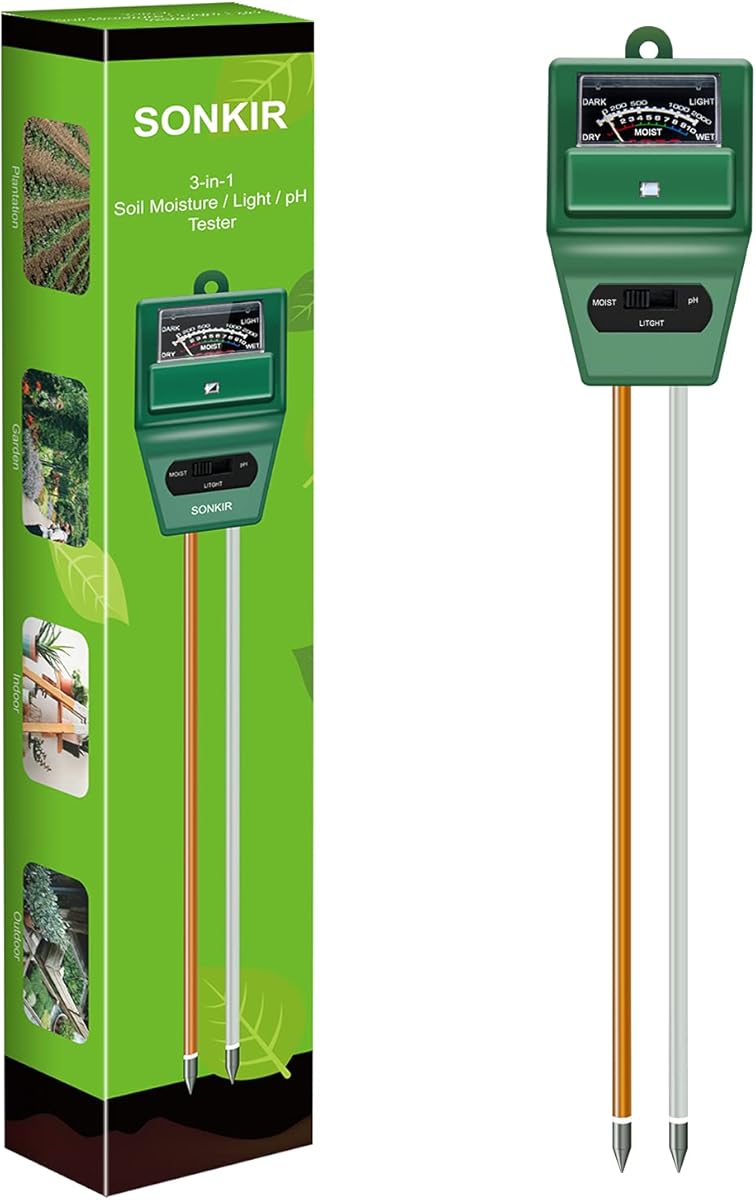
SONKIR Soil pH Meter
4.1Editor score
No battery required
Three-in-one testing
Portable compact design
This guide compares the top ten Bluetooth soil pH meters for accuracy, connectivity, and durability to help you choose the best device for your gardening needs.
Modern gardening demands precision tools to ensure plant health and optimal growth conditions. Bluetooth soil pH meters offer real-time data and connectivity that traditional testers cannot match. These devices help gardeners monitor soil acidity levels efficiently without manual recording or guesswork.
We evaluated ten leading models based on their connectivity features, measurement accuracy, and ease of use. Our analysis covers handheld probes, wireless systems, and comprehensive kits designed for both home gardeners and professional growers. Each product brings unique strengths to soil analysis tasks.
Each selection highlights specific advantages like app integration, multi-parameter testing, or rugged construction. You will find detailed insights into how these tools perform in various environments. Please note that availability and specifications may change over time so verify details before purchasing.
4.1Editor score

4.0Editor score

4.0Editor score
This side-by-side comparison highlights key specifications and capabilities across all ten selected models to help you identify the best fit for your specific gardening or agricultural requirements.




This versatile soil tester combines seven distinct functions into a single handheld unit ideal for detailed garden management. It holds a strong rating among users who appreciate its ability to track multiple soil conditions simultaneously without needing separate devices.
We may earn a commission when you buy through this link, at no additional cost to you.
The device uses advanced probe technology to deliver rapid measurements of pH, moisture, temperature, and light intensity. Its large LCD screen ensures readings are visible in all lighting conditions while the battery warning feature prevents unexpected interruptions during critical testing moments.
While highly functional the requirement for four AAA batteries means ongoing costs and weight considerations. Users must ensure soil is moist enough for accurate readings and cannot use the device for liquid testing which limits its scope slightly.
Gardeners seeking an all-in-one solution for monitoring plant health will find this kit excellent. It simplifies complex soil analysis into quick steps helping you maintain optimal growing conditions with minimal effort and clear visual feedback.
Additional benefits include a satisfaction guarantee and responsive customer support. The intuitive design makes it accessible even for beginners who lack technical gardening knowledge ensuring everyone can benefit from precise soil data.
The fertility function adds unique value by indicating when watering is needed based on soil electrical conductivity. This feature helps prevent overwatering or underwatering by providing objective data rather than relying on guesswork or visual inspection.
The seven-in-one design covers moisture pH temperature light and fertility so you get a complete picture of soil health in one go.
A large white backlit display ensures you can read numbers clearly even in low light conditions without straining your eyes.
We may earn a commission when you buy through this link, at no additional cost to you.
This digital pH meter stands out for its Bluetooth connectivity which allows data storage directly within a mobile application. It is designed for both soil and various liquids making it a flexible tool for diverse testing needs in gardens and beyond.
We may earn a commission when you buy through this link, at no additional cost to you.
The conical steel probe protects the electrode from dirt and damage during repeated soil insertions. Automatic temperature compensation ensures readings remain accurate despite environmental fluctuations while the backlight aids visibility in shaded or dimly lit areas.
While the app offers valuable data tracking users should verify compatibility with their devices before purchase. The probe durability is high but careful handling during cleaning remains important to extend the lifespan of the electrode sensor.
Ideal for tech-savvy gardeners who want to track pH trends over time this model combines classic measurement with modern digital convenience. It supports better decision-making by recording historical data that reveals soil condition changes.
The waterproof feature adds versatility allowing use in wet environments without risk of damage. This makes it suitable for hydroponics pools aquariums and other applications where moisture resistance is critical for device integrity.
Its ability to function in multiple liquid contexts expands utility beyond standard soil testing. Whether checking wine acidity or pool balance this meter provides reliable readings that help maintain optimal conditions for various uses.
Connect via Bluetooth to store pH levels in the app anytime enabling you to review plant soil trends remotely on your mobile device.
A robust conical steel probe shields the electrode from dirt ensuring long-lasting durability during frequent soil measurements.
We may earn a commission when you buy through this link, at no additional cost to you.
This wireless system offers a unique approach by using solar-powered probes that can remain embedded in soil for continuous monitoring. It supports up to thirty-two probes allowing extensive coverage across large gardens without manual reinsertion efforts.
We may earn a commission when you buy through this link, at no additional cost to you.
The controller displays air temperature humidity and light while the probe tracks soil conditions. Data refreshes automatically every twenty minutes but manual checks are available for immediate needs before watering or feeding plants.
Despite the innovative design user ratings reflect concerns about setup complexity or connectivity. However the expandable nature provides long-term value for those managing multiple planting zones who need consistent data streams.
Busy gardeners will appreciate the leave-in capability since the probes withstand outdoor conditions including hot afternoons. This reduces physical labor and ensures timely alerts about soil changes that might affect plant health.
The split design allows comfortable viewing without bending over which helps prevent back strain during checks. Stainless steel and zinc alloy components ensure the system lasts through seasonal changes and harsh weather exposure.
Air and light readings come from the controller so placement matters for accuracy. You may place the controller in your garden zone once to capture ambient data while soil probes stay fixed for specific spot monitoring.
The dedicated solar-powered probe connects wirelessly and stays in the soil reducing effort for busy gardeners monitoring large areas.
One controller supports up to thirty-two expandable probes so you can monitor multiple beds or rows without moving devices constantly.
We may earn a commission when you buy through this link, at no additional cost to you.
This classic 3-in-1 tester requires no batteries because it generates power directly from soil moisture. Its simple analog design makes it an affordable and reliable choice for basic soil condition checks in any garden setting.
We may earn a commission when you buy through this link, at no additional cost to you.
The device measures moisture pH and sunlight levels through a single probe insertion. Results appear on a mechanical panel immediately so you can interpret data without waiting for digital processing or powering on electronics.
While it lacks modern digital features its sturdy construction ensures reliability over time. The upgrade technology maintains accuracy for standard gardening needs without the complexity of apps or wireless connectivity that some users find unnecessary.
Ideal for casual gardeners or those who prefer analog tools this model is easy to carry and store. It avoids battery waste and costs while providing sufficient data to guide watering and light adjustments for healthy plants.
Note that dry soil may not show results so moistening the area before testing is essential. The device is designed for soil only and should not be used for liquids to prevent damage or inaccurate readings.
Its portability makes it great for quick field checks across large lawns or farm areas. The compact size fits easily in pockets or toolboxes ensuring you always have a monitoring device handy during outdoor work.
No batteries are needed since the meter runs on soil moisture energy ensuring it works whenever you insert it into damp soil.
Switch function buttons to test moisture pH or sunlight levels easily allowing versatile monitoring with a single handheld tool.
We may earn a commission when you buy through this link, at no additional cost to you.
This pH pen focuses on ease of use with a tapered dibber that protects the electrode during soil insertion. It connects to a mobile app for data logging enabling you to track changes over time across various plants.
We may earn a commission when you buy through this link, at no additional cost to you.
The device works well with diverse soil types from sandy mixes to coco coir. By avoiding slurries it offers quick direct measurements that save time and reduce preparation steps for regular soil monitoring routines.
Users can store up to 1000 data entries in the app to review trends. This feature is valuable for long-term plant care where noting sample locations helps correlate soil conditions with growth performance.
Though primarily a pH tester it supports hydroponic nutrient solutions as well. This dual capability expands its utility for indoor growers managing water systems alongside potted plants needing pH balance checks.
The included calibration powder ensures accuracy remains consistent over usage periods. Regular calibration with these provided solutions helps maintain reliable readings even as the probe experiences regular exposure to soil environments.
For home gardeners focusing on potted plants this tool simplifies the process of maintaining ideal acidity. It removes the guesswork of dial pointers by delivering precise digital values instantly for better care decisions.
Download the YINMIK App to connect the pH pen and set up automatic data storage so you can check real-time conditions from your phone.
A tapered plastic dibber protects the pH electrode from damage and suits different soil types ensuring longevity for the sensor.
We may earn a commission when you buy through this link, at no additional cost to you.
This kit combines a digital pH tester with a separate moisture meter providing dedicated tools for precise measurements. The moisture meter uses FDR technology which enhances accuracy over basic analog models found in cheaper alternatives.
We may earn a commission when you buy through this link, at no additional cost to you.
The pH tester features a stainless steel dibber that attaches firmly to protect the electrode. This design allows testing in all soil types without worrying about damage during insertion into compacted or rocky ground.
Users receive calibration solutions and brushes for maintenance ensuring long-term accuracy. The inclusion of both pH and moisture tools covers the most critical factors for plant hydration and nutrient uptake in one package.
Ideal for hydroponics enthusiasts this combo supports water testing alongside soil checks. It helps optimize nutrient solutions by providing both conductivity and pH data needed for balanced plant growth environments.
The moisture meter displays results quickly allowing real-time scheduling of watering routines. This efficiency prevents over or under watering by giving clear indicators of current soil hydration levels before action is taken.
While managing two devices may seem complex the specialized accuracy each provides justifies the effort. Separate sensors often outperform multi-function probes for specific parameters ensuring you get reliable data for each condition type.
Advanced FDR method detects soil moisture precisely making measurements more accurate than basic analog indicators for better watering decisions.
Test hydroponic nutrient solutions effectively using both the pH and EC meters included to maintain optimal nutrient balance.
We may earn a commission when you buy through this link, at no additional cost to you.
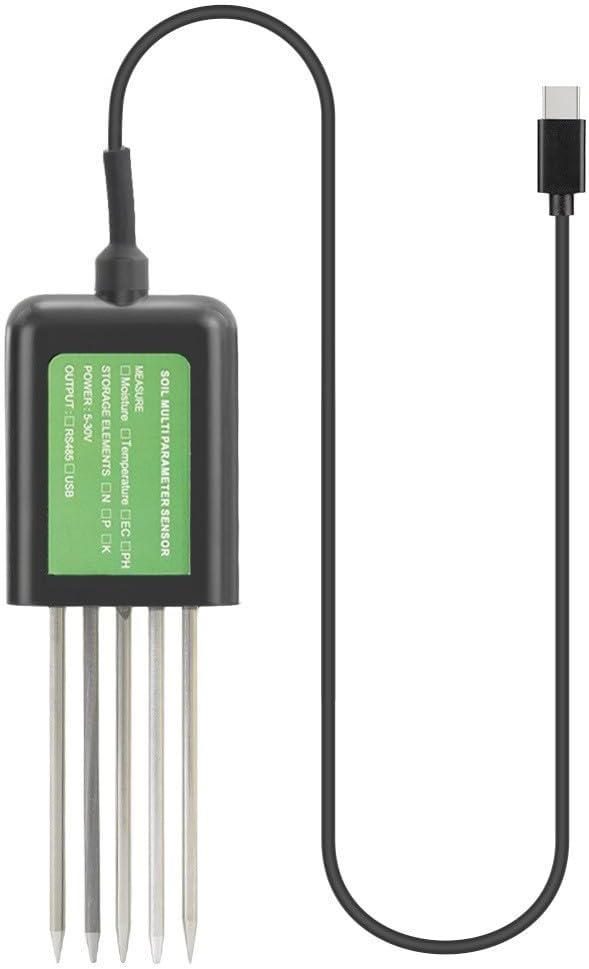
This USB sensor offers comprehensive soil analysis including NPK nutrients alongside pH and moisture. It connects directly to devices via USB allowing instant viewing and exporting of data for research or professional use cases.
We may earn a commission when you buy through this link, at no additional cost to you.
The IP68 rating ensures the sensor withstands prolonged soil exposure and moisture without damage. Its metal alloy probe provides consistent results in various soil conditions making it suitable for demanding agricultural environments.
Users must connect to an Android device or computer to access data which limits standalone use. While robust the lower rating suggests challenges with setup or reliability that potential buyers should consider carefully.
It is ideal for professional growers needing NPK data that basic home testers do not provide. The battery-free design means it powers on instantly when plugged in reducing maintenance and battery replacement needs.
Data export capabilities allow saving soil metrics in digital formats for long-term analysis. This feature supports scientific research or large-scale farming where tracking nutrient levels over seasons is essential for crop planning.
Despite its professional capabilities the complexity may overwhelm casual gardeners. The focus on research and agriculture positions it as a specialized tool rather than a simple plug-and-play consumer device for general plant care.
Measures NPK nutrients alongside moisture and pH to deliver a complete soil health profile for advanced gardening or research.
Built with IP68 rated construction and epoxy resin sealing the sensor withstands soil exposure for long-term professional use.
We may earn a commission when you buy through this link, at no additional cost to you.
This premium pen delivers lightning fast stable readings with Bluetooth sync to track grow history via an app. It is built for professional use with replaceable probes and waterproof durability that ensures longevity in demanding conditions.
We may earn a commission when you buy through this link, at no additional cost to you.
The double-junction pH probe simplifies upkeep while titanium electrodes enhance longevity. It floats if dropped in water and maintains probe health with a dedicated cap ensuring the sensor remains in optimal condition between uses.
Bluetooth connectivity enables sharing data with other Bluelab tools for comprehensive grow monitoring. The Edenic app manages test history so users can spot trends and make informed decisions based on accumulated environmental data.
Ideal for serious hydroponic growers this tool balances ease of use with engineering precision. Its ergonomic design makes it comfortable to hold while the high-contrast screen ensures readability even in low-light grow environments.
The high price reflects the build quality and professional-grade accuracy it offers. For those prioritizing reliability and long-term performance this pen provides value through durability and features that standard testers lack.
Replacement probes extend the device life significantly compared to models with fixed sensors. This means you can keep the main unit for years while only replacing the sensitive electrode when accuracy declines or damage occurs.
A replaceable double-junction pH probe with titanium electrodes simplifies upkeep and enhances probe longevity without replacing the whole unit.
Easily manage test data with Bluetooth sync and the Edenic app to track grow history and combine data with other Bluelab tools.
We may earn a commission when you buy through this link, at no additional cost to you.
This classic meter measures pH and moisture without chemical power or electricity sources. It is designed for straightforward field use where simplicity and reliability matter more than digital connectivity or data storage features.
We may earn a commission when you buy through this link, at no additional cost to you.
Readings cover pH from 3.5 to 8 and moisture from 0 to 100 percent. These ranges suit most gardening scenarios and allow numerous readings across large areas quickly without resetting or battery checks.
The conditioning film sold separately is required for maintenance to keep the probe responsive. Despite this extra step the lack of electronic components makes it robust for harsh outdoor conditions and rough handling.
Ideal for farmers or gardeners who need many quick readings daily this model offers speed and simplicity. It avoids the complexity of apps ensuring users can focus solely on the soil data provided by the instrument.
While modern tech offers more features this analog tool proves enduring for specific tasks. Its design supports efficient scanning of fields where battery dependency would hinder productivity or workflow during large checks.
The mechanical nature of the meter means fewer points of failure over time. Users who appreciate low-tech solutions often find this reliability comforting when monitoring extensive planting areas or agricultural plots regularly.
Requires no chemical distilled water or outside electric power source allowing it to work purely on soil contact for immediate readings.
Numerous readings can be easily taken over large areas making it efficient for farm or lawn checks where speed is essential.
We may earn a commission when you buy through this link, at no additional cost to you.
This 7-in-1 tester measures nitrogen phosphorus and potassium alongside pH moisture and conductivity. It targets professional agricultural and petrochemical applications with high stability and extensive data storage capabilities for rigorous testing needs.
We may earn a commission when you buy through this link, at no additional cost to you.
The full-color interface allows real-time querying and recording of data points. Users can store 100W data entries and export them via Excel enabling detailed analysis and reporting for large-scale crop management or research projects.
Its stability rate exceeds 99.7 percent overall ensuring reliable results over time. This consistency is vital for industries where small measurement errors could impact significant decisions regarding soil amendments or chemical treatments.
The clip-on system enhances portability allowing you to attach the tool to belts or bags easily. This design facilitates hands-free transport across fields or labs where carrying multiple tools would be cumbersome or inefficient.
While expensive it offers comprehensive parameter coverage that general gardeners rarely require. The focus on NPK testing makes it valuable for optimizing agricultural yields where nutrient ratios directly influence crop quality and production volume.
Data export functionality saves time compiling reports manually for review or compliance. You can edit printed Excel data directly which streamlines documentation processes that would otherwise take hours with standard handheld soil testers.
High stability with an overall system availability rate greater than 99.7 percent ensures reliable readings for critical agricultural or chemical decisions.
Supports 100W data storage and export to Excel so you can print and edit data yourself without manual transcription work.
We may earn a commission when you buy through this link, at no additional cost to you.
Selecting the right soil pH meter depends on your gardening scale preferred connectivity and specific soil needs. This guide outlines key factors to consider for a confident purchase decision.
Bluetooth-enabled models allow you to sync readings with mobile apps for trend analysis and historical tracking. This feature is ideal for gardeners who want to observe soil changes over months without manual note-taking. If you prefer simplicity consider analog or non-connected digital tools that deliver instant results without app requirements.
Look for apps that offer intuitive interfaces and reliable data storage. Check if the app allows adding notes to readings so you can link soil data to specific plant locations or fertilizer applications. A good app should export data for backup to avoid losing valuable growth records.
Accuracy varies by sensor quality and calibration options. Professional-grade devices often include automatic temperature compensation which ensures readings remain stable across different environments. Regular calibration using buffer solutions is essential for maintaining accuracy so check if calibration powder or solutions are included with the device.
Devices with replaceable probes offer long-term value since electrodes can degrade over time. Models with auto-recalibration features reduce the frequency of manual checks which helps maintain consistent performance. Always verify the pH range of the device matches your soil type to ensure reliable measurements.
Some testers combine pH monitoring with moisture temperature light or nutrient analysis. A multi-function device reduces the need for separate tools but may compromise on precision for each individual parameter. Evaluate whether you need comprehensive soil health data or just basic acidity checks before committing to a complex model.
If you use hydroponics or manage diverse crops consider a meter that measures EC or TDS alongside pH. These metrics help optimize nutrient solutions and water quality ensuring plants receive balanced chemical environments for optimal growth rates.
Outdoor gardening tools must withstand moisture dust and potential physical impacts. Look for waterproof ratings like IP68 to protect the device from rain or accidental submersion. Robust materials such as stainless steel probes and reinforced casings extend the lifespan of the meter in harsh conditions.
Battery life matters for portable use so check if the device uses standard replaceable batteries or rechargeable options. Some models offer solar power or battery-free operation which reduces maintenance and operational costs over time especially for large garden areas.
The probe design affects how easily you can insert it into different soil types. Tapered or conical probes often penetrate compacted soil better than standard tips. Protective dibbers or guards shield the sensor during insertion which reduces the risk of damage during routine checks.
Ergonomic design ensures comfortable holding during extended testing sessions. Check if the display is easy to read in sunlight or low-light conditions. A backlight or large numeric display helps prevent reading errors which are common when squinting at small screens.
Prices vary widely based on features like Bluetooth integration and multi-sensor capabilities. Budget-friendly models might lack connectivity but provide accurate enough data for casual gardeners. Invest in premium devices if you manage large plots or rely on data for critical farming decisions.
Consider the total cost of ownership including batteries calibration solutions and potential replacement probes. A slightly higher initial cost may be worth it if the device offers long-term reliability and reduces the need for frequent upgrades or replacements over time.
Traditional testers use alkaline batteries while advanced models may require USB or rechargeable lithium batteries. Battery-free options that draw power from soil moisture exist for basic testing but lack digital features. Choose a power source that aligns with how often you plan to use the device.
Solar-powered probes add convenience for leave-in monitoring systems as they reduce the need to replace cells frequently. For portable meters ensure the battery indicator is clear so you are not caught with a dead device during important testing periods.
Reliable manufacturers offer warranties covering defects in sensors and electronics. Check if the company provides responsive customer support to troubleshoot app issues or calibration problems. Access to replacement parts like probes or batteries ensures your device remains usable for years.
Community reviews and support forums can indicate the real-world reliability of a device. If you rely on soil data for income or research prioritize brands with proven track records for durability and helpful customer service interactions.
Before inserting the probe moisten the soil slightly to ensure accurate readings. Push the sensor into the soil at a consistent depth typically around 4 inches for standard plants. Wait for the reading to stabilize on the display before recording data in your app.
After each use clean the probe with a soft brush or cloth to remove soil residue. Avoid using harsh chemicals that might corrode the sensor elements. Store the device in a cool dry place to protect electronics and extend battery life.
Perform regular calibration using standard buffer solutions according to the manufacturer's schedule. Most devices should be calibrated monthly or after significant use to maintain precision. Keep calibration logs to track when the probe may need replacement or adjustment.
Most modern Bluetooth meters support both iOS and Android but you should verify the app requirements before purchasing. Some older models might require specific Bluetooth versions or proprietary apps that are not available on all platforms. Check compatibility notes on the product page to ensure it matches your device.
Calibration frequency depends on usage intensity but monthly calibration is recommended for regular gardeners. If you notice inconsistent readings or drop the probe recalibrate immediately to restore accuracy. Some models have auto-calibration reminders that help you stay on schedule.
Many Bluetooth pH meters work for liquids like hydroponic nutrient solutions or water tanks but check the manual. Probes designed for soil might require cleaning before testing liquids to avoid cross-contamination. Some devices specify a minimum liquid depth for reliable readings.
Probes can last 1 to 3 years depending on care and usage. Stainless steel or titanium probes often outlast basic metal sensors. Regular cleaning and proper storage help extend this life while harsh chemicals reduce it significantly.
Fluctuations can occur due to soil dryness or temperature variations affecting the sensor. Ensure the soil is moist and the meter is at room temperature before testing. Also check that the probe tip is clean and not damaged.
Bluetooth meters offer data tracking and historical analysis which analog devices lack. Analog meters are simpler and cheaper but do not save data. Choose based on whether you need long-term trend insights or quick spot checks.
We explored ten top Bluetooth soil pH meters ranging from budget-friendly options to premium professional tools. Each model offers unique advantages whether you need basic monitoring or comprehensive data tracking for advanced gardening.
Prioritize connectivity accuracy and durability based on your specific needs. For tech-driven gardens choose models with robust app support while traditional gardeners may prefer simple analog devices.
Prices and features may change so verify current specifications before buying. With the right tool you can optimize soil health for healthier plants and better yields in any environment.