
SVBONY SV172 Dew Heater, Lens Warmer 240mm, Universal for Telescope Camera
4.6Editor score
USB powered for portability
Universal fit for lenses under 76mm
Fast aluminum heating element
Astrophotographers and visual observers know dew is the enemy of clear skies. A quality dew heater prevents moisture buildup on lenses and corrector plates, ensuring uninterrupted viewing sessions without costly damage to your gear.
We evaluated ten top-rated dew heater strips and rings based on heating efficiency, power options, and build quality. Each product was assessed for compatibility with common telescope types and ease of use in field conditions.
Every selection below includes detailed specs and real user feedback to guide your choice. Prices and availability may change quickly, so verify current offers before purchasing to ensure you get the best value for your setup.
4.6Editor score

4.7Editor score

5.0Editor score
As an Amazon Associate we earn from qualifying purchases.
The following table offers a side-by-side comparison of all ten selected dew heaters. Review each model's key specifications to find the one that best matches your telescope diameter and power source needs.


The SVBONY SV192 Dew Heater stands out with a 4.7 star rating for its reliable performance across various telescope types. It is designed specifically to protect optics from fogging and freezing in cold observing conditions.
We may earn a commission when you buy through this link, at no additional cost to you.
Its three-speed regulator allows precise control over heat output, ensuring energy efficiency while maintaining clear views. The SBR and Black-T three-layer insulation keeps heat focused on the lens surface effectively.
While it requires a 12V power input which limits portability compared to USB options, the connection is standard and widely compatible. The strip material remains smooth after bending to avoid damaging optical coatings.
This model is ideal for serious observers who prioritize consistent heat distribution and durability. Its broad compatibility makes it a versatile addition to any telescope setup facing humid nights.
The medium and weak heating modes let you tailor warmth to specific humidity levels without overheating optics.
Premium heat preservation materials ensure the strip maintains its shape and efficiency through repeated use.
We may earn a commission when you buy through this link, at no additional cost to you.
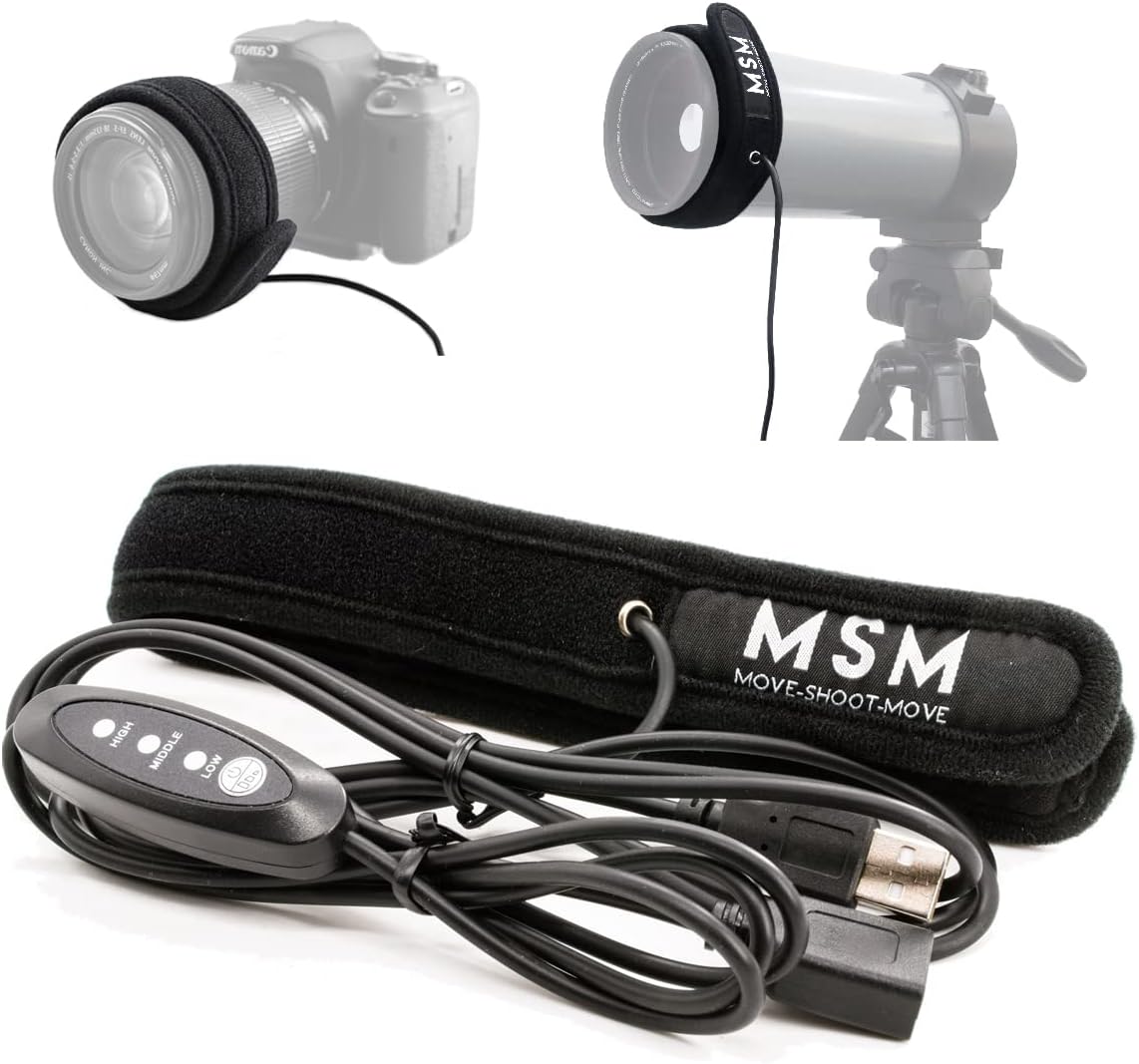
The SVBONY SV172 offers exceptional value with a 4.6 star rating and a lightweight design that won't burden your telescope mount. It connects easily to power banks via USB for flexible field use.
We may earn a commission when you buy through this link, at no additional cost to you.
Its 50mm narrow width ensures it does not interfere with focusing or create dark corners in your field of view. The aluminum core distributes heat evenly across the lens surface rapidly.
While it is best suited for lenses under 76mm, the three gear modes provide enough flexibility for most backyard imaging sessions. The alloy fiber wire heats quickly to prevent condensation early in the night.
This warmer is perfect for portable setups and beginners looking for an affordable solution. It also doubles as a water bottle warmer or wrist strap for general outdoor utility.
Weighing only 66 grams, this heater adds minimal weight to your optical train while providing effective warming.
Works with both telescope cameras and standard lenses, making it a versatile tool for photographers.
We may earn a commission when you buy through this link, at no additional cost to you.
The R-Sky Astro Instruments Dew Heater holds a perfect 5.0 rating due to its meticulous hand-assembly and premium components. It ensures reliable dew prevention across various telescope types including SCT and RASA models.
We may earn a commission when you buy through this link, at no additional cost to you.
Its special construction guarantees uniform heat distribution, which is critical for maintaining consistent optics performance during long imaging sessions. The power cord stays flexible even at sub-zero temperatures.
While it carries a higher price tag, the durability and compatibility with standard telescope power setups justify the investment. The RCA connectors integrate seamlessly with most controllers for easy management.
This band is best for advanced users demanding top-tier reliability. It is built to last and performs consistently in the harshest winter conditions.
Built by hand using premium components, this heater offers reliability that mass-produced strips often lack.
The power cord resists tangling and remains soft even in freezing conditions, ensuring trouble-free setup.
We may earn a commission when you buy through this link, at no additional cost to you.
This Lens Warmer is engineered to withstand temperatures down to -25C with a neoprene strip that remains soft and pliable. It provides continuous warming to help astrophotographers capture clear images in freezing conditions.
We may earn a commission when you buy through this link, at no additional cost to you.
The neoprene material prevents heat loss effectively, making the heater power efficient. It features a regulator that offers three incremental levels for precise temperature adjustment on the power cable.
With a max diameter of 4.26 inches, it accommodates larger lenses that might not fit narrower strips. The USB port allows connection to power banks for convenience during remote shoots.
This warmer is an excellent choice for winter observing or cold climates. Its ability to maintain performance in extreme cold sets it apart from standard plastic heaters.
Proven by field tests, the cable flexibility ensures the strip stays manageable even in deep freeze conditions.
Premium neoprene keeps heat focused on the lens, reducing power consumption for longer observation times.
We may earn a commission when you buy through this link, at no additional cost to you.
The Celestron Dew Heater Ring is custom designed for 8-inch Schmidt-Cassegrain and EdgeHD telescopes. It features a rigid aluminum construction that supports cable circuitry without adding excessive weight.
We may earn a commission when you buy through this link, at no additional cost to you.
Installation is straightforward with a clip to corral cables and prevent unnecessary weight on the tube. It provides consistent continuous heat to prevent dew from forming on the corrector lens.
While limited to specific Celestron models, the fit ensures optimal coverage without risking damage to the optics. The 2-year warranty adds confidence to the purchase for long-term use.
This ring is the logical choice for Celestron owners seeking a reliable and branded accessory. It integrates seamlessly into the existing telescope design.
Designed specifically for 8-inch scopes, ensuring secure attachment and full coverage of the corrector lens.
Includes an accessory to manage cables neatly, preventing snags and keeping the setup professional.
We may earn a commission when you buy through this link, at no additional cost to you.
The NEEWER HW-23B offers a generous 600mm length suitable for camera lenses and telescopes up to 150mm in diameter. It features a touch fastener design that allows quick and easy adjustments.
We may earn a commission when you buy through this link, at no additional cost to you.
With three distinct temperature settings, it provides clear heat levels for varying weather conditions. The USB power design ensures it works with standard portable chargers for flexibility.
While the effective length is slightly less due to the connector, it still covers large optics effectively. The lightweight design ensures it does not add bulk to your gear.
This heater is ideal for creators using larger optics who need a flexible solution. Its simple design makes it a reliable tool for both travel and backyard sessions.
Accommodates optics up to 150mm diameter, making it a great fit for large telephoto lenses and scopes.
Connects to any USB source, allowing for extended use without needing specialized power supplies.
We may earn a commission when you buy through this link, at no additional cost to you.
The Astromania Dew Heater is a compact 25cm strip that fits well on smaller telescopes or camera lenses. It features a stepless regulator that allows you to slide a knob for precise temperature changes.
We may earn a commission when you buy through this link, at no additional cost to you.
It is simple to use with a standard USB port design that connects to power banks or laptops. The strip works well for heating lenses and even bottles or wrists in cold weather.
While its length is shorter, it is perfect for setups where space is limited. The 4.1 rating suggests it performs adequately for budget-conscious buyers seeking basic dew protection.
This model is a great option for casual observers or secondary scopes. Its versatility extends beyond just astronomy to general cold weather use.
A 25cm strip is ideal for smaller lenses where standard long strips would be cumbersome or unnecessary.
Stepless regulation allows for infinite adjustment rather than fixed steps for fine-tuning the heat output.
We may earn a commission when you buy through this link, at no additional cost to you.
This set includes five bands ranging from 4 to 37 inches, covering a vast array of telescope tubes and camera lenses. It allows you to have the right fit for every piece of equipment you own.
We may earn a commission when you buy through this link, at no additional cost to you.
Operating on 12V DC power through RCA connectors, it integrates with most portable power sources. The secure fastening mechanism ensures each band stays in place during observation.
The versatility of having multiple sizes reduces the need for buying single strips later. It is a smart investment for collectors with different scopes and cameras.
Ideal for observatories or multi-telescope setups, this set ensures you never run out of the correct size. It simplifies logistics by providing all necessary sizes in one purchase.
With five distinct sizes, you can cover everything from eyepieces to large telescope tubes efficiently.
Works for telescopes, binoculars, and camera lenses, making it a universal solution for all optical gear.
We may earn a commission when you buy through this link, at no additional cost to you.
This USB Lens Warmer is designed to withstand temperatures as low as -40C without freezing or breaking. It fits lenses with diameters under 80mm making it suitable for many standard cameras and scopes.
We may earn a commission when you buy through this link, at no additional cost to you.
It includes a 1.5m temperature regulator with low medium and high modes for control. The thermal insulation prevents heat loss while ensuring fast heat transfer to the lens surface.
Note that inventory may mix new and old versions but functionality remains consistent. Its USB design makes it easy to power for outdoor heating sessions without extra gear.
For extreme cold climates, this is a reliable option that ensures equipment stays operational. Its low temperature durability makes it a standout for winter photography.
The wire design allows operation in -40C environments ensuring it remains functional in harsh winter weather.
High-quality materials provide fast heat transfer while maintaining good insulation to save power.
We may earn a commission when you buy through this link, at no additional cost to you.
The R-Sky 6 Inch Heater is built to fit 6-inch refractors and SCT designs with precision. It maintains a clear view during humid nights by ensuring even heat coverage across the surface.
We may earn a commission when you buy through this link, at no additional cost to you.
With a standard RCA plug, it connects to all common dew controllers. The power cord is soft and tangle-free even in freezing conditions thanks to hand-assembly.
This strip is trusted for long-term reliability and high performance in demanding setups. It is crafted to handle repeated use without degrading in quality.
Perfect for owners of 6-inch telescopes, it provides targeted protection. Its quality matches the more expensive options in the lineup offering great reliability.
Ensures warmth is distributed evenly to prevent any cold spots where dew could form.
Hand-assembled components ensure the strip functions reliably over many seasons of outdoor use.
We may earn a commission when you buy through this link, at no additional cost to you.
Selecting the right dew heater requires understanding your telescope's size and power capabilities. We break down the critical factors to consider for optimal performance.
The length and width of the strip must match your lens or tube diameter. A strip that is too short will leave parts exposed to moisture while one that is too wide may cause focusing issues.
Measure the circumference of your optical surface before buying to ensure a snug and complete fit.
Decide between USB and 12V power sources. USB heaters are portable and ideal for power banks but may offer less consistent power for large optics. 12V heaters are more powerful and often use standard telescope controllers.
Choose a power type that matches your existing setup to avoid needing extra adapters.
Look for regulators that allow multiple heat levels. Precise control helps you balance energy consumption with dew prevention needs during changing weather conditions.
A model with adjustable settings is always better than fixed output heaters.
The insulation material affects heat retention and durability. Materials like Neoprene or aluminum cores ensure the heater lasts and stays flexible in cold weather.
Higher quality materials reduce heat loss and increase the lifespan of the strip.
If you use a dew controller, ensure the heater uses standard connectors like RCA. Non-standard connectors may require adapters or limit your ability to manage multiple strips efficiently.
Standard connectors make integration into your system seamless and reliable.
The heater should be built to withstand repeated wrapping and exposure to the elements. Flexible cords and strong fasteners ensure it remains secure during observation.
Check for reinforced connections and durable insulation to avoid breakage over time.
Quick installation mechanisms like touch fasteners or elastic bands save time in the field. You want a heater that can be attached quickly without tools or complex steps.
Simple installation ensures you can focus on imaging rather than setting up gear.
While budget options exist, consider the warranty and brand support. Premium heaters often come with longer support which can be valuable for expensive optical gear.
Balance your budget with the expected lifespan of the product.
Wrap the heater strip snugly around the lens or corrector plate ensuring full coverage. Secure it with the provided fasteners to prevent shifting during use.
Connect the power source before setting up your telescope and turn on the heater gradually. Allow a few minutes for the lens to warm up before the dew point is reached.
After use, gently wipe the strip dry and store it in a cool dry place to extend its life. Inspect connections regularly to ensure they remain free of corrosion and damage.
No, when used properly dew heaters do not damage optics. They maintain temperatures just above the dew point which prevents condensation without overheating the glass surface.
Yes, many heaters are designed for camera lenses too. They help prevent fogging during long exposure shots especially in humid or cold conditions.
Power consumption varies by model and temperature setting. USB heaters use less power while 12V heaters may draw more depending on the size and heat output.
It is not mandatory but a controller makes managing heat levels easier. Simple strips can work with direct power sources but controllers offer better regulation.
Quality heaters can last for many seasons if cared for properly. Inspect the wires and connectors regularly to prevent issues from wear and tear.
If dew forms you may need to wipe the lens with a soft cloth and dry it. It is best to start heating early to prevent condensation from forming initially.
Choosing the right dew heater depends on your specific telescope size and power options. The top picks offer reliability and flexibility for both visual observers and imagers.
Prioritize models that fit your optics snugly and provide adjustable temperature control. This ensures efficient power use while protecting your gear effectively.
Remember that prices and availability change frequently so check current listings for the best deals. Investing in quality protection now will save you trouble later.