
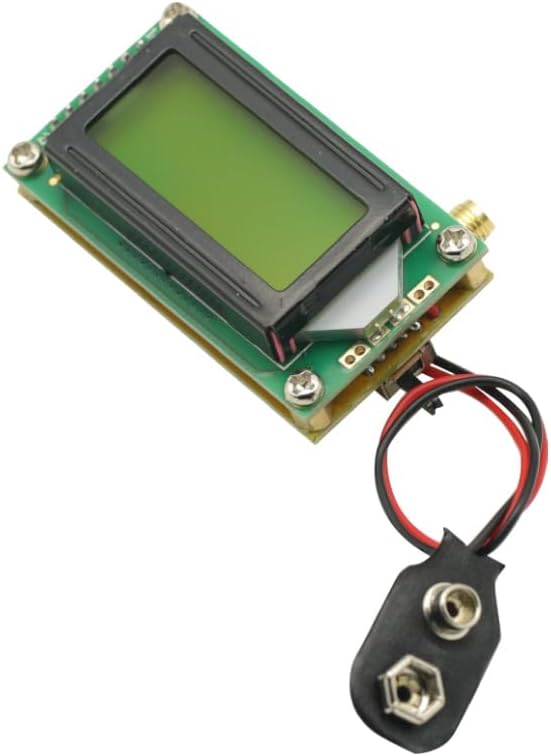
UHF VHF Frequency Counter
4.1Editor score
Compact handheld mini size design
One button control operation
Includes 9V battery and antenna
Discover the top frequency counter for ham radio models reviewed for accuracy and range. Compare features and find the perfect tool for your wireless needs.
Finding a reliable frequency counter for ham radio is essential for precise signal measurement and equipment tuning. These devices help enthusiasts verify transmission frequencies and ensure compliance with band plans.
We evaluated ten top-rated models based on accuracy, range, portability, and user-friendly controls. Our analysis covers handheld counters and advanced analyzers suitable for both beginners and experts.
Each pick highlights specific strengths like GPS stability or broad spectrum analysis. Note that product availability and pricing can change frequently, so check current listings before purchasing your new gear.
4.1Editor score

4.1Editor score

5.0Editor score
This side-by-side comparison shows the key specifications and capabilities of the top ten frequency counters for ham radio available this month.


The Mcbazel Surecom SF401 Plus stands out as a versatile frequency counter for ham radio with a wide measurement range and portable design. It holds a solid rating for its ability to measure signals from 27MHz up to 3000MHz accurately.
We may earn a commission when you buy through this link, at no additional cost to you.
This device uses a TCXO oscillator to maintain precision across different temperatures. It includes a signal strength indicator and comes with separate antennas for VHF and UHF bands. The four-button control interface makes navigation straightforward for users.
While it offers broad coverage, it is not designed for wide bandwidth analysis. Some users may find the display less detailed compared to spectrum analyzers. However, the included accessories and ease of use make up for these minor limitations.
This counter is ideal for technicians and enthusiasts who need reliable field measurements. If you require a tool for checking walkie talkie frequencies and two way radio signals, this model delivers consistent performance.
The 27MHz to 3000MHz range covers most common ham radio and two way radio bands effectively.
Its small size and included antennas allow for easy transport and on site signal verification.
We may earn a commission when you buy through this link, at no additional cost to you.
This Surecom model is a popular choice for those seeking a dependable frequency counter for ham radio. It is designed to count continuous wave signals and features a CTCSS DCS decoder for enhanced functionality.
We may earn a commission when you buy through this link, at no additional cost to you.
The device covers most frequencies you need for two way radio measurements. Its simple four-button interface ensures quick setup and operation. The portable nature allows you to carry it anywhere for instant checks.
It focuses on carrier signal parameters which works well for basic verification but lacks deeper analysis tools. Users should note it is not suitable for complex modulation or wide bandwidth signals.
For routine checks of radio frequencies, this unit provides accurate readings. It is a practical tool for hobbyists who need to confirm their transmission frequency without investing in expensive equipment.
The built-in CTCSS and DCS decoder helps identify tone-coded signals on two way radios.
Small size and light weight make it perfect for field trips and portable operations.
We may earn a commission when you buy through this link, at no additional cost to you.
The FC-2800M offers a frequency counter for ham radio CB with special features for digital radio users. It includes a built-in DCS CTCSS decoder and supports DMR frequency ranges.
We may earn a commission when you buy through this link, at no additional cost to you.
Measurement accuracy is ensured by a low PPM crystal time base. The device features user friendly four-button controls and offers two main range selections for flexibility. A two year warranty adds peace of mind.
While it covers a broad spectrum, you select from predefined ranges rather than continuous tuning. This simplifies operation but may feel less intuitive than variable counters for some users.
This model is excellent for modern digital radio setups. If you work with DMR or need a reliable standard counter, it balances features and durability effectively.
Support for DMR radio frequency counting makes it suitable for digital communications.
The two year warranty ensures long term reliability and customer satisfaction.
We may earn a commission when you buy through this link, at no additional cost to you.
This TinySA unit is a portable spectrum analyzer that functions as a powerful frequency counter for ham radio. It visualizes signals on a 2.8 inch touchscreen with a built-in signal generator.
We may earn a commission when you buy through this link, at no additional cost to you.
It measures MF HF VHF and UHF signals with selectable resolution bandwidth. The rechargeable battery supports field work and USB PC control expands its capabilities. The accessory kit is comprehensive.
The frequency range is capped at 960MHz which may limit UHF use beyond that point. Calibration is internal but requires attention to ensure accurate measurements. It is more complex than basic counters.
Ideal for users wanting visual signal data beyond simple frequency. If you need to see harmonics or interference patterns this tool offers significant value at its price.
View up to 290 scan points on color display to analyze RF environments.
Rechargeable battery ensures operation without needing wall power during tests.
We may earn a commission when you buy through this link, at no additional cost to you.
This handheld frequency counter for ham radio offers essential testing within specific VHF and UHF bands. It is designed for simplicity with one button control and includes a 9V battery.
We may earn a commission when you buy through this link, at no additional cost to you.
The device measures from 136-174MHz and 400-470MHz with CTCSS and DCS decoding. Its mini size makes it easy to slip into a pocket for quick checks. The long press power toggle is convenient.
The narrow range limits use to standard walkie talkie frequencies. More complex setups requiring broader coverage will find this insufficient. However for dedicated band work it performs reliably.
This is a great budget option for local radio checks. If you need a no frills tool to verify specific channel frequencies this one gets the job done efficiently.
Mini dimensions make it the most portable counter for carrying in a tool box.
Supports CTCSS and DCS decoding to identify private call frequencies.
We may earn a commission when you buy through this link, at no additional cost to you.
The Anysecu SF-103 A provides a frequency counter for ham radio with an upgraded range covering up to 2.8GHz. It is suitable for maintenance personnel testing wireless signals and strength.
We may earn a commission when you buy through this link, at no additional cost to you.
This model offers easy ranges to choose from covering most two way radio frequencies. The portable design allows for carrying anywhere and features a signal strength indicator. It is an upgrade over earlier SF401 versions.
The interface is straightforward but lacks advanced visual displays. Users looking for high precision or complex modulation analysis might need something more sophisticated. For general checks it is practical.
It serves well for general RF maintenance and tuning. If you need a wide range tool without extra features this unit balances simplicity and coverage.
Coverage from 2MHz to 2.8GHz handles most standard amateur and commercial bands.
Integrated indicator helps gauge transmission power during frequency checks.
We may earn a commission when you buy through this link, at no additional cost to you.
This handheld frequency counter for ham radio covers 2MHz to 2.8GHz and features TCXO stability for accurate readings. It includes a warning for battery level and max input signal protection.
We may earn a commission when you buy through this link, at no additional cost to you.
The device is a tool of choice for wireless enthusiasts and maintenance staff. It covers interesting frequency areas like 2m HAM radio and DMR. The four button control is intuitive for quick use.
Users must ensure direct input signals do not exceed the 5V limit to avoid damage. It is not a full analyzer but a dedicated counter. Proper care ensures long life and reliability.
It is great for verifying HAM radio frequencies on site. If you value temperature compensated accuracy in a portable form this model is a strong option.
TCXO technology ensures accuracy across a wide temperature range for reliable field use.
Battery and input warnings prevent device damage and unexpected shutdowns.
We may earn a commission when you buy through this link, at no additional cost to you.
This module offers a frequency counter for ham radio focused on DIY builders and electronics projects. It covers 1 to 500 MHz and uses a digital LCD display for readings.
We may earn a commission when you buy through this link, at no additional cost to you.
The PCB and FR4 material provide a sturdy base for integration into custom enclosures. It is designed for those comfortable with basic soldering and testing. Adjusting accuracy has limits.
It is not a ready to use handheld device. You will need to build a casing and power supply. The precision is limited to the second digit so do not expect lab grade performance.
Ideal for hobbyists building their own test equipment. If you need a cheap component to integrate into a larger project this fits that purpose well.
Designed as a module to be embedded into custom ham radio test sets.
Digital display provides simple frequency readouts for general testing needs.
We may earn a commission when you buy through this link, at no additional cost to you.
This board serves as a simple frequency counter for ham radio kits and experiments. It covers the 1MHz to 500 MHz range and features an LCD display.
We may earn a commission when you buy through this link, at no additional cost to you.
It is designed to be part of a larger kit or custom project. Power consumption is low which helps for battery projects. It provides essential measurement capabilities without extra features.
You must supply your own power source and case. The interface is bare bones so integration requires some technical skill. It is suitable for basic frequency verification tasks.
A good choice for makers and students. If you need a low cost board to learn about frequency measurement this is a functional starting point.
Efficient circuit design helps extend battery life in portable DIY setups.
LCD display provides immediate visual feedback of measured frequencies.
We may earn a commission when you buy through this link, at no additional cost to you.
The AURSINC TinyGTC is a high precision frequency counter for ham radio with GPSDO and 40ps resolution. It supports dual channel measurements and features a responsive touchscreen.
We may earn a commission when you buy through this link, at no additional cost to you.
It measures frequency phase and time intervals with extreme accuracy. The GPS disciplined oscillator locks to GPS for long-term stability. It includes rich functions like FFT and ADEV analysis.
The device is designed for calibration and RF testing projects. It runs on a rechargeable battery and offers USB data logging. It is a professional tool in a portable form.
Ideal for advanced users and serious enthusiasts. If you need lab grade accuracy and GPS stability this model delivers top tier performance.
Built-in GPSDO ensures excellent long-term frequency stability for precise calibration.
Includes FFT and ADEV analysis to evaluate oscillator performance thoroughly.
We may earn a commission when you buy through this link, at no additional cost to you.
Selecting the right frequency counter requires understanding your testing needs and technical comfort level.
Ensure the device covers the bands you use most. Some models start at 1MHz while others start at 27MHz.
Choose a range that includes your primary HAM radio or two way radio frequencies.
Look for TCXO or GPSDO technology for stable readings across different temperatures.
Higher resolution models offer better precision for calibration tasks.
Consider if you need a simple digital readout or a touchscreen with graphs.
Touchscreens offer more data but may cost more.
Field work requires a compact size and battery power options.
Check the dimensions and included accessories for travel.
CTCSS and DCS decoding helps identify tone coded signals.
This feature is useful for modern digital radio systems.
USB ports allow for PC control and data logging.
Useful if you need to record or export measurements.
Check the build materials and warranty length for long term use.
Better protection can save money over time.
Some counters include signal generators or spectrum analysis.
These add value if you need to generate test signals.
Connect the device to a power source or insert batteries before starting. Ensure the antenna is attached securely.
Power on the unit and select the correct frequency range. Press test to measure signals from your radio.
Store the counter in a dry place away from heat. Keep connectors clean for reliable readings.
For standard amateur use 1MHz to 3GHz covers most HF VHF and UHF bands. Models with 2MHz to 2.8GHz are versatile for daily testing.
TCXO provides temperature compensation which stabilizes the oscillator. This prevents drift during outdoor field tests in varying weather.
Yes many units support SDR reference verification. Models with external reference inputs work best for precise calibration.
Basic handhelds are pre calibrated. Advanced models may allow manual adjustment or internal calibration routines for accuracy.
Use the included coaxial cables to connect to the antenna port. Ensure the signal level is within safe limits.
Most models offer one to two years. Some brands like FC-2800M include specific long term warranties.
For lab grade accuracy GPSDO is excellent. It offers better stability than TCXO but at a higher price.
Many modern counters support DMR frequencies. Check for specific DMR mode labels in the product specs.
The top picks like the Surecom SF401 Plus and TinyGTC deliver strong value for different users.
Prioritize range and stability based on your specific radio activities and testing needs.
Check current listings for availability and pricing before making your final purchase.