
Delinx 12V 4-Pin PWM PC Fan Speed Controller, Auto/Manual Dual Mode,60W
4.9Editor score
Wide voltage support from 5V to 30V
Built-in over-voltage and reverse protection
Power-off memory retains all settings
This expert guide compares the top 10 Front Panel Fan Controller models for 2026 based on LCD display features, PWM control, safety alarms, and fan channel
Finding the right cooling solution is essential for maintaining optimal PC performance. A Front Panel Fan Controller allows you to manage fan speeds directly from your chassis. These devices provide visibility and control over your system's thermal profile.
We evaluated ten distinct models to determine which offer the best balance of features and reliability. Our comparison focuses on LCD readability, control options, safety alarms, and build quality. Each entry reflects real user feedback and technical specifications.
Each pick highlights key strengths, potential drawbacks, and ideal use cases for your build. Prices and availability change frequently so always verify current details before purchasing. This guide helps you choose the right controller for your specific cooling needs.
4.9Editor score

5.0Editor score

4.2Editor score
The following table presents a side-by-side comparison of all ten selected models. It highlights key specifications including control channels, display types, safety features, and compatibility options to help you narrow down your choice quickly.
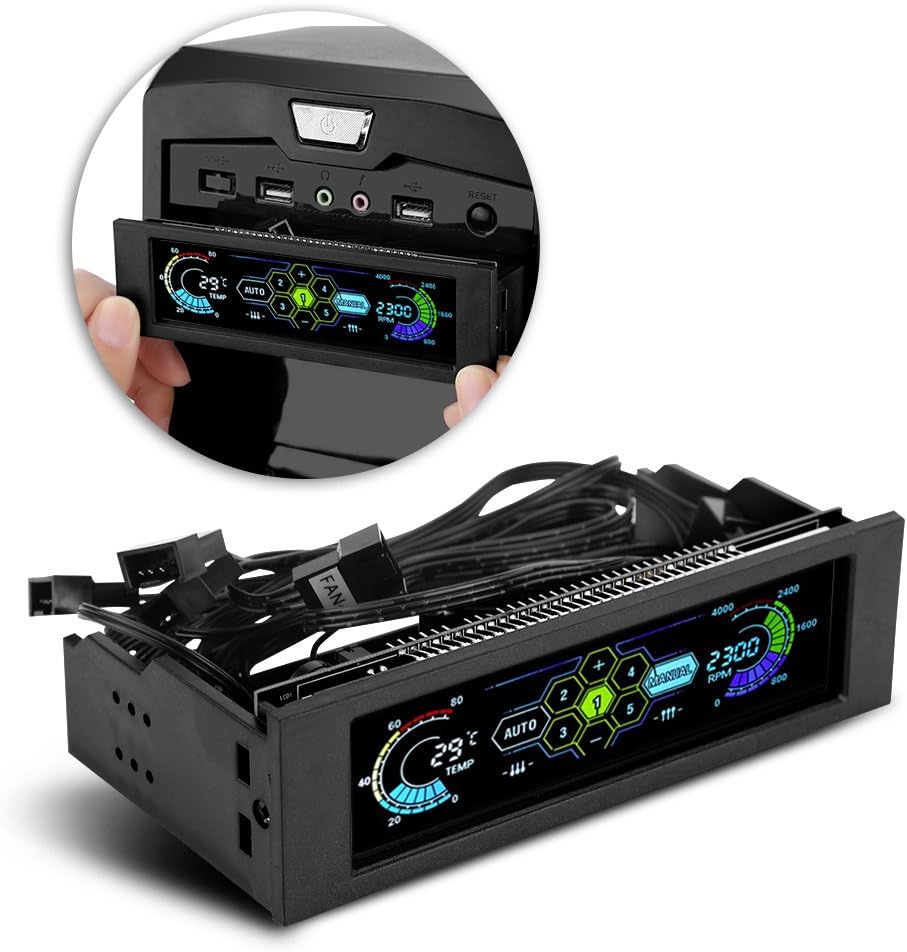


This STW‑6041 controller stands out with a perfect rating and robust thermal monitoring features. It provides clear visibility of fan speeds and temperatures through its wide LCD screen. The unit is designed to fit standard 5.25 inch optical drive bays in most PC cases.
We may earn a commission when you buy through this link, at no additional cost to you.
The LCD display shows four sets of fan speeds and four sets of temperatures simultaneously. This allows users to monitor critical thermal zones without needing to open case side panels. The PWM circuitry ensures that fan speed adjustments are smooth and quiet.
One trade-off is the requirement for a 5.25 inch bay which might not exist in modern compact chassis. Additionally the matte finish may show fingerprints over time depending on handling. These are minor considerations given the comprehensive feature set offered.
This controller is ideal for builders who prioritize thermal visibility and noise reduction. It offers a reliable solution for managing multiple case fans without relying on motherboard headers. We recommend it for users seeking a dedicated cooling management system.
The wide LCD screen displays real-time data for multiple fans allowing precise tracking of thermal loads across the system.
PWM circuits adjust fan speeds dynamically reducing high-frequency noise while maintaining adequate airflow for system cooling.
We may earn a commission when you buy through this link, at no additional cost to you.
The V BESTLIFE model offers a big LCD screen that provides constant updates on system health. It allows control over five fans which is beneficial for cases requiring high airflow. The auto manual switch lets users toggle between automated and manual control easily.
We may earn a commission when you buy through this link, at no additional cost to you.
Key strengths include the ability to display hard disk state alongside temperature and fan speed. Users can set alarm ranges from 40 to 90 degrees to match their specific hardware tolerance. This flexibility helps prevent overheating in demanding computing environments.
Some users report that cable management can be tricky during installation due to the number of connections. The interface is straightforward but may require patience to configure optimal settings initially. Despite this the monitoring capabilities remain robust.
This unit is well-suited for users who want comprehensive system status at a glance. It balances control and visibility effectively for mid to high-end builds. Consider this model if managing five fans is a priority for your setup.
The large LCD shows not only temperatures but also hard disk state giving a holistic view of system components.
Users can customize the alarm temperature range between 40 and 90 degrees to suit different hardware cooling needs.
We may earn a commission when you buy through this link, at no additional cost to you.
The SaiDian controller provides basic thermal management with a focus on cost-effectiveness. It includes a large screen that displays temperature and fan speed alongside date and time. This adds a utility element beyond just cooling control for many desktop users.
We may earn a commission when you buy through this link, at no additional cost to you.
One key feature is the fan jam alarm that sounds immediately when a fan fails to dissipate heat. Users can manually set the alarm temperature range from 50 to 90 degrees to prevent hardware damage. The system supports control over three groups of fans.
The lower rating suggests potential inconsistencies in build quality or sensor accuracy across units. Users may need to verify calibration upon installation to ensure reliable temperature readings. It remains a functional option for those on a strict budget.
This model is best for entry-level builders who need basic monitoring without complex features. It offers essential safety features like alarms and manual control at a low price point. Proceed with careful setup to ensure reliable operation.
The system alerts users immediately when a fan stops working helping prevent overheating issues during system operation.
Displaying date and time on the LCD adds a practical daily utility feature to the cooling controller panel.
We may earn a commission when you buy through this link, at no additional cost to you.
This Thermaltake Commander brings aesthetic appeal to cooling control with an RGB LCD screen. It supports up to six channels of fan control which is ideal for complex builds with extensive airflow needs. The unit includes six voltage control knobs for precise manual tuning.
We may earn a commission when you buy through this link, at no additional cost to you.
Key strengths include the inclusion of six temperature sensors and compatibility with two Lumi LED strips. The warning alarm system includes short circuit protection which adds a layer of safety for connected components. This makes it a premium choice for enthusiasts.
The main drawback is the higher price point compared to non-RGB alternatives. Users should ensure their case has the necessary 5.25 inch bay and space for LED strips. The value comes from the combination of visual customization and high channel count.
This unit is recommended for users who prioritize aesthetics alongside thermal performance. It works well in gaming rigs where visual cohesion is important. If you need six channels and RGB integration this is a strong candidate.
The RGB LCD screen allows users to match system aesthetics by adjusting colors and display styles on the controller.
Six voltage control knobs enable independent management of six different fan zones for comprehensive cooling coverage.
We may earn a commission when you buy through this link, at no additional cost to you.
The Ejoyous controller features a robust aluminum alloy panel with multiple matte finishes. It allows independent control of up to four case fans with a wide LCD display. The unit includes double safety functions to ensure reliable operation under stress.
We may earn a commission when you buy through this link, at no additional cost to you.
Key strengths include automatic temperature control which supports demand-oriented cooling without manual intervention. The PWM circuitry reduces annoying high-frequency noises making the system more comfortable to use. High-temperature capacitors support a long lifespan in varying conditions.
Lack of a user rating suggests limited review data which may make reliability harder to verify. Users should check installation instructions carefully as it fits 5.25 inch bays. The build quality seems focused on durability over budget pricing.
This model is suitable for users who value build robustness and noise reduction. It provides solid thermal management with automatic features for ease of use. Proceed with caution due to limited user feedback on long-term performance.
The automatic temperature control mode adjusts fan speed based on thermal load keeping the system efficient without manual changes.
Aluminum alloy with matte finish provides a sturdy and premium look for the front panel interface.
We may earn a commission when you buy through this link, at no additional cost to you.
This ARCTIC model supports up to 10 ports with individual PWM control which is unique in this category. It offers native driver support for Windows and Linux making it versatile for different operating systems. The design aims to centralize cable management effectively.
We may earn a commission when you buy through this link, at no additional cost to you.
Key strengths include the high power output of 2 A per port totaling 4.5 A for the whole unit. This allows connection of high-performance fans that might otherwise struggle on standard headers. Magnetic or adhesive mounting options add installation flexibility.
Users should be aware that monitoring features may rely on external software rather than a front panel display. This differs from LCD-based controllers where data is visible at the chassis. It is a great choice for those who prefer software dashboards.
This unit is ideal for server racks or workstation builds requiring many fans. It simplifies wiring and ensures consistent power delivery to all connected devices. Choose this if you prioritize channel count over a physical display.
With 2 A per port the controller delivers consistent power to high performance fans without voltage drop issues.
Native drivers for both Windows and Linux ensure compatibility across a wide range of operating system environments.
We may earn a commission when you buy through this link, at no additional cost to you.
The Noctua NA-FC1 is a compact controller designed for 4-pin PWM fans. It works as a manual speed reducer or can be used in tandem with motherboard controls. This flexibility allows for truly quiet operation even with high-speed industrial fans.
We may earn a commission when you buy through this link, at no additional cost to you.
A unique feature is the no stop mode which prevents fans from falling below 300rpm to avoid BIOS errors. The unit includes a 3-way splitter cable enabling control of up to three fans simultaneously. It also carries a six-year warranty for added peace of mind.
It lacks a front panel LCD so visibility is limited to physical adjustments or motherboard software. Installation is internal which might not suit users wanting external controls. This makes it ideal for quiet builds where physical buttons are preferred.
This unit is best for users prioritizing build quality and warranty over external displays. It provides reliable manual control for specialized fan types. Consider this if you want a silent solution with robust manufacturer support.
The no stop mode ensures fans keep spinning at a safe minimum speed to prevent BIOS fan errors on startup.
This compact controller is designed for internal mounting providing a clean look without a front panel bay.
We may earn a commission when you buy through this link, at no additional cost to you.
This Delinx controller offers auto and manual modes for flexible thermal management. It features a digital display showing real-time temperature and fan speed up to 50,000 RPM. The unit supports a wide voltage range from 5V to 30V for diverse applications.
We may earn a commission when you buy through this link, at no additional cost to you.
Key strengths include built-in over-voltage and reverse polarity protection for safe operation. It comes with a USB-C adapter cable and temperature probe making it a complete DIY kit. The hysteresis settings allow precise control over fan behavior during temperature swings.
The compact size allows integration into various projects beyond standard PC cases. It is suitable for server cabinets or audio setups needing thermal regulation. Users should note it is more versatile than a traditional bay-mounted controller.
This model is ideal for builders needing precise control and voltage flexibility. It balances auto and manual modes effectively for different scenarios. Consider this if you need a portable or adaptable cooling solution.
Supporting voltages from 5V to 30V allows this controller to work with a wide range of fan and power standards.
Adjustable start and full speed temperatures with hysteresis prevent rapid fan speed fluctuations during minor temp changes.
We may earn a commission when you buy through this link, at no additional cost to you.
This 4 Fans controller provides basic LCD monitoring for four channels of fans. The LCD displays four sets of fan speeds and temperatures simultaneously. It includes an alarm system for high temperatures and fan anti-seize protection.
We may earn a commission when you buy through this link, at no additional cost to you.
The PWM circuit helps adjust speed to reduce noise which is important for quiet builds. High-specification capacitors are used to ensure a longer service life and resistance to electrical issues. The panel has been treated with multiple matt finishes.
The low rating indicates potential reliability issues or quality control concerns. Users may experience inconsistent temperature readings or fan control response. It serves as an entry-level option but may require frequent checks for functionality.
This model is suitable for budget-conscious users needing basic display features. It provides essential alarms and control without high cost. Ensure you test the unit thoroughly upon installation to verify performance.
The alloy front panel undergoes multiple matt treatments to provide a durable and premium look for the chassis.
An alarm activates if a fan seizes up preventing heat buildup and potential hardware damage during operation.
We may earn a commission when you buy through this link, at no additional cost to you.
This model supports control of five groups of fans which is useful for larger cases. It features a big LCD screen to display temperature and fan speed alongside hard disk state. Users can manually set up alarm temperature ranges for safety.
We may earn a commission when you buy through this link, at no additional cost to you.
Key features include an auto manual switch for control flexibility. If a fan breaks down and cannot cool the computer the system alerts immediately. The alarm temp range can be set from 40 to 90 degrees for custom needs.
The limited positive reviews suggest potential inconsistencies in sensor accuracy or build durability. Users should verify wiring and settings during installation to avoid errors. It provides basic visibility and alarms at a low price point.
This unit is recommended for users needing basic monitoring for multiple fans. It offers essential safety features without advanced customization. Proceed with caution and check component reliability upon purchase.
The LCD includes hard disk state information helping users monitor drive activity alongside thermal metrics.
Manual setting of alarm ranges from 40 to 90 degrees allows tailored safety thresholds for different hardware.
We may earn a commission when you buy through this link, at no additional cost to you.
Selecting the right front panel fan controller requires attention to specific features that impact your thermal management strategy. This guide outlines key factors to consider before making a decision.
Determine how many fans you need to control independently. Models range from 3 to 10 ports depending on the complexity of your cooling setup. More channels provide better airflow distribution across the case.
Choose a controller that exceeds your current needs to allow for future upgrades without replacing the unit.
Controllers offer LCD or LED displays versus internal-only control. LCD screens provide real-time visibility of temperatures and RPMs without needing software. This is critical for troubleshooting and monitoring.
Select a display that is clear enough to read from your viewing angle and shows the data you prioritize most.
Manual and automatic control modes serve different use cases. Automatic mode uses temperature probes to adjust fan speeds dynamically which can save power. Manual mode gives precise control for tuned environments.
Opt for a model that supports both modes if you want flexibility in different usage scenarios.
Safety features like temperature alarms are vital for preventing hardware damage. Look for units that alert you when thresholds are exceeded or fans fail. This can save critical components from overheating.
Ensure the alarm system is reliable and audible enough to notice during system operation.
Check voltage and connector compatibility with your fans and power supply. Some controllers support PWM and DC fans while others require specific pin layouts. Proper compatibility ensures stable operation.
Verify that your case has the necessary drive bay or space for internal mounting before purchase.
Materials like aluminum alloy panels and high-spec capacitors indicate durability. A robust build prevents issues with electrical leakage or heat damage. Quality construction often correlates with a longer service life.
Invest in units with high-quality internal components to avoid early failure during use.
PWM circuits help reduce high-frequency noise which is common in many fan setups. This contributes to a quieter overall system experience. Look for features specifically designed for noise minimization.
Prioritize models with noise reduction technologies if you work in a quiet environment.
Some controllers offer software integration for advanced monitoring. This is useful if you prefer dashboard interfaces over physical displays. Ensure drivers are available for your operating system.
Choose units with active driver support if you plan to manage fans via software.
Begin by installing the controller into the designated drive bay or internal mounting point. Connect the power supply cable and ensure all fan connectors are securely seated. Verify that the display activates correctly upon system boot.
Calibrate temperature probes to ensure accurate readings. Place probes near hotspots like the CPU or GPU for best monitoring. Adjust alarm thresholds to match your hardware tolerances to prevent unnecessary alerts.
Regularly check that sensors and cables remain secure to avoid loose connections. Keep the panel free of dust using compressed air to maintain readability. Periodically review fan speeds to confirm the controller is managing cooling effectively.
Yes many modern Front Panel Fan Controllers support PWM fans with 4-pin connectors. Check the specs to confirm compatibility with PWM and DC modes for accurate control and speed adjustments.
An LCD display provides real-time visibility of fan speeds and temperatures without software. This allows for easy monitoring of system health and immediate detection of thermal issues.
Most models include temperature probes to monitor heat levels. These sensors feed data to the display so you can adjust fan speeds based on actual system temperatures.
Controllers typically manage between three and ten fans depending on the model. Choose one with enough channels to cover your current setup and potential future expansions.
Basic operation requires no software as the controller runs independently. Some advanced models offer software for detailed monitoring but the core functions work directly.
Most controllers have alarm features that alert you if a fan stops. This prevents overheating and gives you time to address the issue before damage occurs.
They fit cases with 5.25 inch drive bays or allow for internal mounting. Check your case specifications to ensure you have the physical space for installation.
Automatic control adjusts fan speeds based on real-time temperatures. This optimizes cooling and reduces noise by running fans only as fast as necessary.
This guide reviewed ten distinct models offering various features and build qualities. Top picks highlight strong LCD visibility, PWM control, and safety features for most users.
Prioritize channel count and display clarity to match your system needs. Ensure compatibility with your case and fans to avoid installation issues.
Always check current pricing and availability before purchasing as details may change. Select a unit that balances performance with budget for the best long-term value.