
NIIMBOT B1 Label Maker Machine with 3 Tapes, 2Inch Thermal Label Printer
4.6Editor score
Direct thermal printing without ink
Portable design with rechargeable battery
Wide label width compatibility range
This guide compares the best label printer for peptide vials by evaluating durability, resolution, connectivity, and chemical resistance for laboratory and
Label printers for peptide vials need to produce clear, durable tags that survive cold storage and harsh chemicals. Choosing the right device ensures your samples remain identifiable over time without fading or peeling. This guide reviews top models designed for precision labeling.
We compared each printer based on print resolution, label width support, and connectivity options like Bluetooth or USB. Durability against water, oil, and temperature extremes was critical for laboratory and peptide storage use cases. We also considered ease of use and software features.
Each pick shows key strengths, pros, cons, and real-world suitability for peptide vial tracking. Prices and availability change often, so check the current listings before deciding. This expert guide helps you choose the most reliable tool for your specific labeling workflow.
4.6Editor score

4.6Editor score

4.6Editor score
This side-by-side comparison lists all ten reviewed printers with their core specifications. Each entry highlights label width, printing technology, connectivity, and durability traits. These details help you match a model to your peptide vial labeling needs.
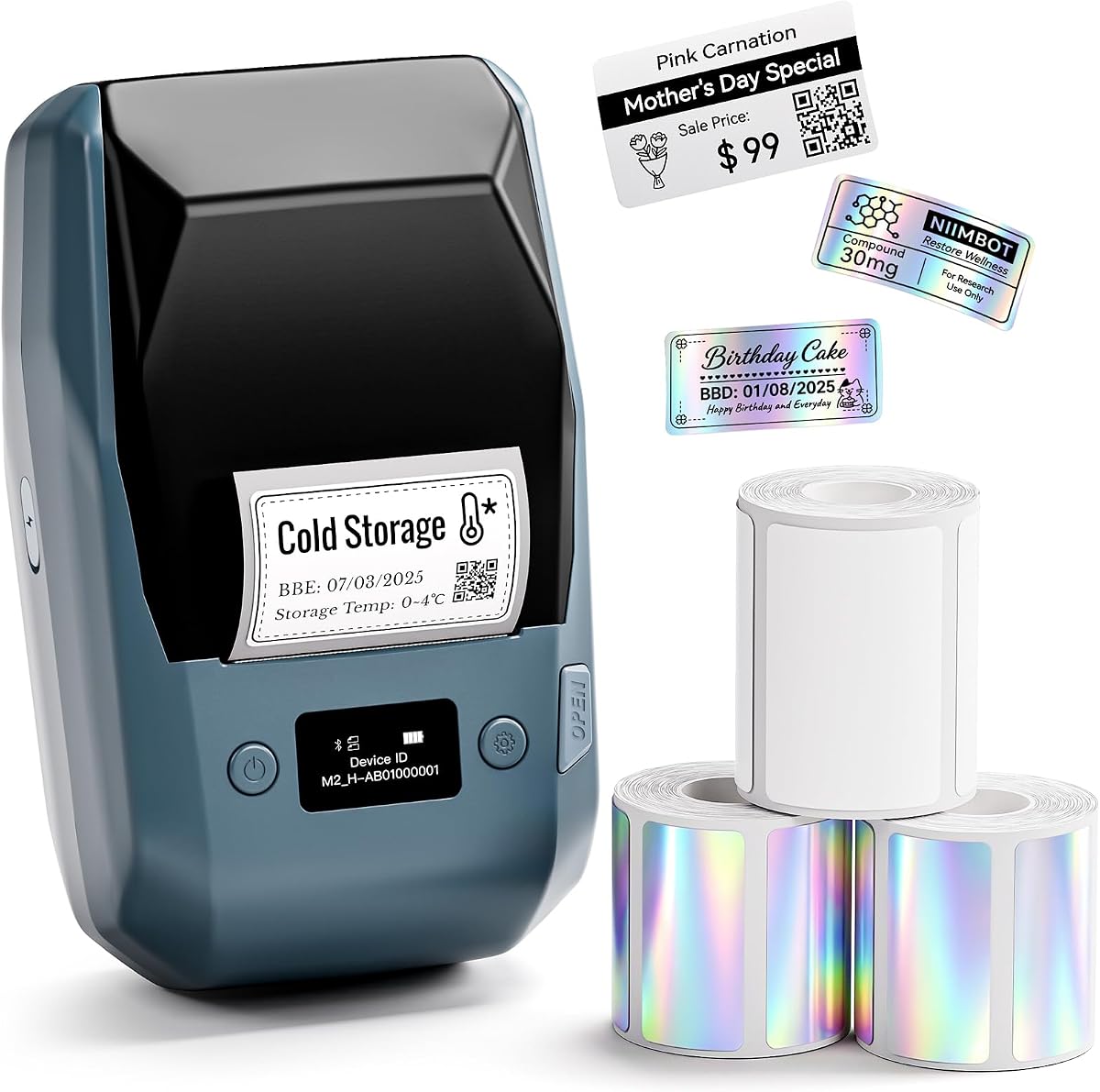


The NIIMBOT M2 is a top-rated thermal transfer printer ideal for peptide vial labeling. It earns high marks for producing sharp, durable labels that resist chemicals and temperature extremes.
We may earn a commission when you buy through this link, at no additional cost to you.
Its 300 DPI resolution ensures barcodes and small text remain legible under storage conditions. The thermal transfer technology prevents fading, making it reliable for long-term sample tracking in labs.
While you must buy specific M2-series labels, the durability justifies the cost. The need for separate ribbons adds a step but ensures consistent, professional-quality output every time.
Buy this if you need reliable, high-resolution labels for peptide storage. Its app support and durability make it a standout choice for demanding lab environments.
Labels withstand oil, alcohol, and temperatures from -4°F to 248°F ensuring they stay intact in freezers and chemical environments.
Connect via Bluetooth to up to ten phones or use USB for PC editing offering flexibility in design workflows.
We may earn a commission when you buy through this link, at no additional cost to you.
This bundle adds three rolls of label tape to the popular NIIMBOT M2, offering immediate use for peptide vial tracking. It shares the same durable thermal transfer tech as other M2 models.
We may earn a commission when you buy through this link, at no additional cost to you.
The inclusion of laser silver tape and team workflow support makes it efficient for labs managing many samples. Adaptive print density and waste-saving features help keep costs down.
Note that app VIP access is time-limited, but core features remain functional. The bundle value outweighs this minor drawback for bulk labeling needs.
Choose this if you want a ready-to-print solution with multiple label types. It balances performance, convenience, and initial cost well.
Three rolls included mean you can start labeling peptide vials right away without extra purchases.
Up to ten mobile devices can pair simultaneously enabling smooth collaboration among lab staff.
We may earn a commission when you buy through this link, at no additional cost to you.
This M2 variant emphasizes battery capacity with a 2000mAh rechargeable cell for extended field use. It delivers sharp thermal transfer prints suitable for peptide vial tracking.
We may earn a commission when you buy through this link, at no additional cost to you.
The large battery allows up to fifteen rolls per charge ensuring uninterrupted labeling during bulk projects. Its multi-device support and material versatility add practical value.
While overall ratings lag slightly, the battery performance is a standout feature. PC drivers are needed but the mobile experience is seamless.
Buy this if long printing sessions without power are a priority. It suits labs or field teams needing reliable mobility.
Charge once for days of use ideal for labeling many peptide vials in one sitting.
Supports multiple label materials and ribbons allowing customized high-contrast tags for storage.
We may earn a commission when you buy through this link, at no additional cost to you.
This M2 model highlights a 4.7 rating and claims up to ten years of label durability. It is explicitly marketed for lab and office use including sample tracking.
We may earn a commission when you buy through this link, at no additional cost to you.
Its auto recognition and paper return features streamline repetitive peptide vial labeling tasks. Chemical resistance ensures labels survive harsh storage conditions without fading.
The need for specific consumables is standard for thermal transfer models. High ratings suggest users appreciate the reliability and print quality.
Choose this if lab durability and user satisfaction are critical. It delivers consistent performance for professional workflows.
Printed labels resist chemicals and extreme temperatures ensuring sample IDs remain legible in storage.
Auto recognition and paper return reduce waste and simplify repetitive label creation tasks.
We may earn a commission when you buy through this link, at no additional cost to you.
The B1 Pro offers high-resolution printing with dual color output for visually distinct labels. It is compact and uses direct thermal technology without ribbons.
We may earn a commission when you buy through this link, at no additional cost to you.
Its app provides extensive design resources and font options helpful for custom vial tags. Setup is straightforward via Bluetooth for mobile devices.
However, direct thermal labels may not last as long as thermal transfer in cold or chemical environments. Consider this for lighter or short-term storage.
Buy this if visual customization and portability matter most. It suits smaller operations needing sharp, colorful labels.
Print red and black to highlight key peptide information or categorize sample types.
Access thousands of icons fonts and templates to create professional-looking labels easily.
We may earn a commission when you buy through this link, at no additional cost to you.
This SUPVAN model includes three tapes and a free app requiring no registration. It is affordable and supports various label styles including square and round.
We may earn a commission when you buy through this link, at no additional cost to you.
Image processing in the app is highlighted for clarity which helps small text on vials. The free app lowers barriers to entry for casual lab users.
Durability may not match industrial thermal transfer units for harsh conditions. It suits general organization or short-term peptide storage.
Choose this for a cost-effective entry into labeling. It balances price and functionality well for basic needs.
Start printing immediately without account setup ideal for quick labeling sessions.
Compatible with square round and file labels to fit different vial and storage shapes.
We may earn a commission when you buy through this link, at no additional cost to you.
The B1 is an affordable thermal printer with three tapes included in the package. It is lightweight and portable making it easy to move around a lab.
We may earn a commission when you buy through this link, at no additional cost to you.
Despite its budget price, the labels are waterproof and oilproof suitable for basic lab storage. Its battery offers long standby time for occasional use.
Direct thermal labels may fade faster than thermal transfer but remain acceptable for many users. iPad connectivity is restricted to iOS phones.
Buy this for cost-conscious labeling of non-critical samples. It delivers solid performance at a low entry price.
At 293 grams the printer is easy to carry for mobile labeling tasks.
Three tape styles included provide flexibility for different vial sizes and shapes.
We may earn a commission when you buy through this link, at no additional cost to you.
This Brother model targets industrial workflows with a dual cutter and quick application keys. It is designed for high-volume, durable labeling in professional settings.
We may earn a commission when you buy through this link, at no additional cost to you.
Its ability to store templates and databases speeds up repetitive tasks. Labels are laminated ensuring they survive harsh conditions over long periods.
The price is higher than consumer models but justified by durability and speed. Weight and size reduce portability but enhance stability.
Choose this for high-volume, critical sample labeling. It suits labs needing robust, professional-grade tools.
Quick keys and dual cutter streamline production of many labels quickly.
Laminated labels withstand chemical exposure and temperature extremes better than consumer options.
We may earn a commission when you buy through this link, at no additional cost to you.
This industrial printer combines Bluetooth and USB-C for flexible design workflows. It offers professional-grade labeling with database storage for repeated tasks.
We may earn a commission when you buy through this link, at no additional cost to you.
The Pro Label Tool app allows mobile design which aids in on-the-spot labeling of peptide vials. Quick keys enhance speed in busy lab settings.
While pricier, the connectivity and durability justify the investment for serious users. It balances mobility and performance well.
Buy this for wireless industrial labeling needs. It is ideal for labs needing robust, connected tools.
Design labels on mobile devices and print wirelessly to save time.
Built for industrial tasks ensuring labels survive tough lab environments and storage.
We may earn a commission when you buy through this link, at no additional cost to you.
This Seiko desktop unit offers rapid label production at an affordable cost. It features a simple front-load design and intuitive software for quick formatting.
We may earn a commission when you buy through this link, at no additional cost to you.
While not marketed for harsh lab environments, it delivers clear labels suitable for general organization. Software works on both PC and Mac systems.
Its fixed footprint and lower durability limit use for specialized peptide storage but suffice for labeling bins or files.
Choose this for basic labeling tasks at a desk. It is affordable and straightforward for home or office use.
Print labels at over 2 inches per second for efficient batch jobs.
Software formats labels easily without technical expertise needed.
We may earn a commission when you buy through this link, at no additional cost to you.
Selecting the right label printer requires balancing durability, resolution, connectivity, and ease of use. This guide outlines key factors to consider.
Thermal transfer printers use ribbons to create labels that resist chemicals, water, and temperature extremes better than direct thermal. For peptide vials stored in freezers or exposed to solvents, thermal transfer ensures labels do not fade or peel.
Prioritize thermal transfer technology if your samples face harsh conditions to ensure sample identification remains intact over time.
Higher DPI values such as 300 produce sharper text, barcodes, and QR codes which are essential for accurate scanning and inventory tracking. Small text on vials must remain readable after months of storage.
Look for at least 300 DPI resolution to ensure clarity and reliability for your label needs.
Ensure the printer supports label widths suitable for your vial sizes, typically ranging from 20mm to 50mm. Check that compatible tapes are waterproof, oil-proof, and temperature-resistant.
Verify label width range and material specs to match your peptide storage containers effectively.
Bluetooth enables mobile editing which is convenient for labeling in different lab locations. USB or USB-C connections allow advanced design work on a PC for complex layouts or batch jobs.
Choose connectivity based on whether you prefer mobile flexibility or PC precision for your workflow.
Robust apps support templates, fonts, icons, and batch printing which save time during repetitive labeling tasks. Some apps offer VIP access for advanced customization which may expire.
Review app capabilities and any subscription limits before purchasing to ensure long-term usability.
Rechargeable batteries provide mobility for labeling vials across multiple lab areas without needing a power outlet. Look for capacity ratings that support multiple rolls per charge.
If you label on the go, prioritize higher mAh ratings and USB charging compatibility for extended use.
Initial device price matters but consider ongoing consumable costs such as label rolls and ribbons. Some models require proprietary labels which can affect long-term expenses.
Evaluate total cost of ownership including replacement tapes to fit your lab budget.
High ratings and positive feedback indicate reliability and customer satisfaction. Check for responsive support channels in case of troubleshooting or software updates.
Choose models with strong user reviews and available technical support for peace of mind.
Before first use, download the official app or software and pair your printer via Bluetooth or USB. Insert the label tape or ribbon according to the manual's instructions ensuring it feeds correctly.
Design your labels using templates or custom text. Include batch numbers, expiration dates, and storage conditions. Test print one label before bulk printing to verify alignment and readability.
Store the printer in a cool, dry place and keep label rolls sealed to prevent exposure. Clean the print head gently with alcohol wipes periodically to ensure consistent print quality over time.
Thermal transfer printers are generally best for peptide vials because they produce labels that resist chemicals, water, and extreme temperatures. Direct thermal labels may fade faster under harsh lab conditions.
Most models require specific label tapes designed for their mechanism. Using incompatible tapes can lead to jams or poor print quality. Always check the product's compatibility notes before buying consumables.
High-quality thermal transfer labels can remain readable for several years in freezer conditions if they are rated for low temperatures. Direct thermal labels may degrade faster in extreme cold.
No, many models support mobile apps via Bluetooth allowing you to design and print labels directly from a smartphone. PCs offer more advanced editing options but are not always necessary.
Label widths from 20mm to 50mm typically work well for most peptide vial sizes. Choose a width that fits the vial surface without curling or overlapping edges.
Clean the print head every few weeks or after every few rolls of labels to remove dust and residue. Use a soft cloth lightly dampened with alcohol for best results.
Industrial models are designed for high-volume use while consumer models suit smaller labs or personal projects. Assess your volume and durability needs before deciding on a commercial-grade unit.
Yes, most label printers support printing barcodes and QR codes via their software. Ensure your app or tool can generate these formats correctly for your tracking system.
This guide highlights top label printers balancing durability, resolution, and ease of use for peptide vial labeling. The NIIMBOT M2 series stands out for lab-friendly thermal transfer technology.
Prioritize thermal transfer for long-term storage, clarity, and chemical resistance. Match label width, connectivity, and budget to your specific workflow needs.
Prices and availability change frequently so check current listings before deciding. These models provide reliable solutions for lab and peptide storage labeling.