
Mcbazel 3 in 1 Handheld Digital Anemometer
4.5Editor score
Measures wind speed and temperature
Backlit LCD for low light
Affordable and portable design
This guide compares the top marine anemometers for sailors and boaters, evaluating accuracy, durability, and features to help you choose the right wind meter.
Marine anemometers are essential tools for sailors and boaters who need accurate wind data for safe navigation and optimal performance. Whether you are racing, cruising, or fishing, knowing wind speed and direction can make a significant difference in your experience on the water.
We compared ten highly rated models ranging from portable handheld units to professional masthead systems. Our evaluation focuses on measurement accuracy, build quality, ease of use, and specific features that matter most in marine environments like saltwater resistance and mounting options.
Each pick highlights key strengths and ideal use cases to help you find the perfect fit for your vessel or activities. Please note that prices and availability change frequently, so verify current details before making a purchase decision to ensure you get the best value.
4.5Editor score

4.5Editor score

4.4Editor score
The following table provides a side-by-side comparison of all ten marine anemometers, highlighting their key specifications and unique features to help you quickly identify which model meets your specific needs.


The BTMETER BT-100 stands out as a reliable choice for boaters and sailors who need quick and accurate wind readings. With a rating of 4.5 stars, it offers a wide range of wind speed units and a clear LCD screen that is easy to read in various lighting conditions.
We may earn a commission when you buy through this link, at no additional cost to you.
Its standout feature is the tripod hole, which allows you to mount the device securely on your boat for continuous monitoring while you focus on sailing or fishing. The inclusion of a lightweight carrying case makes it convenient to store and transport without risk of damage.
While it lacks a humidity sensor, the temperature and wind chill measurements are sufficient for most marine applications. The device is sensitive enough to measure very low air flows, which can be useful for checking ventilation in cabins or engine rooms.
This anemometer is ideal for recreational sailors and drone pilots who want professional-grade features at an affordable price. We recommend it for anyone looking for a balance of accuracy, durability, and ease of use.
The threaded tripod hole ensures the device stays in place during windy conditions, allowing for hands-free operation while you manage your vessel.
The backlit LCD screen ensures you can read wind data clearly even in low-light or evening sailing scenarios.
We may earn a commission when you buy through this link, at no additional cost to you.
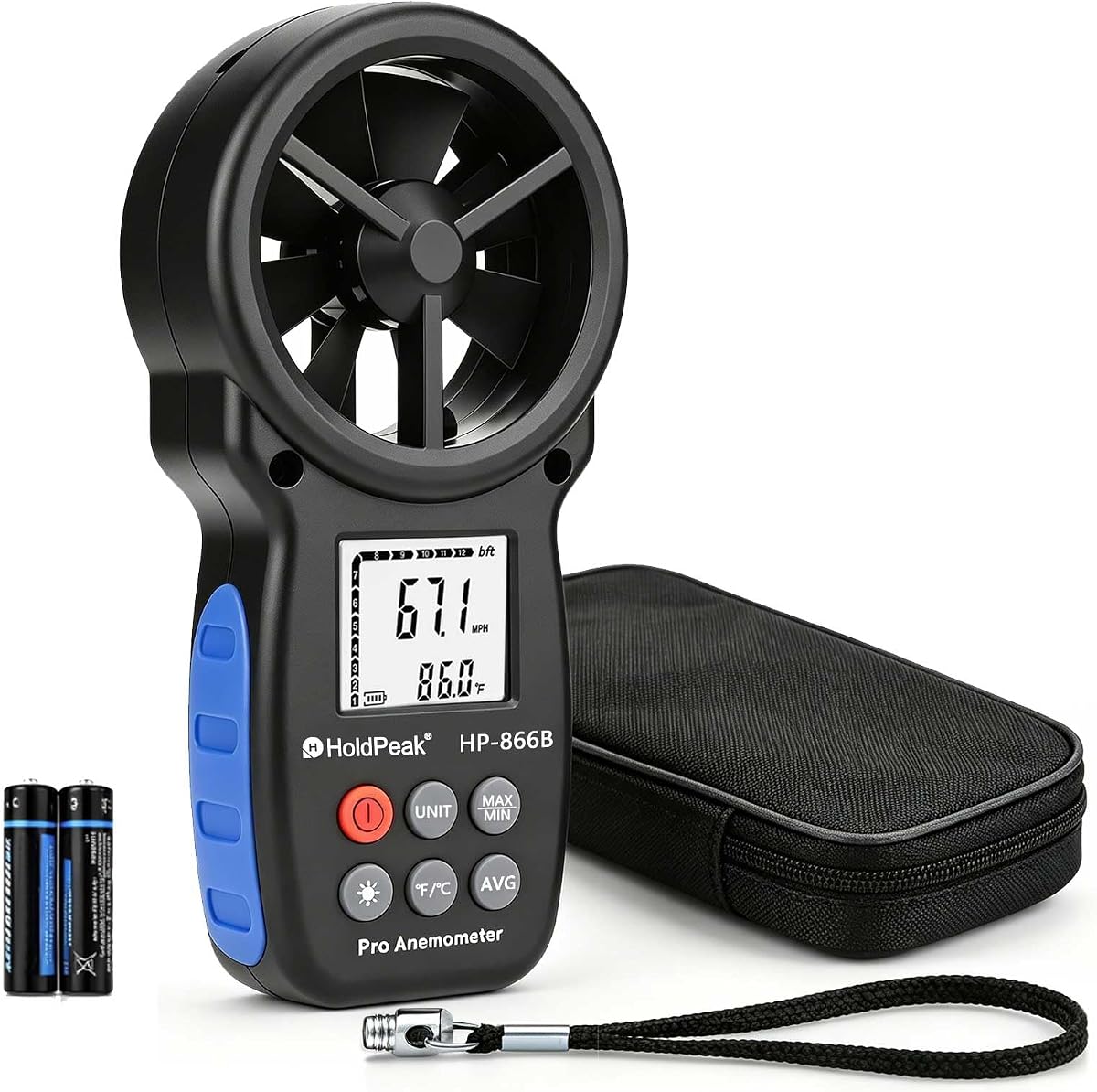
The HoldPeak 866B is another excellent handheld option that competes well with the BTMETER model. It shares many similar features but adds the benefit of tracking maximum and minimum wind speeds, which is crucial for understanding gust patterns during sailing.
We may earn a commission when you buy through this link, at no additional cost to you.
Its dual temperature sensors enhance accuracy, ensuring that your wind chill and temperature readings are dependable. The waterproof carrying pouch is a practical addition that protects the device from moisture and minor impacts while stored in your gear bag.
Like other models in this category, it lacks a humidity sensor, which might be a limitation for those needing comprehensive weather data. However, for pure wind speed and temperature measurements, it performs admirably and offers a good value.
We suggest this model for boaters who prioritize tracking gust data and need a rugged device with a protective case. It is a solid choice for both casual and serious sailors.
The Max/Min/Average functions allow you to monitor peak wind speeds, helping you prepare for sudden changes in weather.
The included waterproof pouch ensures your device remains dry and safe when stored on board or transported to the marina.
We may earn a commission when you buy through this link, at no additional cost to you.
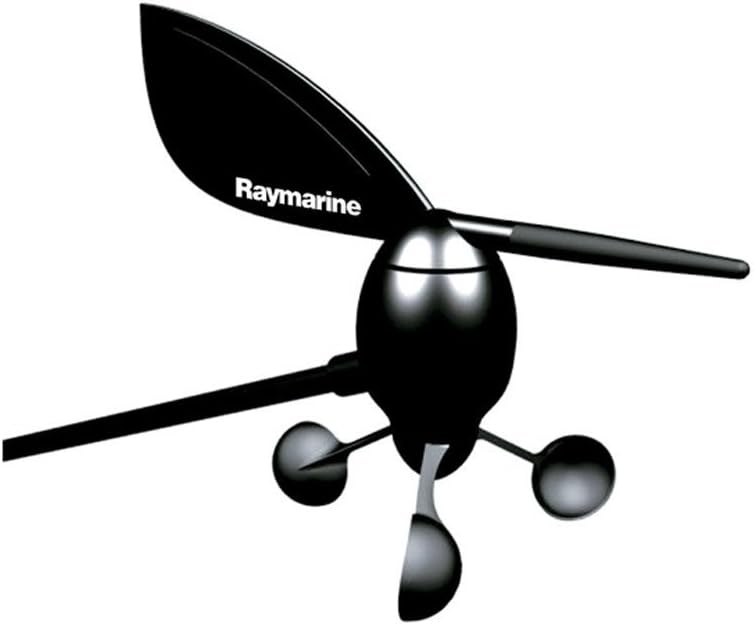
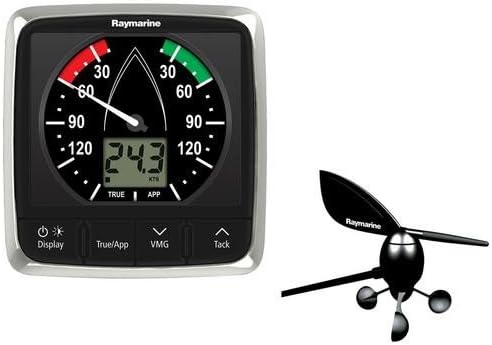
The Raymarine i60 Wind System represents a professional-grade solution for serious sailors who need integrated wind data on their instrument panel. It includes a masthead transducer, which provides more accurate and consistent readings compared to handheld units that rely on user positioning.
We may earn a commission when you buy through this link, at no additional cost to you.
Its analogue dial display is easy to read at a glance, featuring nighttime red backlighting that preserves night vision. The system is designed to be energy efficient, consuming low power which is essential for long voyages where battery life matters.
While the price is higher than handheld models, the included hardware and installation support justify the investment for those upgrading their boat's instrumentation. The footprint is identical to older ST60 models, making it an easy retrofit for existing setups.
We recommend this system for cruisers and racers who want reliable, hands-free wind data integrated into their navigation setup. It is the ultimate choice for performance sailing.
The masthead transducer captures wind speed and direction directly from the highest point on the boat, ensuring accurate readings.
The 30m cable and base included in the kit simplify the installation process for most vessels.
We may earn a commission when you buy through this link, at no additional cost to you.
The Magnetic Mount Anemometer by Inspeed offers a unique approach by including a magnetic mount for quick and secure placement on metal surfaces. This is particularly useful for sailors who want to position the device without the need for a tripod or complex mounting gear.
We may earn a commission when you buy through this link, at no additional cost to you.
With a high rating of 4.7 stars, it is known for its precision and calibration, ensuring that the data you read is reliable. Its compact design makes it easy to carry and store, fitting seamlessly into a boat's storage compartments.
While detailed specs are limited compared to other models, its performance suggests it is a robust tool for serious applications. The magnetic feature sets it apart as a versatile option for on-deck wind monitoring.
We suggest this for boaters who need a portable yet precise instrument that can be deployed quickly. It is a great addition to any sailing toolkit.
The included magnetic mount allows you to secure the device to any metal surface on your boat, providing stability during use.
Calibrated for precision, this device ensures that your wind readings are trustworthy for navigation and performance analysis.
We may earn a commission when you buy through this link, at no additional cost to you.
This Raymarine Instrument Wind I60 Display is designed for those who need to replace a broken screen or upgrade their existing system without buying a full new setup. It offers a high-contrast screen that is easy to read even in bright sunlight.
We may earn a commission when you buy through this link, at no additional cost to you.
Compatible with NMEA 2000 networks, it integrates well with other marine electronics to provide a comprehensive data display. The black and grey color scheme blends seamlessly with most boat instrument panels.
However, it is a display-only unit, meaning you must purchase the transducer separately if you do not already have one. This limits its appeal for those starting from scratch but makes it a cost-effective solution for upgrades.
We recommend this display for sailors who need a reliable screen replacement or an additional data point on their boat. It is a practical choice for maintaining system integrity.
The display is fully compatible with NMEA 2000 networks, allowing it to share data with other navigation instruments easily.
The high-contrast screen ensures data is legible in all lighting conditions, from dark nights to bright midday sun.
We may earn a commission when you buy through this link, at no additional cost to you.
The TopTes TS-301 stands out because it includes a humidity sensor, providing a more complete weather picture for sailors. The large 2.26-inch LCD screen makes it easy to read multiple data points at once without squinting.
We may earn a commission when you buy through this link, at no additional cost to you.
With six wind speed units available, you can customize the display to match your preferred measurement system. The auto shut-off feature after 10 minutes helps conserve battery life, which is useful for extended trips on the water.
One consideration is that the temperature and humidity sensors may take up to 30 minutes to adjust to a new environment. This is typical for this type of sensor but something to keep in mind when starting your measurements.
We suggest this model for boaters who want humidity data alongside wind speed without paying a premium. It is a versatile tool for both marine and indoor air flow monitoring.
The built-in humidity sensor allows you to track moisture levels, which can be crucial for understanding fog or condensation risks.
The 2.26-inch backlight LCD ensures all data is visible from a distance, reducing eye strain during use.
We may earn a commission when you buy through this link, at no additional cost to you.
For sailors with existing Raymarine ST systems, the E28081 Weather and Bowls kit provides essential replacement parts to restore your wind instrument. It includes the vane, cups, and necessary hardware to get your system working accurately again.
We may earn a commission when you buy through this link, at no additional cost to you.
This kit is designed to fit ST50, ST60, and ST80 models, making it a versatile option for many older boats. The durable plastic construction ensures that the new parts can withstand marine conditions just as well as the originals.
While it does not function as a standalone unit, it is a critical resource for maintaining your onboard instruments without replacing the entire system. The included fixing screws and allen key simplify the repair process.
We recommend this for boat owners who need to repair a damaged wind sensor. It is a practical and cost-effective solution for keeping your navigation gear in top shape.
Designed to fit ST50, ST60, and ST80 models, this kit ensures compatibility with a wide range of existing systems.
The package includes all necessary fixing screws and tools to make the replacement process straightforward and quick.
We may earn a commission when you buy through this link, at no additional cost to you.
This RAYMARINE MASTHEAD unit is a comprehensive solution for upgrading your boat's wind measurement system. It features the latest version of cups and vane designed to improve accuracy and reduce wear over time.
We may earn a commission when you buy through this link, at no additional cost to you.
Constructed from marine-grade materials, this masthead is built to withstand the harsh conditions of saltwater exposure and extreme weather. The high precision sensors ensure that you receive reliable data even in challenging sailing environments.
Installing a masthead unit requires technical knowledge and proper sealing to prevent water ingress, but the result is a significant upgrade to your boat's instrumentation. It is best suited for experienced installers or professional technicians.
We suggest this for boat owners looking to overhaul their wind measurement system with a high-performance unit. It offers long-term reliability and precision.
The latest version cups and vane are engineered for better performance and durability compared to older models.
Constructed from marine-grade materials to resist corrosion and damage from prolonged exposure to harsh marine conditions.
We may earn a commission when you buy through this link, at no additional cost to you.
The Raymarine i60 Wind Display System with Masthead offers a complete package for sailors who want accurate and comprehensive wind data. It includes both the display and the masthead transducer, making installation straightforward for those familiar with marine systems.
We may earn a commission when you buy through this link, at no additional cost to you.
This system provides true and apparent wind angles, which are essential for tactical sailing and navigation. The customizable data fields allow you to display exactly what matters most to your specific sailing style.
While it comes at a premium price, the comprehensive functionality and build quality make it a worthwhile investment for serious boaters. The adjustable backlighting ensures visibility in any lighting condition throughout the day and night.
We recommend this system for those looking for a top-tier wind instrument that offers flexibility and precision. It is a complete solution for professional sailors.
Provides both true and apparent wind angles, giving you complete tactical information for navigation and sailing.
Customizable data fields let you tailor the screen to show exactly what information is most important to you.
We may earn a commission when you buy through this link, at no additional cost to you.
The Mcbazel 3 in 1 Anemometer offers exceptional value for boaters on a budget who still want reliable wind and temperature readings. It includes a Beaufort scale display, which helps interpret wind conditions without needing to convert numbers mentally.
We may earn a commission when you buy through this link, at no additional cost to you.
Its backlit LCD ensures visibility in low-light conditions, making it useful for early morning or evening sailing. The device is lightweight and portable, fitting easily into a pocket or small gear bag.
While it lacks a humidity sensor, it covers the most essential measurements for everyday use. The price point makes it an accessible entry point for anyone needing a basic wind speed meter.
We recommend this for casual sailors or those looking for a secondary backup device. It is a solid choice for cost-conscious buyers.
The Beaufort scale provides an intuitive way to understand wind intensity without needing detailed numerical analysis.
This model is one of the most affordable options available, making it accessible for all budgets.
We may earn a commission when you buy through this link, at no additional cost to you.
Choosing the right marine anemometer requires considering your specific needs and budget. This guide outlines key factors to help you make an informed decision.
Accuracy is critical for navigation safety. Look for devices with a measurement range that covers the wind conditions you typically encounter. For sailing, a range of 0 to 60 knots is usually sufficient. Higher-end models offer tighter tolerances which improve reliability in variable conditions.
Prioritize anemometers with clear accuracy ratings and a wide enough range to handle strong gusts without overloading the sensor.
Marine environments are harsh due to salt, humidity, and UV exposure. Choose models with weather-resistant housing or coatings. Handheld units should be able to withstand drops and moisture. Professional masthead transducers are designed to be permanently mounted and should be specifically rated for marine use.
Ensure the device has adequate protection against water and salt to prevent corrosion and extend its lifespan.
The display must be easy to read in bright sunlight and low-light conditions. Look for backlit LCD screens with adjustable brightness. Handheld devices often feature large digits and clear icons. Integrated systems should have high-contrast displays that show essential data at a glance.
Select a device with a display that is legible under the conditions you will be operating in most often.
Consider how you plan to mount or carry the device. Handheld units may include tripod holes or straps for secure holding. Masthead transducers require specific mounting hardware. Ensure the chosen model supports your intended mounting method to maintain accurate readings.
Choose a mounting option that ensures the device remains secure and does not obstruct other operations on the boat.
Features like wind chill, humidity, temperature, and wind gust tracking add value. Some models include a Beaufort scale for quick interpretation. Advanced units offer connectivity with navigation systems. Evaluate which extra features justify the added cost for your use case.
Look for features that enhance usability and provide actionable data for sailing or weather monitoring.
Battery life is important for long trips. Devices with auto shut-off features help conserve power. Check if the device uses common batteries like AAA or includes rechargeable options. Low power consumption is a key factor for integrated systems.
Choose a device with reliable battery performance to avoid interruptions during critical sailing times.
Controls should be intuitive and easy to operate while on the water. Look for simple menus and clear labeling. Some models have dedicated buttons for key functions. Avoid overly complex interfaces that require multiple steps to access wind data.
Prioritize models that allow quick and easy access to wind information without complicated navigation.
Prices vary widely from inexpensive handheld units to premium integrated systems. Determine your budget and weigh the features offered at that price point. Sometimes spending more upfront on a durable device saves money in the long run.
Find a balance between cost and quality that meets your needs without unnecessary expenditure.
To get accurate readings, position the handheld anemometer away from obstructions like sails or your body that could block wind flow. Point the wind vane directly into the wind and wait a few seconds for the reading to stabilize.
For masthead systems, ensure the transducer is mounted high enough on the mast to avoid turbulence from the rigging. Regularly check that the cups and vane spin freely and are not obstructed by debris or ice.
After each use, especially in saltwater environments, rinse the device with fresh water and dry it thoroughly to prevent corrosion. Store handheld units in a protective case away from extreme temperatures to prolong battery life.
True wind is the actual wind direction and speed over the water. Apparent wind is the wind felt on the boat, which combines true wind with the boat's speed. Anemometers often measure apparent wind, and advanced systems calculate true wind.
Handheld anemometers can be accurate if used correctly. However, masthead transducers provide more consistent and reliable readings since they are positioned away from wind shadows. For serious racing or cruising, a masthead system is recommended.
Most handheld devices do not require manual calibration. If readings seem off, compare them with a reliable local weather source. Masthead systems may require professional calibration during installation to ensure accuracy.
Many handheld models are water-resistant but not waterproof. Check the IP rating before using in heavy rain. For regular use in wet conditions, a dedicated marine-rated device is better.
The Beaufort scale is a measure of wind force from 0 to 12 based on observed conditions. It helps sailors quickly understand wind intensity without precise speed measurements.
Humidity affects fog formation and overall weather conditions. High humidity combined with dropping temperatures often indicates rain or storms, so tracking it helps in planning and safety.
We have reviewed ten marine anemometers ranging from budget-friendly handheld tools to professional masthead systems. The BTMETER BT-100 and HoldPeak 866B are excellent choices for those needing portability and accuracy.
For serious sailors, the Raymarine i60 systems offer integrated solutions that provide comprehensive wind data essential for tactical navigation. Consider your budget, boat setup, and specific needs when choosing the best model for you.
Prices and availability may change over time so always verify the latest details before purchasing. We hope this guide helps you make an informed decision to enhance your time on the water.