
Upgraded Watt Power Meter Plug
4.6Editor score
Monitors voltage and amps
Overload protection included
Adjustable backlight time
This guide compares the top 10 electricity meters for RV to help you monitor usage, save money, and ensure safe power management at campsites or off-grid.
Finding the right electricity meter for RV use is essential for monitoring power consumption and avoiding unexpected fees. Whether you are camping off-grid or staying at a park with metered billing, accurate tracking helps manage your energy budget effectively.
We evaluated ten leading models based on accuracy, durability, and ease of installation. Our comparison covers sub-meters, plug-in monitors, and surge protectors with energy tracking to help you choose the best fit for your recreational vehicle setup.
Each pick highlights key features like display clarity, communication protocols, and voltage compatibility. Prices and availability may change over time, so verify current details before purchasing to ensure you get the most reliable solution for your specific needs.
4.6Editor score
4.5Editor score

3.5Editor score
The following table provides a side-by-side look at key specifications for each model. Use this to quickly compare features like voltage range, display type, and communication options before making your final decision.


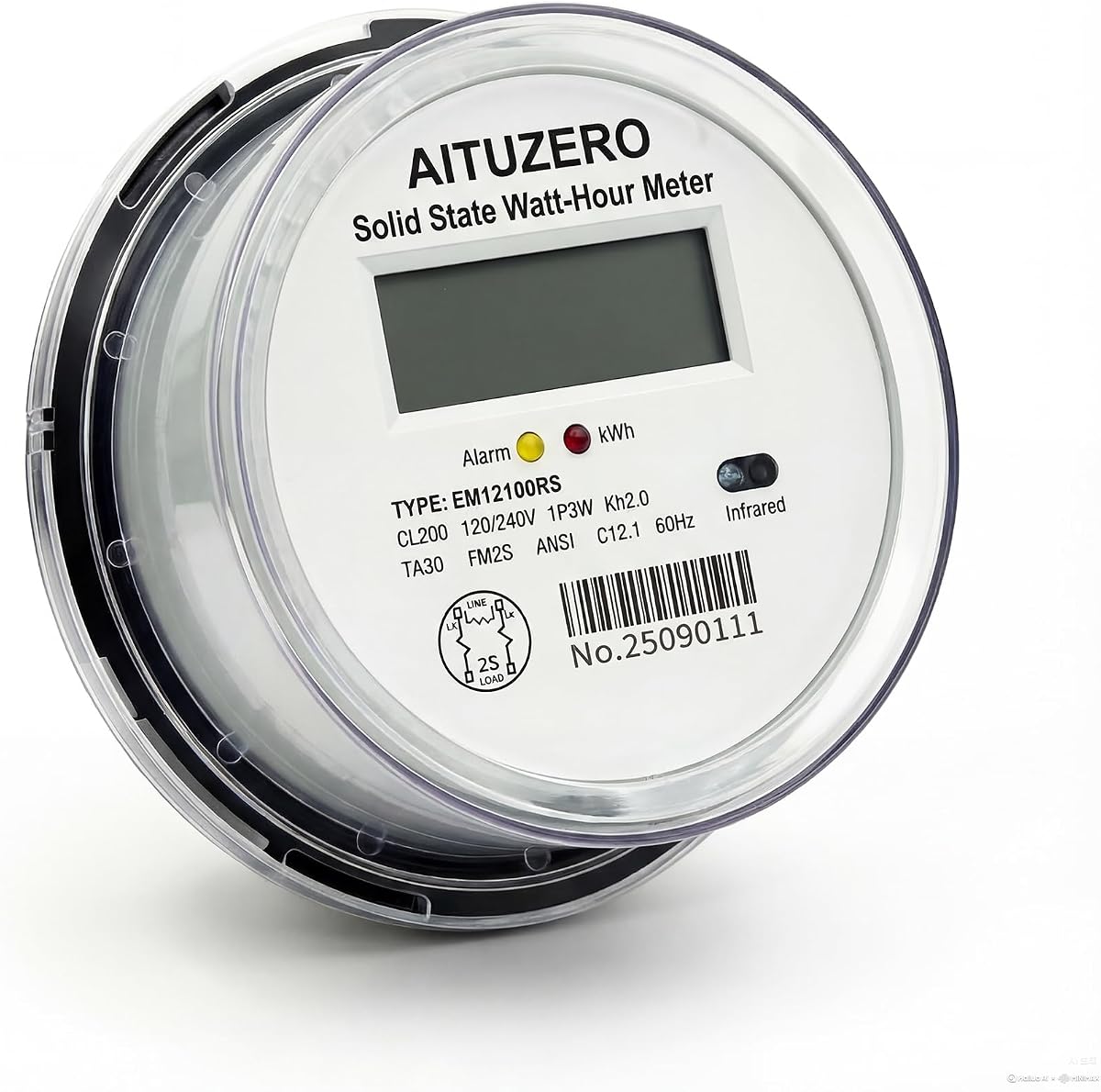
This digital energy meter stands out for its reliability and straightforward installation in RV pedestals and sub-panels. With a 4.5 star rating, it offers precise kWh tracking for fair cost allocation and effective energy management in rental or private setups.
We may earn a commission when you buy through this link, at no additional cost to you.
The ANSI Form 2S configuration ensures it fits standard 4-jaw sockets without special tools. Its bright LCD cycles through voltage, current, and power data, while the reverse LED helps verify correct wiring for solar or grid connections.
While it lacks wireless features, the pulse and Modbus outputs allow integration with larger monitoring systems. The sealed housing protects against humidity, making it suitable for outdoor RV applications where conditions vary.
Landlords and RV owners seeking accurate billing or usage insight will find this meter dependable. It balances professional-grade accuracy with DIY-friendly setup, ensuring you track power consumption without complexity.
Separate usage across circuits to allocate costs precisely in shared RV spaces or rental units.
Track real-time power flow to optimize hybrid systems and verify inverter performance safely.
We may earn a commission when you buy through this link, at no additional cost to you.
This monitor offers robust performance for RV systems needing high current handling up to 200 amps. Its 4.7 rating reflects user satisfaction with its rugged build and clear display for checking energy consumption anytime.
We may earn a commission when you buy through this link, at no additional cost to you.
Designed for 240V three-wire setups, it fits standard sockets and shows voltage and total usage clearly. The LED indicator confirms operation quickly, which is helpful during troubleshooting or routine checks at campsites.
Installation is straightforward due to its Form 2S compatibility, but advanced users might miss additional data logging options. Still, the focus on durability ensures it withstands varying weather conditions over time.
Ideal for users prioritizing basic accuracy and sturdiness over smart features. It provides essential kWh data without complexity, helping you manage load balancing and avoid unexpected overloads.
Rugged housing handles harsh weather, ensuring consistent monitoring in exposed RV pedestal environments.
Large LCD shows key metrics clearly, making daily checks quick even in low light.
We may earn a commission when you buy through this link, at no additional cost to you.
This plug-in monitor delivers exceptional value for RV owners needing to check appliance-specific energy usage. With a 4.6 rating, it provides detailed metrics like watts, volts, and cumulative cost without requiring hardwired setup.
We may earn a commission when you buy through this link, at no additional cost to you.
The large backlit screen and seven display modes make it easy to toggle between readings like power factor or time. You can set custom backlight times, saving battery or improving visibility in dim campers.
Overload protection alerts you if an appliance draws too much power, preventing circuit trips. However, it is limited to single outlets, so multiple units are needed for whole-vehicle tracking.
Best for users wanting portable, low-cost monitoring of specific devices. It helps identify energy hogs and adjust usage patterns to save on campsite fees efficiently.
Plug directly into outlets to see exactly how much power your AC or fridge consumes.
Input unit prices to estimate billing costs over time, aiding budget planning for trips.
We may earn a commission when you buy through this link, at no additional cost to you.
This meter emphasizes precision with a 0.5-level accuracy rating, making it ideal for critical monitoring tasks. Its 4.8 user rating highlights satisfaction with its sharp display and durable protection against environmental factors.
We may earn a commission when you buy through this link, at no additional cost to you.
Built to meet ANSI C12.1 standards, it ensures safety and compatibility for 240V systems. The display shows real-time data intuitively, helping users manage loads effectively without confusing interfaces.
While installation requires wiring knowledge, the triple protection against dust and moisture extends lifespan in outdoor RV pedestals. It balances professional reliability with user-friendly design for long-term use.
Great for RVs with complex electrical needs requiring accurate data. Its compliance and durability make it a trustworthy choice for homeowners prioritizing safety and precision.
Meets ANSI safety specs, ensuring reliable operation in residential and RV electrical environments.
Triple-resistant housing keeps internal components safe from humidity and dust buildup outside.
We may earn a commission when you buy through this link, at no additional cost to you.
This unit combines surge defense with energy tracking, offering dual benefits for RV travelers. Despite a 3.5 rating, users appreciate the 16,000 Joule protection and ability to check internal plug temperature.
We may earn a commission when you buy through this link, at no additional cost to you.
It displays six key electrical parameters including voltage and active power. The LCD shows cumulative kWh, making it easy to verify usage at metered campsites without needing separate tools.
Internal temperature monitoring adds a safety layer by warning of overheating connections. While pricier than standard meters, the protection features justify the cost for owners of expensive electronics.
Best for travelers prioritizing equipment safety alongside billing tracking. It ensures your RV electronics stay safe while giving clear insight into daily energy consumption.
Safeguard electronics from spikes while tracking consumption with one connected device.
Monitor amperage instantly to avoid breaker trips during heavy appliance usage.
We may earn a commission when you buy through this link, at no additional cost to you.
A close alternative to the first plug-in model, this meter offers eight display modes for flexible viewing. Its 4.6 rating reflects ease of use for checking costs and energy parameters in various appliances.
We may earn a commission when you buy through this link, at no additional cost to you.
The ABS body is fireproof and durable for camping conditions. You can set unit prices to see cumulative costs, helping estimate daily fees at full-hookup sites accurately.
Overload protection triggers a flash when thresholds are crossed, prompting you to unplug risky loads. It is a great tool for budget-conscious campers needing quick insights into usage habits.
Ideal for small appliances or checking specific loads. It is affordable and reliable for those needing cost-focused monitoring without complex installation.
Input local kWh rates to see real cost estimates as you monitor appliance energy.
No tools needed for resetting data, making it easy to clear previous trips.
We may earn a commission when you buy through this link, at no additional cost to you.
This model brings professional connectivity to RV monitoring with RS485 Modbus support for data integration. Its 4.8 rating indicates success in advanced applications where system-wide data logging is needed.
We may earn a commission when you buy through this link, at no additional cost to you.
Import and export measurement suits solar setups with batteries. You can track energy flow directions and use pulse outputs for external counters or automation projects seamlessly.
The IR optical interface allows secure configuration without exposing terminals. While more technical than basic meters, these features enable deep control for complex off-grid systems.
Best for tech-savvy users needing scalable monitoring. It offers robust data tools for those managing multiple meters or integrating with energy management systems.
Connect multiple units to a network for centralized tracking across an RV park.
Verify exact import and export kWh to optimize battery charging strategies.
We may earn a commission when you buy through this link, at no additional cost to you.
This meter earned a perfect 5.0 rating for its reliability in 240V two-wire systems. It delivers straightforward kWh tracking with a clear display that users find easy to read daily.
We may earn a commission when you buy through this link, at no additional cost to you.
Designed for Type C1S Form 2S sockets, it installs easily in RV pedestals and residential panels. The CL200 monitoring capability covers most common usage patterns for campers and trailers.
Its durable housing resists wear in daily electricity monitoring environments. While it lacks advanced smart features, the simplicity ensures fewer points of failure over time.
Ideal for users wanting a hassle-free, trusted tracker. It provides essential data without complexity, making it a solid choice for standard RV power setups.
A rare perfect rating indicates consistent reliability and user-friendly performance in real-world use.
Fits common 4-jaw sockets, simplifying replacement or upgrade without rewiring.
We may earn a commission when you buy through this link, at no additional cost to you.
This meter matches high precision with robust protection features. Its 4.8 rating highlights user appreciation for its accuracy and ability to withstand harsh environmental conditions reliably.
We may earn a commission when you buy through this link, at no additional cost to you.
Meeting ANSI C12.1 specs ensures it handles electrical safety needs for RV and home systems. The display delivers sharp, easy-to-read data for real-time viewing of power consumption.
Triple protection against dust, water, and pressure extends service life significantly. While installation requires 3-wire knowledge, the result is stable operation across diverse working environments.
Great for users needing durable precision in tough climates. It offers a balanced blend of performance and protection for serious RV electrical monitoring.
0.5-level accuracy ensures trustworthy readings for managing sensitive electronic loads.
Triple-proof protection keeps the meter functional in humid or dusty RV park conditions.
We may earn a commission when you buy through this link, at no additional cost to you.
This hardwired monitor offers flexibility via split-core CT clamps, avoiding wire cuts during setup. Its 4.4 rating shows users value its broad voltage range and visual overload warnings for safety.
We may earn a commission when you buy through this link, at no additional cost to you.
It tracks voltage, current, and kWh with power-off memory retention. The compact display provides quick readings for load balancing, which is useful for workshop or generator setups.
While installation requires some wiring skills, the split-core design makes it safer than cutting conductors. It is a versatile option for monitoring specific circuits or generators in RV parks.
Best for DIYers needing flexible monitoring. It offers practical features for checking load health without needing full sub-meter replacements.
Clamp CT around live conductors without disconnecting wires, simplifying DIY projects.
Flashing alerts warn when thresholds are exceeded, helping prevent circuit damage.
We may earn a commission when you buy through this link, at no additional cost to you.
Selecting the right electricity meter involves evaluating voltage compatibility, installation requirements, and monitoring features. This guide outlines the key factors to ensure you choose a model that fits your RV power system needs.
Ensure the meter matches your RV's electrical system, typically 120/240V single phase. Meters designed for 240V three-wire systems may not work for 120V circuits without adaptation.
Check voltage ratings carefully to avoid damage or inaccurate readings that could lead to billing errors.
Decide between hardwired sub-meters and plug-in monitors. Sub-meters are fixed in pedestals and require wiring knowledge but offer whole-vehicle tracking.
Plug-in models are portable and easy to use for checking individual appliances but cannot monitor the entire system at once.
Look for meters with bright LCDs or backlit screens for visibility in dim campers or at night. Clear data presentation is essential for frequent monitoring.
Features like auto-cycling through voltage and current help you access all key metrics without manual input.
Advanced models offer Modbus or RS485 ports for connecting to energy management systems. These are useful for RV parks or solar setups needing centralized data logging.
Most basic meters lack wireless options, so consider if you need remote access or integration with other tools.
Higher accuracy ratings like 0.5-level ensure precise billing and load tracking. This is vital if you are paying for exact consumption or managing solar exports.
Standard meters often have 1.0 grade accuracy, which is sufficient for general budgeting but may vary slightly on high loads.
Choose meters with dust, water, and pressure protection if installed outdoors in pedestals. Sealed housing prevents internal damage from humidity or debris.
Durability ensures long-term reliability without frequent replacements, saving money and effort over time.
EEPROM or memory retention preserves usage data during power outages. This allows you to track cumulative usage without losing progress.
Without memory, you might lose track of consumption after a power loss, complicating billing and monitoring efforts.
Some models include overload protection or surge defense. These add safety by warning of high loads or protecting electronics from spikes.
If you use sensitive equipment like AC units or fridges, integrated protection can prevent costly repairs and downtime.
Install the meter according to its manual, ensuring power is off before wiring connections. For plug-in models, simply insert them into standard outlets and connect the appliance directly.
Regularly check the display for readings and reset data as needed. Use memory functions to track cumulative usage over trips without losing prior information.
Keep outdoor meters protected from direct debris and inspect terminals for corrosion. Cleaning the screen and housing extends lifespan and ensures clear visibility for monitoring.
A sub-meter is hardwired into your electrical panel or pedestal to monitor total household or RV usage. A plug-in meter measures specific appliances when plugged into an outlet. Sub-meters are better for whole-vehicle tracking while plug-in units suit individual devices.
Yes, many meters support import and export monitoring to track solar generation. Look for models with bidirectional measurement to see exactly how much power your panels feed into batteries or the grid.
Most dedicated RV meters feature sealed housings rated for dust and moisture. Ensure you install them inside a proper meter box for maximum protection against weather elements.
Plug-in monitors typically offer reasonable accuracy for billing estimates but may vary under heavy loads. They are best for identifying high-consumption devices rather than precise utility billing.
Hardwired meters draw power from the circuit so they do not need batteries. Plug-in models rely on the outlet power. Some may store data in non-volatile memory without needing battery backups.
Yes, especially models with Modbus or RS485 ports. These allow linking multiple units for centralized data collection, which is useful for large RV parks or complex setups.
You will need basic electrical tools and safety gear to access the pedestal or panel. Always turn off power before wiring to ensure safety during installation.
Check daily if you are on metered sites to avoid unexpected fees. For regular trips, weekly checks help track usage patterns and manage power consumption effectively.
The Digital Electric Sub Meters lead our list for reliability and clear data, while plug-in plugs offer budget-friendly options for specific appliances. For those needing protection, the 50 Amp Surge Protector adds valuable safety.
Prioritize voltage compatibility and display clarity when selecting your model. Whether you want simple monitoring or advanced connectivity, matching the meter to your power setup ensures accurate tracking.
Always verify current prices and availability before purchasing as these details change regularly. Investing in the right electricity meter helps you manage energy costs and enjoy worry-free RV adventures.