
EBOOT 30 Pieces Photoresistor
4.6Editor score
30 pieces included
5mm GM5539 resistor
150 Volt max voltage
This guide compares the top ten light sensors for Arduino to help you choose the best module for your project based on accuracy, features, and reliability.
Light sensors are essential components for any Arduino project that requires environmental awareness or automated control based on illumination levels. Choosing the right sensor ensures your project functions accurately and reliably in various lighting conditions without compromising performance or power efficiency.
We have carefully evaluated ten top-rated light sensors available on the market to provide you with a comprehensive overview of their capabilities and specifications. Each product was selected based on customer ratings, technical features, compatibility with popular microcontrollers, and overall value for DIY electronics enthusiasts and professionals alike.
Every pick in this list highlights key specifications, pros and cons, and detailed usage scenarios to help you make an informed decision for your specific needs. Please note that product availability and pricing may change over time, so always verify current details before making your purchase to ensure you get the best deal.
4.6Editor score

4.4Editor score
5.0Editor score
The following table provides a side-by-side comparison of all ten products to help you quickly identify the specifications and features that matter most for your Arduino project requirements.


The WWZMDiB 6 Pcs 5MM LDR Light Sensor module is a robust choice for Arduino users seeking reliable ambient light detection with both digital and analog outputs. With a solid 4.4 rating from verified buyers, this product stands out for its integration of the LM393 voltage comparator, which ensures clean signal processing for your microcontroller projects.
We may earn a commission when you buy through this link, at no additional cost to you.
This sensor module offers significant versatility through its dual output pins, allowing you to choose between a digital switch output for threshold detection or an analog voltage output for continuous light intensity monitoring. The built-in potentiometer provides precise control over the detection brightness threshold, making it easy to tune the sensor to your specific environmental conditions without complex code adjustments.
While the module provides strong driving capability with over 15mA output, users may need to spend a few minutes calibrating the potentiometer to achieve optimal sensitivity levels for their setup. The six-piece pack is sufficient for most small to medium projects, but larger scale deployments might require additional units which could add to the overall cost.
If you need a dependable light sensor that works seamlessly with Arduino, Raspberry Pi, or ESP32 boards, this WWZMDiB module is an excellent starting point. Its combination of analog flexibility and digital ease-of-use makes it a top recommendation for hobbyists and students building automated lighting systems or light-responsive gadgets.
The module provides both digital and analog outputs, enabling you to use simple threshold detection or precise light intensity readings depending on your project requirements.
A built-in potentiometer allows you to fine-tune the light sensitivity threshold, ensuring the sensor triggers correctly across different lighting environments.
We may earn a commission when you buy through this link, at no additional cost to you.
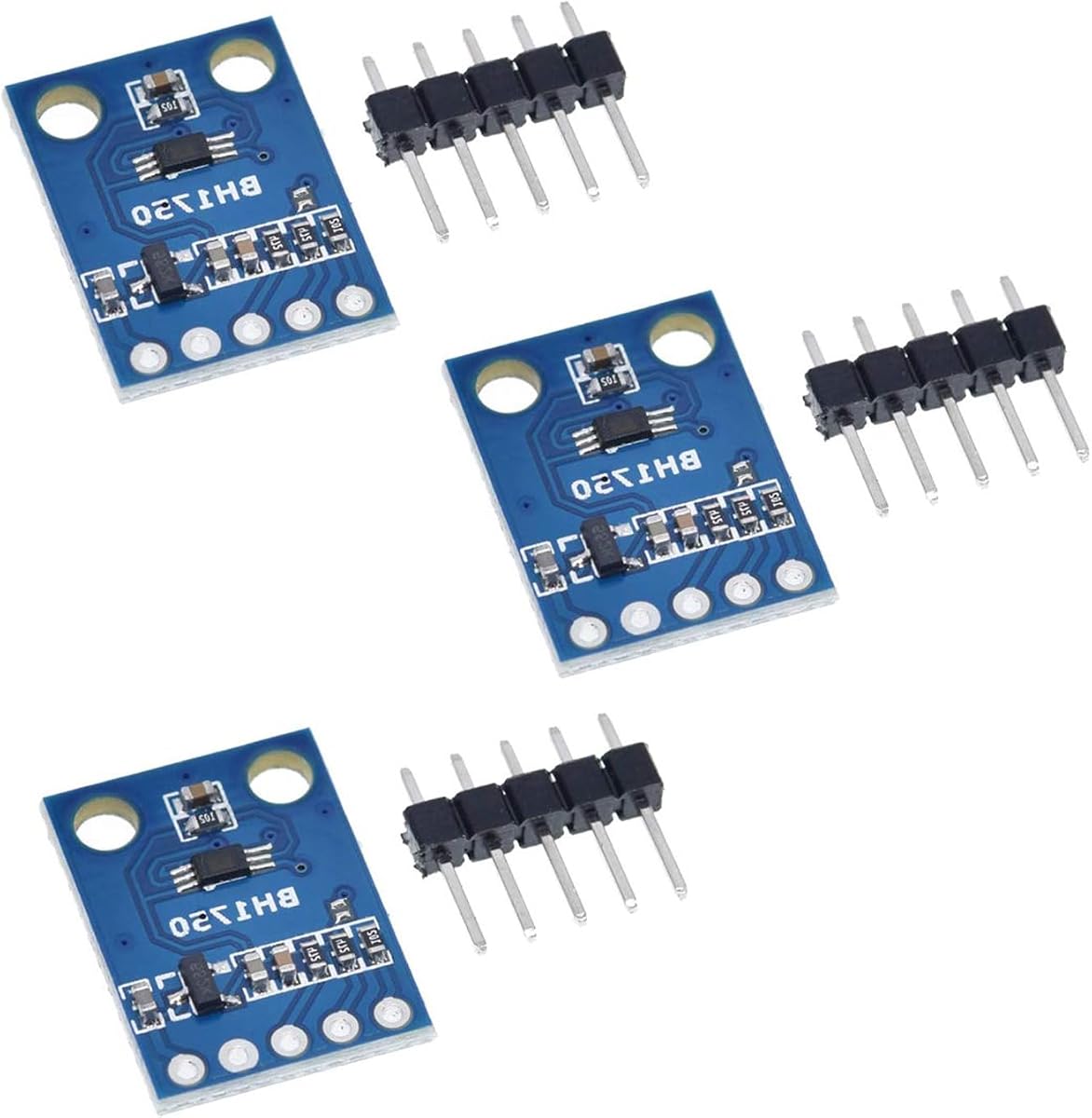
The 3-Pack GY-302 BH1750 Light Sensor Module offers high precision digital light measurement through the ROHM BH1750FVI chip, making it ideal for projects requiring accurate lux readings. With a 4.7 rating, users appreciate its compact form factor of 13.9mm by 18.5mm, which fits easily into tight enclosures or wearable devices without consuming much space on your breadboard.
We may earn a commission when you buy through this link, at no additional cost to you.
Unlike analog light sensors, this module communicates over the I2C protocol, providing direct digital lux values that simplify your code and improve measurement reliability. The sensor supports a versatile power supply range from 3 to 5 volts, ensuring compatibility with a wide variety of microcontrollers including Arduino, ESP32, and other common platforms.
Setup requires basic I2C wiring and library integration, which might be slightly more involved than plugging in a simple analog sensor, but the trade-off is superior accuracy and no need for analog-to-digital conversion calculations. The three-pack ensures you have replacements or spares for multiple projects, though you may need to handle the small pins carefully during soldering or prototyping.
For builders focused on data accuracy and space efficiency, this GY-302 module delivers professional-grade performance at an accessible price point. Its reliable digital output makes it a strong choice for environmental monitoring, smart lighting control, or any project where consistent light intensity data is critical.
Direct digital output removes the need for analog conversion, ensuring precise and consistent light intensity measurements in your code.
Its tiny footprint allows installation in compact devices where traditional larger light sensors would not fit.
We may earn a commission when you buy through this link, at no additional cost to you.
HiLetgo is a well-known name in the Arduino community, and their 3pcs GY-302 BH1750 module continues that reputation with high-quality build and authentic ROHM BH1750FVI chips. The 4.5 rating reflects consistent performance across various lighting conditions, providing users with confidence in the sensor's accuracy for both hobbyist and educational projects.
We may earn a commission when you buy through this link, at no additional cost to you.
This module shares the compact 13.9mm by 18.5mm form factor with similar products, allowing for seamless integration into small enclosures. The original chip ensures reliable digital light readings through the I2C interface, while the wide voltage input range of 3 to 5 volts guarantees it works with most standard microcontroller boards without needing extra power regulation circuitry.
Users should note that this module relies on I2C communication, meaning your code needs to handle the digital protocol and libraries. While this is standard for many modern sensors, beginners might find it slightly more complex than reading an analog pin, but the resulting data precision is well worth the extra setup time for serious applications.
If you prioritize component authenticity and reliability, the HiLetgo GY-302 is a smart pick for your light sensing needs. The three-pack value offers flexibility for multiple builds, and the proven design ensures you get consistent results whether you are building a light meter or an automated room lighting system.
The use of original ROHM chips ensures the sensor performs exactly as specified without variance from generic replacements.
Having three units lets you replicate projects easily or keep spares for future developments without needing new orders.
We may earn a commission when you buy through this link, at no additional cost to you.
This Photodiode Sensor Module distinguishes itself with directional light detection capabilities, allowing your project to focus on a specific light source rather than general ambient light. With a 4.5 rating and a pack of 10 units, it provides excellent value for multi-point sensing applications such as smart car tracking or robotic line following systems.
We may earn a commission when you buy through this link, at no additional cost to you.
The module features adjustable sensitivity via a blue digital potentiometer, giving you precise control over the response threshold for your specific environment. With both digital and analog outputs available, you can choose to trigger a relay based on a set threshold or read continuous brightness values for more nuanced lighting control logic.
While the directional nature of the sensor makes it ideal for tracking specific light sources, it requires careful orientation during installation to ensure accurate readings. The included mounting bolt holes simplify physical installation, but users must ensure the sensor is aligned correctly with the target light source to maximize its directional advantage.
For projects requiring targeted light detection or line following capabilities, this photodiode module offers the specificity and value needed to succeed. The combination of digital reliability and analog flexibility ensures it can adapt to a wide range of Arduino and microcontroller applications with minimal effort.
The sensor perceives light from a fixed direction, reducing noise from ambient sources and improving accuracy for specific tasks.
The digital potentiometer lets you tune how sensitive the sensor is to changes in brightness without software changes.
We may earn a commission when you buy through this link, at no additional cost to you.
The EBOOT 30 Pieces Photoresistor kit provides an economical solution for projects requiring multiple light sensors or bulk replacements. With a 4.6 rating and 30 units of 5mm GM5539 resistors, it ensures you have ample components for classrooms, prototyping sessions, or large production runs without worrying about running out mid-project.
We may earn a commission when you buy through this link, at no additional cost to you.
These photoresistors feature a spectral peak at 540nm, which closely matches human eye sensitivity for visible light detection. The component supports a maximum voltage of 150V DC and operates within a wide temperature range from minus 30 to plus 70 degrees Celsius, making them durable for both indoor and outdoor use cases.
Keep in mind that these are standalone components, not modules, so you will need to design your own voltage divider circuit and handle any necessary filtering or amplification. This is perfect for advanced users or educational settings where understanding the circuitry is part of the learning process but might be a hurdle for beginners needing plug-and-play solutions.
For builders prioritizing value and quantity over immediate ease of use, this EBOOT photoresistor set is hard to beat. It offers the flexibility to create custom circuits tailored to your exact needs while keeping the overall project cost low through bulk pricing and component efficiency.
Standalone resistors allow you to design custom circuits that match your specific voltage and sensitivity requirements exactly.
Thirty units ensure you can complete multiple projects or share with classmates without needing immediate reordering.
We may earn a commission when you buy through this link, at no additional cost to you.
The Teyleten Robot 5MM LDR Photosensitive Sensor Module offers a robust solution for digital light detection with a 4.6 rating across ten units. Each module features the reliable LM393 comparator, ensuring that your microcontroller receives clear high or low signals based on ambient light intensity thresholds set by the onboard potentiometer.
We may earn a commission when you buy through this link, at no additional cost to you.
This setup allows for easy integration with relay modules to create light-operated switches that trigger automatically when the environment brightens or darkens. The digital output simplifies your code by removing the need for analog calculations, though it limits you to threshold-based detection rather than continuous brightness monitoring.
While the ten-piece count provides great value for larger projects, the compact size means you need to handle them carefully during wiring. Users should also ensure the threshold is calibrated correctly to avoid false triggers caused by minor fluctuations in ambient lighting conditions during operation.
If you need multiple light sensors for a classroom or a multi-node system, this Teyleten pack provides the reliability and quantity you need. Its straightforward digital interface makes it ideal for automation tasks where a simple on-off signal is all that is required to control lights or alarms.
The digital output can drive relays directly, enabling simple light-controlled automation like automatic street lights or alarms.
The potentiometer lets you adjust the trigger point to match your specific environment accurately.
We may earn a commission when you buy through this link, at no additional cost to you.
The Digital Light Sensor for Arduino comes in a four-pack designed for broad compatibility with ESP32, ESP8266, and Raspberry Pi boards. With a 4.6 rating, users value its straightforward design that supports both digital and analog outputs, allowing flexibility in how you integrate the sensor into your project logic.
We may earn a commission when you buy through this link, at no additional cost to you.
The onboard potentiometer enables you to adjust the triggered threshold easily, making it simple to adapt to different environments without writing new code. Supported by provided tutorials for popular platforms, this sensor reduces the learning curve for beginners while still offering enough customization for intermediate hobbyists.
Since it operates on a 3.3 to 5V supply range, it works seamlessly with both 5V Arduino logic and lower voltage ESP microcontrollers. However, it is a basic module rather than a high-precision device, so it should not be used in applications requiring exact lux measurements or professional calibration standards.
For general DIY automation tasks where you need multiple sensors at a low cost, this four-pack delivers excellent utility. It is particularly well-suited for projects involving automated lighting control or light-triggered alerts across multiple points in your home or workshop.
Works equally well with Arduino and ESP boards, making it a versatile choice for mixed microcontroller projects.
Included tutorials make getting started quick and simple even for those new to light sensors.
We may earn a commission when you buy through this link, at no additional cost to you.
This pack of 50pcs LDR Photoresistor Light sensors offers exceptional value and reliability with a 4.9 customer rating. The components are standard GL5516 photocells, a common choice for light automation projects due to their balanced performance and easy availability in electronic component markets.
We may earn a commission when you buy through this link, at no additional cost to you.
With resistance ranging from 5 to 10Kohm in bright light to 0.2Mohm in darkness, these sensors provide a wide dynamic range suitable for various indoor and outdoor conditions. Their compatibility with 3.3V and 5V microcontrollers ensures they can be used with nearly any standard Arduino or ESP board without additional logic level shifters.
While these are raw components rather than modules, they are perfect for custom PCB designs or situations where you want to minimize space and power consumption. Keep in mind that you will need to design a voltage divider circuit and handle any filtering in your software to ensure stable readings.
If you are running a large scale project or a classroom workshop where students build multiple circuits, this fifty-piece pack ensures everyone has components without extra costs. Its high reliability rating makes it a trustworthy choice for long-term deployments where consistent performance is key.
The GL5516 is a proven component with well-known characteristics that simplify circuit design and replacement.
With a near-perfect rating, users can trust these components to perform consistently over time.
We may earn a commission when you buy through this link, at no additional cost to you.
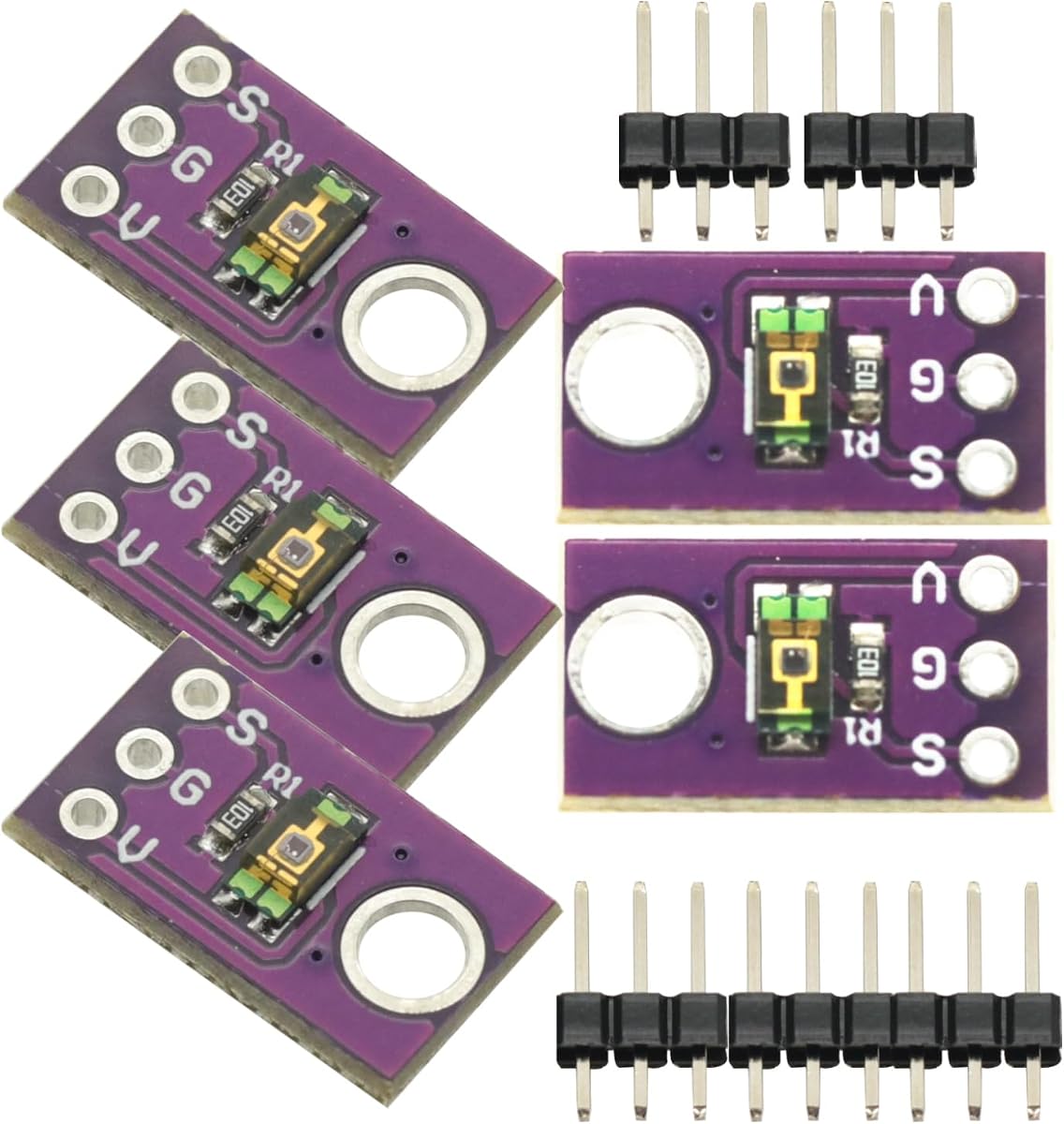
The 5PCS TEMT6000 Light Sensor Module stands out as a professional-grade component with a perfect 5.0 rating from users. It is designed specifically for ambient light sensing applications such as display backlight dimming in LCD screens and keypad backlighting for mobile devices, making it ideal for industrial lighting control tasks.
We may earn a commission when you buy through this link, at no additional cost to you.
These modules offer precise light intensity measurements that are consistent and reliable under various lighting conditions. The built-in design ensures minimal noise and high accuracy, which is critical when precise lighting control is required for user comfort or energy efficiency in automated systems.
While these are higher in price compared to basic photoresistors, the improved performance and professional specifications justify the investment for serious projects. The five-pack ensures you have enough units to cover multiple screens or zones in a product without worrying about running out during prototyping.
If you need reliable professional performance for consumer electronics or industrial lighting automation, this TEMT6000 module is the top choice. Its high accuracy and robust build quality ensure it delivers consistent results where other basic sensors might fail to provide stable readings.
Engineered for precise ambient light measurement, ideal for displays and industrial applications requiring consistent performance.
Designed for use in commercial and industrial settings where reliability and accuracy are non-negotiable requirements.
We may earn a commission when you buy through this link, at no additional cost to you.
The uxcell Photosensitive Diode Sensor module combines digital and analog outputs for versatile use in smart cars and Arduino projects. With a 4.6 rating, it provides reliable light detection through a stable LM393 comparator chip, ensuring consistent performance across a wide voltage range of 3.3 to 5 volts.
We may earn a commission when you buy through this link, at no additional cost to you.
This dual output capability allows you to choose between simple digital triggers or more nuanced analog readings depending on what your project needs. The three-unit pack is perfect for prototyping or small scale applications, offering enough units to test multiple points without needing to buy extra components.
As with other photodiode modules, you will need to calibrate the sensitivity to match your environment. The compact design makes it easy to mount in tight spaces such as inside vehicle dashboards or behind enclosures where space is limited.
For users needing a flexible module that works with multiple controller voltages, this uxcell sensor offers a great balance of performance and ease of use. Its stability and compact form make it well-suited for dynamic environments where lighting conditions may change rapidly during operation.
The LM393 comparator ensures clean signal conversion and stable output across various operating conditions.
The small size allows for easy mounting in space-constrained areas like vehicle dashboards or compact cases.
We may earn a commission when you buy through this link, at no additional cost to you.
Selecting the right light sensor requires understanding several key factors that affect performance and compatibility with your specific project needs.
Light sensors come in various types including photoresistors (LDR), photodiodes, and digital modules like the BH1750. Photoresistors are simple and cost-effective but lack precision, while photodiodes offer faster response times. Digital modules provide high accuracy and simplified output but may require more complex coding for setup.
Choose a type that aligns with your accuracy needs and technical skill level for the project.
Ensure the sensor supports your microcontroller's voltage logic which is typically either 3.3V or 5V. Some sensors operate on a wide range covering both voltages making them more versatile. Check the datasheet to confirm the minimum and maximum supply voltages.
Always match the sensor voltage to your board voltage to prevent damage or incorrect readings.
Sensors provide either analog or digital outputs. Analog outputs give continuous voltage values representing light levels suitable for detailed measurements. Digital outputs provide on or off signals based on a threshold which is simpler for basic automation tasks.
Select an output type that matches how your code processes light data and how complex the measurement needs to be.
Photodiodes generally respond much faster than photoresistors to changes in light intensity. If your project involves tracking fast moving objects or rapid light changes response speed is critical. Slower sensors are fine for environmental monitoring where changes occur gradually.
Ensure the sensor speed is sufficient for the frequency of changes in your specific application.
Different sensors detect different ranges of light intensity measured in lux. Some are optimized for bright sunlight while others work best in low light conditions. Check the operational lux range to ensure it covers your expected environment.
A sensor with the right range ensures accurate readings without saturating in bright areas or failing in dark ones.
Physical mounting options such as screw holes or adhesives can simplify installation in enclosures or vehicles. Some modules come with PCBs designed for easy soldering while others have headers for plug-and-play use.
Consider how you plan to mount the sensor and choose a package that supports your physical build needs.
Some sensors require manual calibration using potentiometers to set thresholds while others provide calibrated digital values. Manual calibration adds flexibility but takes time to set up and adjust.
Decide if you need adjustable sensitivity or prefer a pre-calibrated sensor for simplicity.
Prices vary widely based on sensor type and packaging. Bulk packs of basic components are cheaper but require your own circuit design while modules cost more but are ready to use.
Balance the cost per unit with the functionality you need to find the best value for your project size.
Start by connecting the sensor to the correct voltage pins on your microcontroller board. For digital sensors connect VCC to power and GND to ground while for analog sensors connect the signal pin to an analog input pin.
Install the appropriate library if required by the sensor and write code to read the light values. Calibrate the sensor by adjusting the threshold or code constants until it responds correctly to your environment.
Keep the sensor surface clean and free of dust or debris to ensure accurate readings over time. Avoid exposing the sensor to extreme temperatures or moisture unless it is specifically rated for such conditions.
The WWZMDiB LDR module is excellent for beginners because it includes a built-in comparator and simple pin connections. It offers both digital and analog outputs so you can experiment with both modes easily. The adjustable threshold also makes tuning easier without complex coding.
Yes photodiodes offer faster response times and are better for detecting rapid light changes. However they require a reverse bias circuit and amplifier for best results. LDRs are simpler for basic ambient light detection tasks.
Most digital sensors like the BH1750 require an I2C library to read data properly. Libraries simplify communication and provide direct lux values. You can find libraries in the Arduino IDE library manager for most common models.
Use the onboard potentiometer to adjust the threshold until the LED or output switches at your desired light level. For digital sensors adjust the code threshold value to match your environment readings. Calibration ensures accurate detection across different lighting conditions.
Yes most modules work with both 3.3V and 5V logic making them compatible with ESP32 and ESP8266. Just ensure you match the sensor voltage to your board power pins to avoid damage. Some require logic level shifters if using 5V modules with 3.3V boards.
Analog sensors output a voltage that changes with light intensity allowing precise measurement. Digital sensors output only on or off signals based on a set threshold. Choose based on whether you need detailed values or simple switching behavior.
We have reviewed ten top light sensors ranging from basic photoresistors to professional digital modules to meet a variety of project needs. Our top picks include the WWZMDiB LDR module for its balanced performance and the TEMT6000 for high-accuracy tasks.
When selecting a sensor prioritize voltage compatibility and output type to ensure it integrates smoothly with your microcontroller and code. Consider whether you need simple threshold detection or precise light intensity data before making your final decision.
Remember to check current product availability and prices before purchasing to get the best deal for your project. With the right sensor you can build reliable light-responsive systems that enhance your Arduino applications.